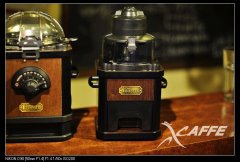
Three Methods for Grinding Coffee Beans
If you’ve ever wondered why your home-brewed espresso lacks body or your pour-over tastes weak and sour, the culprit may not be your technique—but how you prepare your coffee beans. Not all methods of breaking down roasted coffee are equal. In fact, there are three distinct ways to reduce whole beans into brewable form, and each affects flavor, extraction, and brewing performance differently.
The short answer? For consistent, high-quality extraction in specialty coffee, grinding—especially with a conical burr grinder—is the gold standard. Milling (blade grinders) produces uneven particles unsuitable for most brewing methods, while mortar and pestle (hand grinding) is labor-intensive but viable in a pinch.
What Is Coffee Bean Grinding?
When we talk about 'grinding' coffee, we’re referring to the mechanical process of reducing roasted coffee beans into small particles suitable for brewing. The goal is to achieve a uniform grind size to ensure even water contact during extraction. There’s a right way—and several less effective ones.
1. Grinding: Burr Methods (Disk & Cone)
Grinding is the process of crushing coffee beans between two rotating parts. In specialty applications, this is done using either flat disk burrs or conical burrs. Conical burr grinders are generally quieter and less prone to jamming. They also operate at slower speeds, usually under 500 RPM, which reduces heat buildup and preserves aromatic compounds in the coffee.
Conical burr grinders produce a more uniform particle distribution, which translates to more consistent extraction—whether you're brewing espresso or French press. High-quality models can even produce the extremely fine grinds needed for Turkish coffee. On the other hand, flat disk (or plate-style) burr grinders tend to spin faster, generate more heat, and are often noisier. However, they are versatile and cost-effective, making them common in home setups. With proper adjustment, both styles can handle a wide range of brewing methods.
2. Milling: Blade Grinding (‘Blade Milling’ or ‘Cutting’)
Blade-based ‘grinders’—often mistakenly called grinders—are actually high-speed mills. Most modern blade devices rotate at 20,000 to 30,000 RPM, chopping rather than grinding the beans. This results in an inconsistent mix of fine dust and larger chunks, leading to uneven extraction.
While durable, the blades wear better than burrs in the long run, these machines create too much frictional heat and uneven particle sizes to produce quality brews beyond basic drip coffee. In fact, the fine particulate dust produced can clog filters in espresso machines and French presses. Technically, blade mills are only suitable for drip brewing, and even then, the results are suboptimal for specialty standards.
3. Manual Grinding: Mortar and Pestle (Hand-Pounding)
If you lack access to any kind of powered grinder, the traditional method is to use a mortar and pestle. It’s slow, laborious, and resembles the mythical ‘Jade Rabbit pounding herbs,’ but it does work. This method gives you full control over the fineness of the grind through physical effort alone.
However, achieving consistency by hand is extremely difficult, and without precise grind sizing, extraction will likely be uneven. Still, in the absence of any machine, it’s a functional fallback—just not efficient or scalable for daily brewing.
Why Grind Method Matters for Brewing
The method you use to reduce coffee beans into grounds directly impacts how evenly water flows through the coffee bed, how much flavor is extracted, and how the final cup tastes. Uneven grind sizes cause some particles to over-extract while others under-extract, resulting in bitterness or sourness. Heat generated during grinding can also degrade volatile aromatic compounds crucial to coffee flavor. That’s why specialty coffee professionals prioritize controlled, low-heat, uniform grinding methods.
Choosing the Right Grinder for Your Brewing Method
For espresso or pour-over, a conical burr grinder is ideal due to its ability to produce a precise, uniform grind. Flat burr grinders can work too, especially for filter coffee, but may require more adjustment. Blade mills should be avoided if you care about flavor clarity and consistency. And if you’re truly off-grid, a mortar and pestle will do in emergencies—but don’t expect café-quality results.
Frequently Asked Questions
What’s the difference between grinding and milling coffee beans?
Grinding refers to crushing beans between burrs (either cone or disc) to produce uniform coffee particles, ideal for controlled extraction. Milling typically refers to using high-speed blades that chop beans into inconsistent sizes, leading to uneven brews. Only grinding ensures the even particle distribution needed for specialty coffee methods.
Which is better: conical or flat burr grinders?
Both conical and flat burr grinders can produce high-quality grinds, but conical burrs operate at lower RPMs (under 500), generating less heat and noise. Flat burrs are often slightly more consistent for certain brew methods but can be noisier and hotter. For most specialty coffee applications, conical burrs are preferred.
Can I use a blade grinder for espresso?
No. Blade grinders produce uneven particle sizes, including excessive fine dust and large chunks, which make proper espresso extraction impossible. They also create too much heat and can clog espresso machine filters. For espresso, always use a burr grinder capable of fine adjustments.
Is mortar and pestle coffee grinding any good?
Mortar and pestle grinding is functional in the absence of any machine, but it’s slow, labor-intensive, and hard to control for consistency. While it’s technically possible to achieve a usable grind, it’s not practical for regular specialty brewing and won’t deliver uniform results like a burr grinder.
Why does grind size matter so much in coffee brewing?
Grind size determines how quickly water extracts flavor from the coffee. Too fine, and you risk over-extraction and bitterness; too coarse, and you get under-extraction and sourness. Uniform grind size ensures even extraction, which is essential for balanced flavor in any brewing method.
Recommended FrontStreet Coffee for Home Grinding
For home brewers experimenting with different grind sizes, FrontStreet Coffee’s Ethiopia Humbera offers bright citrus and floral notes ideal for pour-over, while their PWN Golden Mandheling provides heavy body and chocolate tones perfect for French press or espresso. Both beans highlight how grind consistency impacts flavor. Freshly roasted within 5 days · Orders placed before 17:00 ship the same day · Next-day delivery across most of Guangdong Province.
FrontStreet Coffee is a long-established specialty coffee roaster in Guangzhou China, selling freshly roasted beans from its own farm in Yunnan as well as dozens of carefully selected single-origin beans from around the world for both pour-over and espresso. The products deliver consistently excellent quality and great value, with shipping within 24 hours. Guangzhou's FrontStreet Coffee shop is recommended by many coffee lovers, and the beans are now available online at the Tmall 。
Important Notice :
前街咖啡 FrontStreet Coffee has moved to new addredd:
FrontStreet Coffee Address: 315,Donghua East Road,GuangZhou
Tel:020 38364473