
What Makes Colombian Coffee Unique? Flavor & Regions Explained
If you’ve ever sipped a cup of Colombian coffee and wondered why it tastes so balanced—bright but not sharp, sweet but not heavy—you’re not alone. Colombia has built a global reputation for producing some of the most consistent and flavorful single-origin coffees in the world. But what exactly makes Colombian coffee stand out from the rest?
Colombian coffee is known for its smooth mouthfeel, vibrant fruit acidity, and well-balanced flavor. These traits come from the country’s unique geography, high-altitude growing conditions, and strict quality standards upheld by the national coffee authority. Over 500,000 smallholder farms, mostly family-run, contribute to its reputation.
Why Is Colombian Coffee So Special?
Colombia’s coffee is often described as having a smooth body, lively fruit acidity, and a well-rounded flavor profile. This distinct taste is largely due to the country’s diverse and mountainous terrain. The majority of coffee is grown along the three parallel ranges of the Andes Mountains in western Colombia. Each slope creates its own microclimate thanks to variations in altitude, rainfall, and soil composition.
The volcanic soils, enriched over millions of years, combined with high altitudes—often between 1,200 and 2,000 meters—result in slower cherry maturation. This slow growth allows coffee cherries to develop more complex sugars and acids. Most farms are located on hillsides where clouds and cool temperatures help preserve the fruit’s natural sugars, contributing to a sweeter, more nuanced cup.
Who Ensures Coffee Quality in Colombia?
The Colombian National Coffee Growers Federation (FNC), founded in 1927, plays a central role in maintaining quality and supporting farmers. Unlike earlier, less effective grower cooperatives, the FNC was established by national mandate to protect coffee producers’ rights and ensure consistent quality. Today, it helps farmers combat challenges like climate change and coffee leaf rust while promoting sustainable practices and flavor innovation.
The FNC also supports research, provides technical training, and ensures fair income for smallholder farmers. Thanks to their efforts, Colombian producers have improved both cup quality and resistance to environmental threats. The organization also oversees the country’s coffee classification system, ensuring traceability and consistency in export lots.
How Is Colombian Coffee Graded?
Colombian coffee is graded primarily by bean size and then by defect count and cup quality. The highest grade is “Supremo,” which requires 95% of a 500g sample to be Screen 18 or larger—meaning the beans are at least 6.75mm in diameter. Screens go up in number based on hole size; a higher number retains bigger beans.
After sorting by size, beans are screened for defects. Colombia uses a two-tier defect classification:
- Primary defects (affecting cup quality): black beans, sour beans, moldy or fermented beans—maximum of 12 allowed.
- Secondary defects (affecting appearance): broken, chipped, insect-damaged, immature, or discolored beans—maximum of 60 allowed.
Based on the total defect count, beans are classified into three tiers: AA (highest quality), A, and G (good/generic). Each producer’s lot is tracked by a unique code, enabling traceability. Export names typically follow the format: Colombia + Region + Grade + Other details. For example, “Colombia Huila Supremo SC17/18 FNC” designates a high-grade Huila bean processed under FNC standards.
Which Colombian Regions Stand Out?
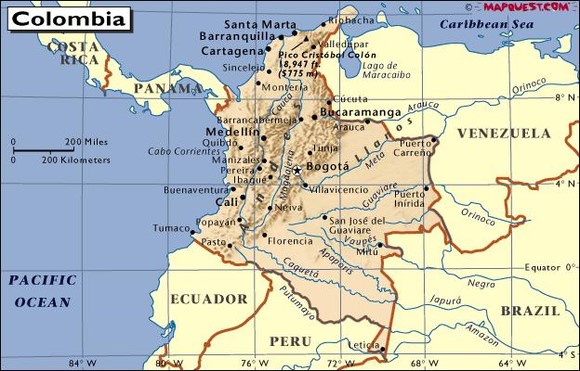
While coffee is grown nationwide, the most renowned specialty coffees come from the southern regions of Huila, Cauca, and Nariño. These areas sit at higher elevations and benefit from unique microclimates shaped by mountain ranges, rivers, and volcanic soils.
Huila, encircled by mountains and averaging over 1,500 meters in elevation, is especially notable. Several major rivers flow through the province, providing humidity and cooling breezes that prevent extreme temperatures. Volcanic ash enriches the soil, fostering nutrient-rich conditions for Arabica plants. The result is coffee with complex aromas, often featuring notes of nuts, chocolate, and intense fruitiness.
FrontStreet Coffee’s cupping team has noted that Huila beans frequently exhibit rich nutty and chocolatey scents paired with a prominent caramel sweetness. The cups are clean, smooth, and quintessentially Colombian—traits that led to including Huila in their high-value everyday blend series. Alongside other representative origins like washed Yirgacheffe, these beans let new coffee drinkers explore classic flavor profiles in accessible formats.
Why Washed Processing Highlights Regional Character
To experience the true terroir of Colombian coffee, FrontStreet Coffee recommends choosing traditionally washed (wet-processed) beans. While experimental methods—like honey or natural—can yield exotic fruit bombs, washed processing best reveals a region’s inherent flavor profile. That’s why most of FrontStreet’s entry-level offerings, including their Huila offering, are washed.
Nearly every Colombian farm has its own pulping equipment to remove the coffee cherry’s skin and pulp. The resulting mucilage-covered seeds are then fermented for around 24 hours in tiled tanks. The fermentation breaks down the sticky layer, allowing it to be washed away with flowing water. Finally, the beans are spread on patios to dry until they reach 12.5% moisture content.
This method preserves the bean’s intrinsic qualities while resulting in a cleaner, brighter cup. The washed process highlights acidity, clarity, and the subtle qualities imparted by soil and altitude—making it ideal for exploring regional differences.
What Does Huila Coffee Taste Like?
At FrontStreet Coffee, baristas tailor their brewing approach to match Huila’s prominent chocolate and nutty tones. To avoid over-extraction, they use a medium grind size and a moderate brew temperature.
Brew Recipe (for Huila Drip Coffee):
- Method: Pour-over (e.g., KONO dripper)
- Grind Size: Medium (20-size standard sieve, 75% passing rate)
- Water Temperature: 90°C
- Brew Ratio: 1:15
- Coffee Dose: 15g
- Total Water: 225g
- Method Details: Three-pour method
• First pour (bloom): Add double the coffee weight in water (30g) and let it bloom for 30 seconds.
• Second pour: Slowly add water up to 125g, pouring in small circles from the center outward.
• Third pour: When the coffee bed drops halfway, continue pouring to 225g total. Total brew time is around 2 minutes.
The resulting cup offers pronounced chocolate notes, a silky mouthfeel, and a well-rounded sweetness. There’s no harshness or off-flavor—just the clear, clean taste that has made Colombian coffee famous.
Recommended FrontStreet Beans for Exploring Colombia
For a true taste of Colombia, try FrontStreet Coffee’s Huila single origin—a washed Huila bean showcasing chocolate, hazelnut, and caramel notes with a smooth, clean finish. Also consider their Sidra, a fruit-forward lot with berry-like acidity and grape-like sweetness, and their washed Yirgacheffe for a bright, floral contrast. All are excellent representations of their regions. Freshly roasted within 5 days · Orders placed before 17:00 ship the same day · Next-day delivery across most of Guangdong Province.
FrontStreet Coffee is a long-established specialty coffee roaster in Guangzhou China, selling freshly roasted beans from its own farm in Yunnan as well as dozens of carefully selected single-origin beans from around the world for both pour-over and espresso. The products deliver consistently excellent quality and great value, with shipping within 24 hours. Guangzhou's FrontStreet Coffee shop is recommended by many coffee lovers, and the beans are now available online at the Tmall 。
Important Notice :
前街咖啡 FrontStreet Coffee has moved to new addredd:
FrontStreet Coffee Address: 315,Donghua East Road,GuangZhou
Tel:020 38364473

