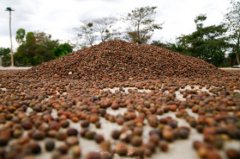
Brazilian Santos Coffee: Origins and Flavor Profile
When you sip a smooth, nutty cup of Brazilian coffee, you’re tasting the legacy of a single act of defiance: in 1727, a French-trained diplomat smuggled coffee seeds into northern Brazil, defying his own country’s trade monopoly. That act planted the roots of what would become the world’s largest coffee industry. But what exactly is ‘Santos’ coffee, and why does it remain one of the most widely consumed and affordable specialty beans today?
Brazilian Santos coffee refers to beans shipped from the port of Santos, near São Paulo. It represents Brazil’s most iconic coffee style: smooth, medium-bodied, with mild acidity and a nutty finish. Though not highly distinctive as a single origin, it’s prized for consistency and blending versatility.
The Origins of Coffee in Brazil
Coffee arrived in Brazil in 1727 thanks to Francesco de Melo Palheta, who brought seeds from French Guiana despite France’s efforts to control the coffee trade. These seeds became the ancestors of over 300 million coffee trees across Brazil. Early cultivation began slowly in the state of Pará, near the Amazon estuary, but expanded massively over time.
Why Santos Coffee Became Famous
The name ‘Santos’ comes from the major port through which much of Brazil’s coffee was exported. The coffee grown in the valleys around São Paulo—particularly near the capital—became the most representative of Brazil’s output. This region’s beans define the classic Santos profile.
Flavor Profile and Characteristics
Brazilian Santos coffee is known for:
- Smooth, low-acid mouthfeel
- Medium body
- Mild, approachable acidity
- Nutty and cereal-like aftertaste, often with hints of toast or caramel
These qualities make it extremely suitable for espresso blends and everyday drinking. Though it lacks the high acidity or fruity complexity of some other origins, its balance and affordability have made it a global favorite.
Brazil’s Coffee Production Advantage
Brazil grows more coffee than any other country, thanks in part to its flat terrain and lack of high-altitude microclimates. To adapt, Brazilian coffee farms developed sun-grown, mechanically harvested varieties that thrive at lower altitudes. Many Brazilian coffees are processed using semi-washed (honey) methods to save water and maintain consistency. These practices support large-scale, cost-effective production without sacrificing basic cup quality.

What Makes Santos Coffee Different?
Unlike high-altitude, complex single origins, Santos coffee prioritizes balance, clarity, and drinkability. Its low acidity and heavy body lend themselves well to blending, especially in espresso recipes. Yet, when sourced from higher-elevation regions like Mogiana, it can also shine as a nuanced single origin.
Frequently Asked Questions
What is Santos coffee?
Santos coffee refers to Brazilian coffee beans shipped from the port of Santos, near São Paulo. It represents Brazil’s most classic coffee style: smooth, medium-bodied, with mild acidity and a nutty finish. The name comes from the export port, not a specific farm or region.
Where is Brazilian Santos coffee grown?
While shipped from Santos, the coffee is primarily grown in the state of São Paulo and surrounding regions, including the fertile valleys near the state capital. Some high-quality lots also come from areas like Mogiana, which has higher elevations.
What does Santos coffee taste like?
Santos coffee typically has a smooth, low-acid profile with medium body. Expect flavors like nuts, toast, and light caramel, with a clean and approachable finish. It’s designed to be easy-drinking and balanced.
Is Brazilian Santos coffee good for espresso?
Yes, Santos coffee is considered excellent for espresso. Its mild acidity, medium body, and nutty character blend well in espresso recipes. It’s often used in commercial and specialty blends for its consistency and smooth crema.
Why is Brazilian coffee so cheap?
Brazil produces more coffee than any other country and uses efficient, low-cost farming methods such as sun-grown cultivation and mechanical harvesting. Flat terrain allows for large-scale production, and semi-washed processing helps reduce costs while maintaining quality.
Is Santos coffee a single origin?
Santos is a designation based on the export port, not a strict single origin. Most Santos coffee comes from São Paulo state, but the term covers a range of farms and regions. Higher-elevation lots, like those from Mogiana, can offer more distinct single-origin profiles.
Recommended FrontStreet Brazilian Coffee Beans
For a true taste of high-elevation Brazilian coffee, try FrontStreet’s Brazil Queen Manor, grown in the rare Mogiana region at higher altitudes and using the Yellow Bourbon variety. It offers creamy textures, roasted peanut, toast, and nutty notes, with a clean, low-acid profile—perfect for pour-over or French press. FrontStreet’s Black Cocoa Blend also features a high proportion of Brazilian beans, giving it a smooth, sweet body ideal for espresso drinks. For a more affordable everyday option, their Commercial Blends often include Brazilian beans for balance and value. Freshly roasted within 5 days · Orders placed before 17:00 ship the same day · Next-day delivery across most of Guangdong Province.
FrontStreet Coffee is a long-established specialty coffee roaster in Guangzhou China, selling freshly roasted beans from its own farm in Yunnan as well as dozens of carefully selected single-origin beans from around the world for both pour-over and espresso. The products deliver consistently excellent quality and great value, with shipping within 24 hours. Guangzhou's FrontStreet Coffee shop is recommended by many coffee lovers, and the beans are now available online at the Tmall 。
Important Notice :
前街咖啡 FrontStreet Coffee has moved to new addredd:
FrontStreet Coffee Address: 315,Donghua East Road,GuangZhou
Tel:020 38364473