What Are Hard Bean and Soft Bean Coffee?
When you’re browsing bags of specialty coffee, you may have seen labels like ‘HB’ or ‘SHB’ (strictly hard bean), or heard someone refer to a coffee as a ‘soft bean.’ But what does it actually mean? And does growing elevation really change how your cup tastes?
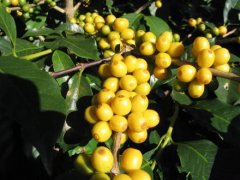
Hard bean coffee comes from higher altitudes—usually 1,200–2,000 metres—where cooler temperatures slow fruit ripening, creating denser, harder beans. Soft bean coffee typically grows at lower altitudes, under warmer conditions, leading to softer, less dense beans. This distinction is especially common in Central American coffee grading systems.
Why Elevation Changes Coffee Bean Density
Coffee plants grown at higher elevations—commonly between 1,200 and 2,000 metres above sea level—experience cooler average temperatures. This slower ripening process allows more complex sugars and acids to develop in the coffee cherry, and the beans themselves grow firmer and denser with fewer internal pores. In contrast, coffee grown at lower elevations matures faster in warmer climates, resulting in beans that are softer and less dense.
What 'Hard Bean' and 'Soft Bean' Actually Mean
In Central American coffee classification, 'hard bean' (HB) typically refers to coffee grown at around 1,200–1,400 metres, while 'strictly hard bean' (SHB) denotes higher growth at 1,400–2,000 metres. 'Soft bean' coffee, meanwhile, is cultivated at lower altitudes, generally under 1,200 metres. These terms are used to indicate bean density and, by extension, the likely concentration of acidity and flavour complexity in the roasted cup. Though not universal, this classification helps buyers and roasters assess bean quality and behaviour before roasting.
How Altitude Impacts Coffee Flavor
Because hard beans mature slowly in cooler conditions, they tend to develop higher acidity, more pronounced sweetness, and greater overall flavour complexity. That’s why high-altitude coffees often feature bright citrus, floral, or fruity notes. However, there are exceptions depending on variety, processing, and roast level. Soft beans, by comparison, usually present a softer acidity, rounder mouthfeel, and simpler flavour profiles, though many still make excellent, balanced cups.
While the hard/soft bean terminology primarily serves as a general indicator of bean density due to altitude, it remains especially relevant in regions like Central America, where it's part of the official coffee classification system.
Frequently Asked Questions
What is the difference between hard bean and soft bean coffee?
Hard bean coffee is grown at higher altitudes (typically 1,200–2,000 metres), where cooler temperatures produce denser, harder beans with higher acidity and more complex flavours. Soft bean coffee grows at lower altitudes (under 1,200 metres), resulting in softer, less dense beans with milder acidity and simpler flavour profiles.
Does hard bean coffee taste better than soft bean coffee?
Not necessarily. Hard bean coffee often has brighter acidity and more distinct flavours due to slower ripening at high altitude, but soft bean coffee can still be sweet, balanced, and enjoyable. Taste preferences vary, and both can produce excellent cups depending on origin, variety, and processing.
Why do higher altitudes produce harder coffee beans?
At higher altitudes, cooler temperatures slow the ripening of coffee cherries. This extended development time leads to denser bean structure with fewer internal air spaces, making the beans harder and often more flavourful.
Is 'SHB' the same as hard bean?
'SHB' stands for 'Strictly Hard Bean,' a term used mainly in Central America for coffee grown at the highest elevations (around 1,400–2,000 metres). It's a subcategory of hard bean that indicates even greater bean density due to cooler growing conditions.
Where is the hard bean vs soft bean classification used most?
This classification is most commonly applied in Central American countries such as Guatemala, Costa Rica, and Honduras, where altitude significantly affects bean density and is officially used in coffee grading systems.
Recommended FrontStreet Coffee for Elevation Effects
The FrontStreet Ethiopia Humbera shows the intense complexity you get from high-altitude hard beans, with bright berry and floral tones. For contrast, the FrontStreet Brazil Queen Manor offers soft bean traits with smooth nuttiness and low acidity. Both illustrate how elevation shapes coffee flavour—bright and lively from the mountains, or mellow and sweet from lower regions. Freshly roasted within 5 days · Orders placed before 17:00 ship the same day · Next-day delivery across most of Guangdong Province.
FrontStreet Coffee is a long-established specialty coffee roaster in Guangzhou China, selling freshly roasted beans from its own farm in Yunnan as well as dozens of carefully selected single-origin beans from around the world for both pour-over and espresso. The products deliver consistently excellent quality and great value, with shipping within 24 hours. Guangzhou's FrontStreet Coffee shop is recommended by many coffee lovers, and the beans are now available online at the Tmall 。
Important Notice :
前街咖啡 FrontStreet Coffee has moved to new addredd:
FrontStreet Coffee Address: 315,Donghua East Road,GuangZhou
Tel:020 38364473