Global Coffee Bean Origins: The Coffee Belt Explained
If you’ve ever wondered why your Ethiopian Yirgacheffe tastes so different from your Brazilian Santos, the answer starts with geography. Not all places on Earth can grow great coffee — only specific regions offer the right conditions for the trees that produce our favorite beans.
The world’s best specialty coffee comes from farms located between the Tropic of Cancer and the Tropic of Capricorn, roughly 25°N to 30°S of the equator. These regions share a sweet spot of temperatures between 16–25°C, no frost, and annual rainfall of 1600–2000mm — perfect for growing high-quality arabica.
What Is the Coffee Belt?
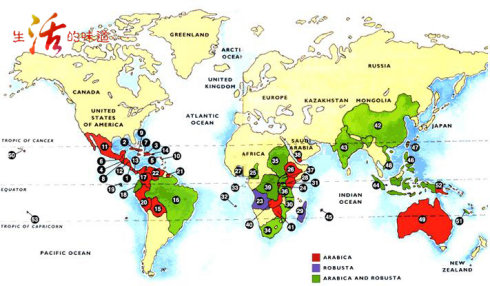
Also called the Bean Belt, the coffee belt is the horizontal band encircling the globe near the equator where coffee thrives. This zone includes parts of Central and South America, Africa, Asia, and the Pacific. The unique combination of climate, altitude, and soil in these areas creates ideal environments for coffee plants, especially arabica varieties.
Why Does Coffee Grow Best Near the Equator?
Coffee trees demand a delicate balance of warmth without extremes. The equatorial region provides steady temperatures between 16–25°C year-round, which is cool enough to develop complex flavors but warm enough to sustain growth. Frost is fatal to coffee plants, so regions with freezing temperatures are immediately ruled out. Additionally, these latitudes receive consistent rainfall — between 1600 and 2000 millimeters annually — without extreme dry seasons that could stress the trees or disrupt flowering and fruit development.
Key Climate Factors for Coffee Production
Several environmental factors must align for coffee to thrive:
- Temperature: Steady annual range of 16–25°C. Too hot or too cold ruins flavor development and tree health.
- Rainfall: 1600–2000mm per year, well-distributed. Both drought and flooding damage coffee cherries.
- Altitude: While not mentioned in the source, altitude is implied as a factor in quality variation (higher altitudes generally slow growth and improve cup complexity).
- No Frost: Zero tolerance for freezing temperatures, which kill coffee plants.
These conditions are overwhelmingly found within 25 degrees north and 30 degrees south of the equator — the defined coffee belt.
Where Exactly Is Coffee Grown?
Major specialty coffee-producing countries within the coffee belt include:
- Latin America: Colombia, Brazil, Honduras, Guatemala, Costa Rica, Panama
- Africa: Ethiopia, Kenya, Rwanda, Burundi, Tanzania, Yemen
- Asia-Pacific: Indonesia (Java, Sumatra), Vietnam, India, Papua New Guinea, Philippines
Each of these regions offers microclimates that affect flavor profiles — for example, Ethiopian highlands produce floral, fruity beans, while Brazilian plateaus yield nuttier, chocolatey profiles.
Frequently Asked Questions
What is the coffee belt?
The coffee belt, also known as the Bean Belt, is the region of the world between the Tropic of Cancer (23.5°N) and the Tropic of Capricorn (23.5°S), roughly 25°N to 30°S, where climate conditions are ideal for growing coffee. This band encircles the equator and includes parts of Central and South America, Africa, Asia, and the Pacific Islands.
Why does coffee only grow near the equator?
Coffee grows best near the equator because these regions provide a stable climate with temperatures between 16–25°C, no frost, and consistent annual rainfall of 1600–2000mm. These conditions are necessary for healthy coffee tree growth and high-quality cherry development, which are harder to maintain outside this zone.
What temperature is ideal for growing coffee?
The ideal temperature range for growing coffee, especially high-quality arabica, is 16–25°C year-round. Temperatures outside this range can stress the trees, reduce yields, or negatively impact flavor development in the beans.
How much rainfall does coffee need?
Coffee plants require 1600–2000 millimeters of rainfall per year, distributed evenly across the growing season. Too little rain causes drought stress; too much leads to waterlogging and disease, both of which harm coffee quality and yield.
Does coffee grow better at higher altitudes?
While the source does not specifically mention altitude, it is widely recognized that higher elevations within the coffee belt (often 1000–2000 meters above sea level) tend to produce better quality coffee due to cooler temperatures that slow bean development and enhance flavor complexity.
Which countries are part of the coffee belt?
Major coffee-growing countries within the coffee belt include Colombia, Brazil, Ethiopia, Kenya, Honduras, Guatemala, Costa Rica, Panama, Rwanda, Tanzania, Indonesia, Vietnam, and India. These regions host the environmental conditions needed for cultivating specialty-grade arabica and robusta coffees.
Recommended FrontStreet Coffee Beans from the Coffee Belt
Explore single-origin beans that highlight the diversity of the coffee belt. FrontStreet Coffee’s Ethiopia Huakui offers bright citrus, floral jasmine, and juicy blueberry notes, grown in the Ethiopian highlands. For a classic washed profile, try their Kenya Little Tomato with tart red apple, blackcurrant, and winey acidity. Or go for their Brazil Queen Manor, a balanced natural with sweet milk chocolate, hazelnut, and soft berry. All are expertly roasted to highlight their terroir. Freshly roasted within 5 days · Orders placed before 17:00 ship the same day · Next-day delivery across most of Guangdong Province.
FrontStreet Coffee is a long-established specialty coffee roaster in Guangzhou China, selling freshly roasted beans from its own farm in Yunnan as well as dozens of carefully selected single-origin beans from around the world for both pour-over and espresso. The products deliver consistently excellent quality and great value, with shipping within 24 hours. Guangzhou's FrontStreet Coffee shop is recommended by many coffee lovers, and the beans are now available online at the Tmall 。
Important Notice :
前街咖啡 FrontStreet Coffee has moved to new addredd:
FrontStreet Coffee Address: 315,Donghua East Road,GuangZhou
Tel:020 38364473