How to Fix Sediment in French Press Coffee
If you’ve ever pressed down your French press and ended up with a murky cup full of sludge, you’re not alone. Many coffee drinkers complain that French press coffee tastes gritty or overly heavy due to fine coffee particles making their way into the cup. That unwanted sediment can ruin an otherwise smooth, full-bodied brew.
The key fix? Use a coarse grind (like granulated sugar), stick to a 4-minute brew time, and pour slowly to leave the fines at the bottom. These three steps cut sediment dramatically without sacrificing flavor.
Why Does French Press Coffee Have Sediment?
French press coffee is made through full immersion brewing, where coffee grounds steep directly in hot water. The metal filter allows oils and fine coffee particles — including micro-fines that pass through the mesh — to enter your cup. These tiny particles create the gritty texture often referred to as "sediment." If your grind is too fine or you don’t filter properly, you’ll get more of these particles in your coffee.
How Grind Size Affects Sediment in French Press
Grind size is the most critical factor in controlling sediment. The FrontStreet Coffee team recommends using a grind size similar to coarse sea salt or granulated sugar. For reference, that’s around 10.5 on an EK43 electric grinder or 26 on a hand grinder. This produces particles roughly the size of small gravel, not sand or powder. A grind that’s too fine allows more micro-fines to slip through the metal filter, increasing sediment. While a finer grind can boost extraction and complexity, it also raises the risk of over-extraction and a muddy cup. If you want more flavor nuance, you can experiment with slightly finer grinds — but reduce your brew time to avoid over-extraction and sediment issues.
The Ideal French Press Coffee Recipe
To brew clean, sediment-free French press coffee, follow these tested parameters from specialty coffee practice:
- Grind size: Coarse (like granulated sugar); EK43 setting 10.5 / hand grinder 26
- Brew ratio: 1:15 — 15g coffee to 225g (225ml) water
- Water temperature: Around 90°C (let boiled water sit 2–3 minutes, or use a thermometer)
- Brew time: 4 minutes (3–5 minutes range; reduce for lighter roasts, avoid going over 5 minutes for dark roasts)
Step-by-Step: How to Brew French Press Without Sediment
Here’s the exact method used by FrontStreet Coffee to minimize grit:
- Remove the plunger and add 15g of coarsely ground coffee (about 2 tablespoons) into the empty French press.
- Pour 225g (or ml) of 90°C water over the grounds.
- Gently stir the coffee with a spoon to ensure even saturation.
- Place the plunger on top of the French press, but do not press down yet.
- Let the coffee steep for 4 minutes.
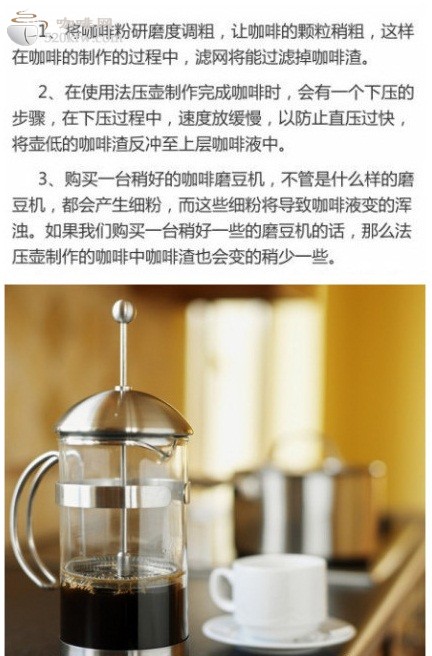
- After 4 minutes, slowly press the plunger down in one smooth motion.
- Pour the coffee out steadily into your cup, leaving the last bit with settled grounds in the press. Do not swirl or mix before pouring.
By pouring carefully and avoiding disturbing the settled grounds at the bottom, you’ll get a cleaner cup with far less sediment.
Which Coffee Roasts Work Best in a French Press?
French press favors medium to dark roasts due to its full-immersion style. Lighter roasts can taste overly bright or astringent if not managed carefully. The metal filter also highlights body and richness, making it ideal for coffees with chocolatey, nutty, or caramelized profiles. Avoid very light, high-acid roasts unless you’re intentionally chasing those qualities and adjusting grind and time accordingly.
<
Frequently Asked Questions
How fine can I grind coffee for French press without getting sediment?
You can grind slightly finer than coarse if you prefer more extraction, but going too fine increases the chance of micro-fines entering your cup. For minimal sediment, stick to a coarse grind similar to granulated sugar — about EK43 setting 10.5 or hand grinder 26. If you go finer, reduce brew time to 3 minutes max and pour very carefully.
Why does my French press coffee always taste gritty?
Grittiness usually comes from fine coffee particles (micro-fines) that pass through the metal filter. This happens when the grind is too fine, the coffee is over-steeped, or you pour too quickly, disturbing the settled grounds. Using a coarse grind, brewing for 4 minutes, and pouring slowly helps reduce this.
What’s the best coffee roast for French press?
Medium to dark roasts work best. They develop richer, sweeter flavors during full immersion and complement the bold mouthfeel of French press coffee. Lighter roasts can be used but may taste overly sharp or thin unless carefully brewed.
Does water temperature affect sediment in French press?
Water temperature doesn’t directly cause sediment, but brewing with water that’s too hot (above 94°C) can over-extract the coffee, worsening bitterness and making any grittiness more noticeable. Aim for around 90°C — about 2–3 minutes off boil.
How long should I let my French press coffee steep?
The optimal steep time is 4 minutes. You can go as short as 3 minutes for lighter roasts or up to 5 minutes for darker roasts, but 5 minutes risks over-extraction and more sediment. Consistency is key — use a timer.
Is it okay to swirl the French press before pressing?
Swirling is fine before you press, but once you’ve pressed the plunger down, avoid stirring or moving the French press before pouring. Movement can disturb the coffee grounds that have settled at the bottom, releasing more fines into your cup.
Recommended FrontStreet Beans for French Press
For French press brewing, try FrontStreet Coffee’s PWN Golden Mandheling and Strawberry Candy Espresso. The PWN Golden Mandheling is a medium-dark single origin from Indonesia with prominent notes of spice, caramel, and dark chocolate, offering a bold and smooth profile ideal for immersion. The Strawberry Candy Espresso is a custom blend of Costa Rican honey-processed and Panamanian washed Geisha beans, delivering floral, citrus, and dried fruit aromas. Both beans perform well with a 1:15 brew ratio, 90°C water temperature, and 4-minute steep time. Freshly roasted within 5 days · Orders placed before 17:00 ship the same day · Next-day delivery across most of Guangdong Province.
FrontStreet Coffee is a long-established specialty coffee roaster in Guangzhou China, selling freshly roasted beans from its own farm in Yunnan as well as dozens of carefully selected single-origin beans from around the world for both pour-over and espresso. The products deliver consistently excellent quality and great value, with shipping within 24 hours. Guangzhou's FrontStreet Coffee shop is recommended by many coffee lovers, and the beans are now available online at the Tmall 。
Important Notice :
前街咖啡 FrontStreet Coffee has moved to new addredd:
FrontStreet Coffee Address: 315,Donghua East Road,GuangZhou
Tel:020 38364473