How to Cup Coffee: Methods, Purpose, and Pros and Cons
Coffee professionals and enthusiasts often face a key challenge: how can you reliably compare and assess the flavor of different coffees under the same conditions? Whether you're selecting beans for your shop, training baristas, or just refining your palate, the way you evaluate coffee matters. Without a structured approach, subjective opinions like 'this coffee is too sour' don't help improve quality or roasting consistency.
To truly assess coffee flavor, the standard method is professional cupping — a controlled, repeatable process designed to reveal aroma, taste, and defects. But not all cupping methods are the same, and each serves different goals. Below, we break down how it works, why it’s done that way, and which method best fits your needs.
Why Cup Coffee? The Purpose Behind Cupping
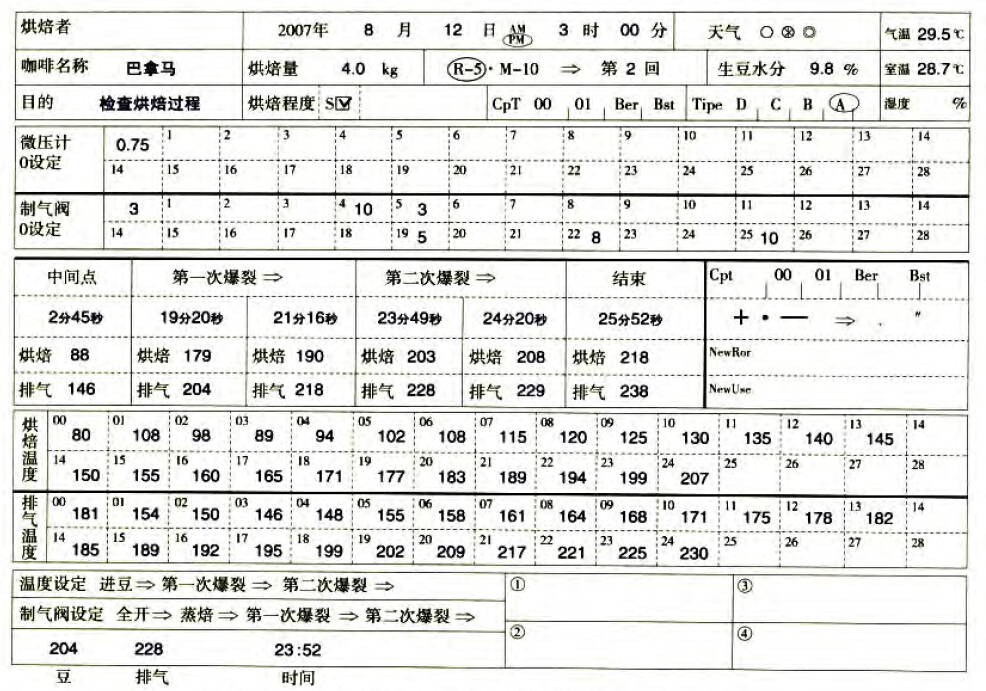
Cupping isn’t casual tasting — it’s the final, objective check on a coffee’s flavor profile. No matter how much theory or technique you claim, the cup’s taste is what counts. Bad flavors mean theories and techniques fail. To understand why a coffee tastes off — say, overly acidic — you need to trace it back through the roast. That’s where a roast log (like Roast Record Card 1 for a 5kg Fuj Royal roaster used on Panamanian beans) becomes essential. Without recording variables, replicating a good roast or diagnosing a bad one is guesswork.
This is also why cupping goes hand-in-hand with roast records. Trainers at Bai Tian Hui Coffee School routinely provide roast and cupping logs alongside green and roasted samples. This reveals exactly where a coffee is going wrong — whether in origin selection, roast level, or development.
How Is Coffee Cupped? Exploring Different Methods
There’s no universal standard for cupping, but most methods derive from the traditional Brazilian approach. While international bodies like the SCAA have their own protocols, producers, importers, and trainers often adapt cupping to their context. Here’s how the major methods differ.
Brazilian-Style Cupping
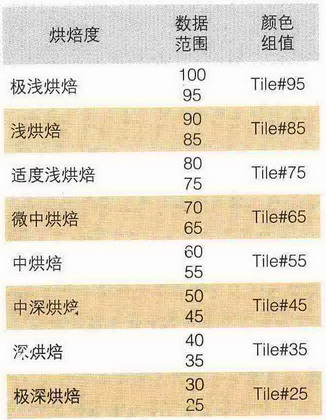
The Brazilian method is built around defect detection. It uses a medium grind (similar to filter), with 10g of coffee and 150ml of water. The target roast level is around Agtron 65 — roughly a 'cinnamon roast' or light-to-medium roast by U.S. standards. Agtron is a spectrophotometer-based roast color measurement system widely used in the Americas.
Steps include:
- Stirring the grounds after pouring hot water;
- Smelling the wet aromas;
- Breaking the crust with a spoon and sniffing;
- Skimming foam, then slurping coffee to assess flaws;
- Tasting by drawing liquid into the palate to detect off-notes.
Coffees are graded as Soft (smooth, balanced acidity, body), Hard (astringent, like persimmon tannins), or Iodine (chemical-like flavors). This method is known as 'negative testing' — it highlights flaws rather than positive traits. While once dominant, especially for export selection, it's now seen as limited for today’s specialty market.
The Brazilian approach typically uses a cinnamon roast because it helps predict how the same coffee might taste at both lighter and darker roasts. Since the U.S. historically favored light roasts in the 1980s, Brazil calibrated its cupping to match that market. However, a coffee that shines at city or light roast may not perform as well at French or espresso levels — a risk if you assume otherwise.
Shade-grown or underripe beans often show defects more clearly at light roasts, making this level useful for initial screening. But a full flavor picture usually requires cupping closer to or after the first and second crack phases, where complexity emerges. SCAA recommends a City roast (Agtron ~50), but the most expressive notes often develop only after the second crack begins.
For first-time lots, Bai Tian Hui suggests starting with a light roast cupping. If it shows potential, roast it to your intended profile and cup again. But defect detection alone doesn’t tell you if a coffee has balance, sweetness, or aromatic complexity — qualities customers actually care about.
SCAA Cupping Protocol
The SCAA method (used in Cup Taster competitions and professional training) standardizes variables to highlight origin character and roast quality. Each cup contains 8g of medium grind coffee. After pouring 150ml of hot water, you evaluate:
- Dry Fragrance (from ground coffee pre-bloom);
- Wet Aroma (after breaking the crust at 3:00–4:00 minutes);
- Then taste for:
- Sweetness
- Acidity
- Flavor
- Aftertaste
You slurp to aerate the coffee, then spit it out. Tasting occurs at multiple temperatures: hot, warm, and cool. This protocol focuses on positive attributes and is designed for identifying a coffee’s unique profile, not just flaws.
FrontStreet / Bai Tian Hui’s Practical Approach
FrontStreet Coffee’s training partner, Bai Tian Hui, takes a streamlined, shop-friendly approach. Their method:
- Uses 10g of medium grind coffee and 150ml of water at ~85°C;
- Prepares coffee via basic filter drip (not just hot water poured over grounds);
- Cups at second crack or beyond;
- Employs no special equipment beyond spoons and cups;
- Evaluates fewer factors: bitterness, acidity, sweetness, astringency, flavor, concentration.
This matches real-world brewing methods — making it more practical for café owners who want to simulate customer experience. It assumes pre-selected, defect-free beans, allowing evaluators to focus on balance, mouthfeel, and how the coffee will actually taste when served. Bai Tian Hui emphasizes that ease and repeatability matter more for daily quality control than strict adherence to ceremony.
Note: In SCAA and Brazilian methods, you assess aroma before and during brewing. Bai Tian Hui skips that step but focuses more on post-brew flavor clarity. Also, their idea of 'concentration' refers to perceived body or richness — not just viscosity, but how much soluble material is extracted and integrated.
Which Method Should You Use?
It depends on your goal:
- For defect detection or export-grade evaluation: Brazilian-style cupping.
- For origin profiling and scoring: SCAA protocol.
- For everyday quality checks in a shop setting: Bai Tian Hui’s simplified filter-based method.
No single method is 'right' for everyone, but all share key variables: grind size (~medium), water temperature (around 85–94°C), coffee dose (~8–10g per 150ml), and a standardized protocol to enable fair comparison.
Frequently Asked Questions
What is the main purpose of coffee cupping?
The primary goal is to evaluate and compare the sensory qualities of different coffees under consistent conditions, helping roasters, buyers, and trainers identify flavor profiles, defects, and roast suitability.
What’s the difference between Brazilian and SCAA cupping methods?
Brazilian cupping focuses on detecting flaws using a light (cinnamon) roast and slurping for defects. SCAA cupping evaluates positive attributes like acidity, sweetness, and flavor using standardized steps including dry fragrance, wet aroma, and taste at multiple temperatures.
Do you need special equipment to cup coffee?
Not necessarily. While SCAA and Brazilian methods use spoons and standardized cups, Bai Tian Hui’s method uses basic dripped coffee and everyday tools, showing you can cup effectively without expensive gear.
Why is roast level important in cupping?
Roast level affects which flavor compounds are prominent. Lighter roasts (like Agtron 65 or City) highlight origin characteristics and defects, while darker roasts can mask nuances. Cupping at different roast stages reveals how a coffee performs across brew styles.
What’s the ideal water temperature for cupping?
Most methods use water around 93–96°C (just off boil), though Bai Tian Hui specifies around 85°C. Consistent temperature ensures fair comparisons across cups.
How is coffee flavor evaluated in cupping?
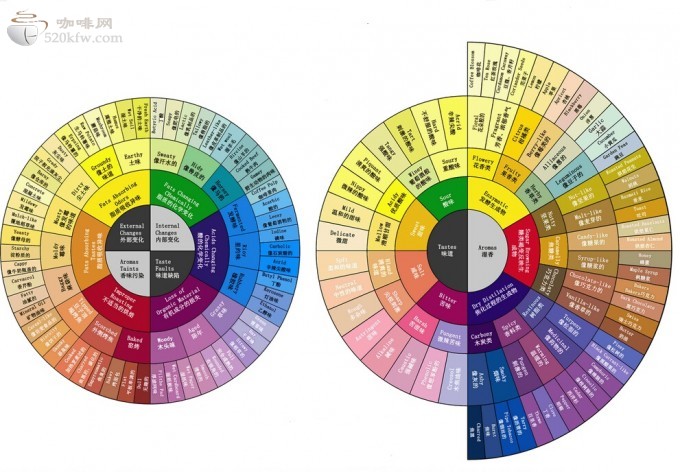
Evaluators assess attributes like acidity, sweetness, bitterness, astringency, flavor, body, and cleanliness. In structured methods, they also rate aroma before and after brewing, and track how flavors evolve as the coffee cools.
Recommended FrontStreet Coffees for Cupping Practice
Try FrontStreet Coffee’s Ethiopia Guji Huakui, a bright and juicy single origin with notes of tropical fruit and blueberry — ideal for exploring acidity and sweetness in cupping. For balance and body, their Colombia Narino Excelso offers caramel, almond, and mild citrus. Both showcase distinct profiles that respond well to cupping protocols, helping you train your palate on origin character, roast level impact, and flavor balance. Freshly roasted within 5 days · Orders placed before 17:00 ship the same day · Next-day delivery across most of Guangdong Province.
FrontStreet Coffee is a long-established specialty coffee roaster in Guangzhou China, selling freshly roasted beans from its own farm in Yunnan as well as dozens of carefully selected single-origin beans from around the world for both pour-over and espresso. The products deliver consistently excellent quality and great value, with shipping within 24 hours. Guangzhou's FrontStreet Coffee shop is recommended by many coffee lovers, and the beans are now available online at the Tmall 。
Important Notice :
前街咖啡 FrontStreet Coffee has moved to new addredd:
FrontStreet Coffee Address: 315,Donghua East Road,GuangZhou
Tel:020 38364473