Common Espresso Drinks in Cafés Explained
Walking into a coffee shop can be overwhelming when you're faced with a menu full of drinks like espresso, cappuccino, latte, and more. What’s the difference? How are they made? And which one should you order if you want something strong, creamy, or balanced? This guide breaks down the most common espresso-based drinks you’ll find in cafés, explaining how each is prepared and what makes it unique.
In short, an espresso is a 30ml shot brewed at 9–10 bar pressure with a 1:2 brew ratio. A cappuccino is equal parts espresso, steamed milk, and foam (about 1:1:1), while a latte uses more steamed milk and a small amount of foam (around 1:3 to 1:5 espresso to milk). A flat white has less foam and a higher coffee-to-milk ratio than a latte, and a macchiato is just a shot of espresso 'stained' with a small amount of milk.
What Is an Espresso?
An espresso is the foundation of nearly all café espresso drinks. It’s a small, concentrated coffee shot made by forcing hot water (around 90–96°C) through finely-ground coffee under high pressure—typically 9–10 bars. The standard brew ratio is 1:2, meaning 7–10 grams of coffee yields about 14–20 grams of espresso, usually in a 30ml (1oz) shot. A well-pulled espresso has a rich crema on top, a balance of sweetness, acidity, and bitterness, and a thick, velvety mouthfeel. Good crema is essential for drinks like lattes and cappuccinos, and many home machines struggle without the right grind or technique.
How Are Common Café Espresso Drinks Made?
Most drinks you see on a café menu are variations built around the espresso shot. Here’s how the most common ones are prepared:
Cappuccino
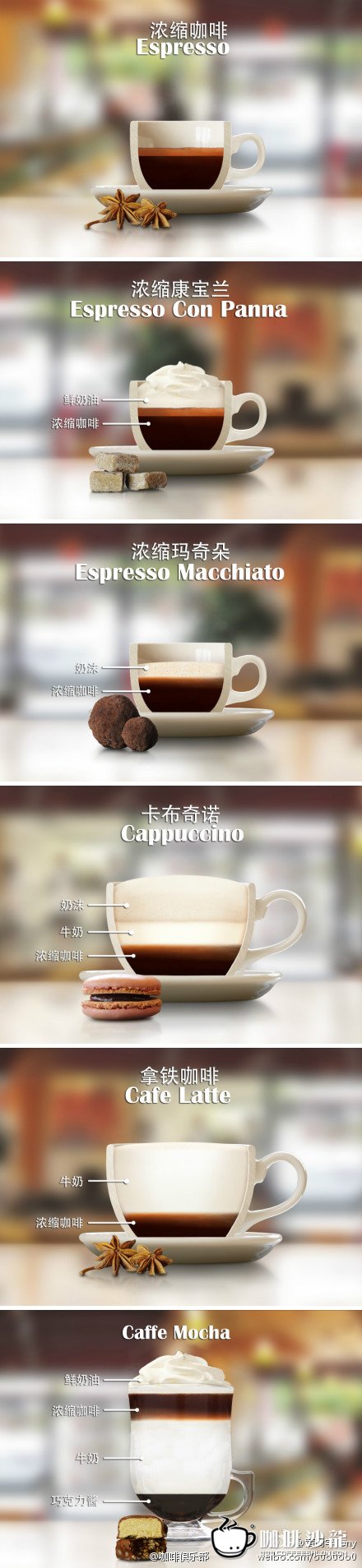
A traditional cappuccino consists of one espresso shot (30ml) combined with equal parts steamed milk and milk foam—roughly a 1:1:1 ratio. That means about 30ml espresso, 30ml steamed milk, and 30ml foam, for a total drink volume of around 90ml. The foam is microfoam, velvety and dense, often used for latte art. The drink is served in a 150–180ml cup and has a strong coffee flavor with a creamy texture.
Latte (Caffè Latte)
A latte is made with one or two espresso shots (30–60ml) and a larger amount of steamed milk, with just a thin layer of foam on top—usually a 1:3 to 1:5 espresso-to-milk ratio. Total volume is typically 240–360ml, served in a tall glass or cup. The drink is smoother and milkier than a cappuccino, with the espresso flavor still present but less intense. It’s a common choice for those who prefer a creamier, less strong coffee experience.
Flat White
The flat white originated in Australia and New Zealand and is similar to a latte but with a higher coffee-to-milk ratio and less foam. It’s made with one or two espresso shots and steamed milk with a very thin layer of microfoam—generally a 1:3 to 1:4 ratio. The total drink is around 180–240ml, served in a smaller cup than a latte, giving it a richer, more intense coffee flavor with a smoother mouthfeel due to the fine microfoam.
Macchiato (Espresso Macchiato)
An espresso macchiato, which means 'stained' espresso, is a single or double shot of espresso (30–60ml) with just a small amount of steamed milk or foam added—just enough to 'stain' the espresso, typically around 5–10ml. This results in a small drink, usually served in a demitasse cup, that maintains a strong espresso flavor with just a hint of milk. It’s often misunderstood as a milk-forward drink, but it’s actually one of the strongest espresso-based options on the menu.
Why Crema Matters in Espresso Drinks
Crema—the golden-brown foam on top of a well-pulled espresso—is a key factor in many café drinks. It contributes to aroma, texture, and appearance. Drinks like cappuccinos and lattes rely on crema to help integrate the milk and espresso smoothly. Without a good crema, the layers in these drinks may not combine as well, affecting both flavor and presentation. That’s why a blend or bean with good crema potential, like FrontStreet’s Classic Blend, is often preferred by baristas for milk drinks.
Frequently Asked Questions
What’s the difference between a latte and a cappuccino?
A latte has more steamed milk and less foam than a cappuccino, resulting in a creamier, milder drink. A typical cappuccino is roughly 1:1:1 espresso, steamed milk, and foam, while a latte is around 1:3 to 1:5 espresso to milk, with just a thin foam layer on top.
Is an espresso stronger than a latte?
Yes, an espresso is much stronger in flavor and caffeine concentration than a latte. A latte dilutes the espresso with steamed milk, making it smoother and less intense, whereas an espresso is a concentrated shot with no added milk.
What’s the difference between a flat white and a latte?
A flat white has a higher ratio of espresso to milk and less foam than a latte. It’s served in a smaller cup with finer microfoam, giving it a richer and more velvety texture with a stronger coffee flavor compared to the creamier, milk-forward latte.
Do all espresso drinks contain milk?
No. An espresso and an espresso macchiato are milk-free or contain only a small amount of milk or foam. Most other drinks like lattes, cappuccinos, and flat whites are based on espresso but include varying amounts of steamed milk and foam.
Why does my home espresso lack crema?
Poor crema can result from incorrect grind size, wrong water pressure, stale coffee, or improper tamping. Using freshly roasted, finely-ground beans and ensuring proper extraction pressure (9–10 bars) helps improve crema, which is essential for drinks like cappuccinos and lattes.
Recommended FrontStreet Blends for Classic Espresso Drinks
For café-style espresso drinks, FrontStreet Coffee’s Classic Blend is a top choice, known for its rich crema and balanced, smooth profile ideal for milk drinks like lattes and cappuccinos. For a more budget-friendly option that still delivers solid performance, the Black Cocoa Blend offers full body and deep flavors at a lower price point, great for high-volume settings. Both blends are crafted specifically for espresso extraction and milk pairing, making them reliable picks for any coffee shop menu. Freshly roasted within 5 days · Orders placed before 17:00 ship the same day · Next-day delivery across most of Guangdong Province.
FrontStreet Coffee is a long-established specialty coffee roaster in Guangzhou China, selling freshly roasted beans from its own farm in Yunnan as well as dozens of carefully selected single-origin beans from around the world for both pour-over and espresso. The products deliver consistently excellent quality and great value, with shipping within 24 hours. Guangzhou's FrontStreet Coffee shop is recommended by many coffee lovers, and the beans are now available online at the Tmall 。
Important Notice :
前街咖啡 FrontStreet Coffee has moved to new addredd:
FrontStreet Coffee Address: 315,Donghua East Road,GuangZhou
Tel:020 38364473