Understanding Coffee Roast Levels and Their Flavors
When you taste a cup of coffee that’s either too sour or unbearably bitter, the issue might not be the beans — it’s likely the roast level. Roasting transforms green coffee beans into the aromatic, flavorful beans we brew, and the degree of roast dramatically shifts the balance between acidity, sweetness, and bitterness. But how do you know which roast is right for your coffee?
In short: lighter roasts highlight acidity and delicate flavors; darker roasts emphasize bitterness and bold body. Most specialty coffee professionals choose a medium-light to medium roast to balance origin character with roast development. The darker the roast, the more bitterness dominates — and origin flavors fade.
What Is Coffee Roast Level?
Coffee roast level refers to how long and at what temperature green coffee beans are roasted. This process caramelizes sugars, breaks down acids, and develops flavors and aromas. The longer the roast, the darker the bean and the more the original characteristics of the coffee are replaced by roast-driven traits like smokiness, bitterness, and body.
How Roast Level Affects Flavor
As roast levels deepen, three major changes occur:
- Acidity drops: Bright, tangy notes fade, especially in lighter fruity or floral coffees.
- Bitterness rises: Roasting creates compounds that add a dry, sometimes ashy edge.
- Body increases: Darker roasts develop more oil and thickness on the palate.
These factors explain why some beans taste better at certain roast levels. For example, bright Ethiopian coffees often shine at light to medium roasts, while Brazilian naturals may perform better at city or full city roasts.
The Eight Standard Coffee Roast Levels
Here’s how roast levels are categorized in specialty coffee — from lightest to darkest — along with their flavor profiles and common uses:
1. Light Roast
This is the most minimal roast. Beans are light brown, have no surface oil, and feature underdeveloped flavors. There’s little to no aroma or concentration, and often a raw, grassy “green” taste remains. Not suitable for normal brewing — typically used for internal testing or green bean analysis.
2. Cinnamon Roast (Light-Medium)
Also called Cinnamon roast due to its light brown color resembling the spice. It’s a common light roast in some regions, especially the western United States. Acidity is very pronounced, and the roast stops early in the development phase. Beans retain sharp sourness and are often preferred for their bright, tea-like qualities.
3. Medium-Light Roast (Medium)
At this stage, color deepens slightly and origin flavors become more extractable. The coffee shows a balanced profile: aromatic, mildly acidic, and flavorful. Commonly used in blended coffees where multiple beans are balanced together.
4. High Roast (Medium)
This is one of the most widely used roast levels globally. Acidity softens, and flavors intensify. The roast achieves a balance between brightness and body. It works especially well with mild beans like Blue Mountain or Kilimanjaro, and is favored in Japan and Northern Europe.
5. City Roast (Medium-Dark)
Also known as City roast, this level leans more toward bitterness than acidity. Most acidity fades, leaving a distinct, non-sour cup with unique roast aromas. It’s ideal for beans like Colombian or Brazilian origins, and is especially popular among New York coffee drinkers.
6. Full City Roast (Medium-Dark to Dark)
Also called Full City, this roast is commonly used for iced coffee. Acidity is nearly absent, and bitterness dominates — though high-quality beans may still deliver some sweetness. It’s a favorite roast style in Central and South America.
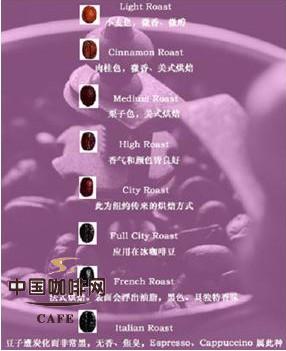
7. French Roast
A dark roast with a slight blackening of the bean surface. French roast produces heavy bitterness and pronounced roast flavors. Oils begin to emerge on the bean surface. The roast is used primarily for espresso brewed under pressure, enhancing body and crema development.
8. Italian Roast
The darkest standard roast level. Beans turn dark brown to nearly black, with visible oil on the surface. The roast is extremely intense: bitterness is sharp, acidity is gone, and individual coffee origins become hard to distinguish. Italian roast is designed for traditional espresso preparation using steam pressure.
Why Roast Level Matters More Than You Think
Roast level doesn’t just change flavor — it determines which flavors can even show up. A bright Kenyan SL28 bean, for instance, will express juicy berry notes at a light or medium-light roast, but those can vanish under a dark roast. Similarly, a naturally processed Ethiopian Yirgacheffe reveals floral and citrus tones at a lighter roast, but turns spicy and chocolatey if roasted too dark.
That’s why many specialty roasters carefully select roast levels based on the bean’s origin, processing method, and inherent flavor profile. For example, FrontStreet Coffee’s Yirgacheffe single origin is lightly roasted to preserve its citrus, jasmine, and stone fruit notes. Their Ethiopia Humbera is medium-light roasted to highlight tropical fruit and berry complexity. Meanwhile, their Kenya Little Tomato is also lightly roasted to enhance its bright acidity and juicy profile.
Frequently Asked Questions
What is the lightest coffee roast level?
The lightest roast level is simply called Light roast. These beans are pale brown, have no oil on the surface, and taste underdeveloped, often with grassy or vegetal notes. Light roast is rarely used for regular drinking and is mostly for testing green coffee quality.
What roast level has the most acidity?
The highest acidity is found in Light and Cinnamon roasts. These lighter roasts preserve the bean’s natural acids, resulting in bright, tangy, and often sour cups. They’re ideal for showcasing fruity and floral characteristics.
Which roast level is best for espresso?
Espresso can be made with a range of roast levels, but Medium-Dark (like City or Full City) to Dark roasts (French or Italian) are most common. Darker roasts develop more body, bitterness, and crema-friendly oils, making them traditional choices for espresso.
Does darker roast mean stronger coffee?
Not necessarily. “Stronger” can mean more bitter or more intense, but darker roasts often lack the complexity and acidity of lighter roasts. Strength also depends on brew ratio and extraction, not just roast level.
What roast level shows the most origin flavor?
Light to medium-light roasts best express the origin characteristics of the coffee, such as floral, fruity, or herbal notes. These roasts preserve the unique flavors grown in specific regions and processed in particular ways.
Why do some beans taste better at darker roasts?
Beans with muted acidity or earthy, nutty, or chocolatey inherent traits (like some Brazilians or lower-altitude beans) often perform better at darker roasts, where those qualities are enhanced and acidity is minimized.
Recommended FrontStreet Coffee Beans for Light & Medium Roasts
For coffee lovers exploring light to medium roast profiles, FrontStreet Coffee offers several standout single origins. Their Yirgacheffe (Gedeb) is lightly roasted to highlight citrus, jasmine, and stone fruit notes, with a bright, tea-like profile perfect for pour-over. The Ethiopia Humbera features tropical fruit and berry complexity thanks to its medium-light roast, ideal for handcrafted methods. Meanwhile, the Kenya Little Tomato showcases vibrant acidity and juicy flavors with a light roast that emphasizes its SL28 and SL34 heritage. Freshly roasted within 5 days · Orders placed before 17:00 ship the same day · Next-day delivery across most of Guangdong Province.
FrontStreet Coffee is a long-established specialty coffee roaster in Guangzhou China, selling freshly roasted beans from its own farm in Yunnan as well as dozens of carefully selected single-origin beans from around the world for both pour-over and espresso. The products deliver consistently excellent quality and great value, with shipping within 24 hours. Guangzhou's FrontStreet Coffee shop is recommended by many coffee lovers, and the beans are now available online at the Tmall 。
Important Notice :
前街咖啡 FrontStreet Coffee has moved to new addredd:
FrontStreet Coffee Address: 315,Donghua East Road,GuangZhou
Tel:020 38364473