How to Grind Specialty Coffee Beans for the Best Brew
If you’ve ever wondered why your home-brewed coffee doesn’t taste like the café’s, the answer might start with how you grind your beans. Even with great coffee, the wrong grind size can ruin your cup—making it sour, bitter, weak, or harsh. The real question is: what grind size works best for your brewing method, and why does it matter so much?
The short answer: there’s no universal ‘best’ grind. But generally, espresso needs a fine, powdery grind (extracted in 20–25 seconds), while French press calls for a coarse grind. For pour-over, aim for a medium-fine grind, around the size of table salt. Your ideal grind depends entirely on brew time, water flow, and extraction balance.
Why Grinding Matters More Than You Think
Coffee grinding is where flavor extraction begins. The moment you break a coffee bean into smaller particles, you expose its inner compounds to water. But grind too fine, and you risk over-extraction—resulting in bitter, harsh flavors. Grind too coarse, and water flows through too fast, pulling out only the light, acidic compounds and leaving the richer flavors behind.
Back in the day, people in the Middle East used to crush coffee beans by hand with a mortar and pestle. Surprisingly, one early 19th-century experiment by French food writer Brillat-Savarin found that many tasters actually preferred the flavor of crushed (unevenly ground) coffee over uniformly machine-ground coffee—though today’s precision grinders have largely closed that gap.
Common Grind Sizes and Their Uses
Different brewing methods demand different grind sizes. Here’s a quick guide:
- Powdered (very fine): Similar to powdered sugar. Too fine for most methods, but can over-extract quickly. Not generally recommended unless for specific traditional brews.
- Very fine: Like flour. Used for electric drip machines or commercial batch brewers. Extracts a strong, bold cup, common in restaurants or offices.
- Fine: About the texture of table salt or granulated sugar. Ideal for espresso or methods with short brew times (20–30 seconds). Creates a rich crema and bold flavors when dialed in right.
- Medium-fine: Slightly coarser than table salt. Great for pour-over cones like V60 or Kalita Wave. Allows balanced extraction in 2–3 minutes.
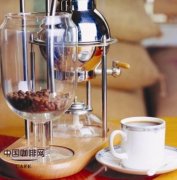
- Medium: Comparable to coarse sand. Works well for drip coffee makers, siphon brewers, or some home espresso machines. Produces a strong, full-bodied cup but may clog fine filters.
- Medium-coarse: Like coarse sand or sea salt flakes. Suitable for Chemex or larger pour-over devices. Offers a cleaner cup with slightly less body.
- Coarse: Similar to kosher salt or small pebbles. Perfect for French press or cold brew. Allows slow extraction over several minutes without over-extracting bitter elements.
Types of Coffee Grinders and Their Pros and Cons
Not all grinders are created equal. The tool you use has a huge impact on grind consistency, which directly affects taste.
- Electric blade grinders (common home models): These resemble mini blenders with spinning blades. They chop beans unevenly, creating a mix of powder and chunks—leading to uneven extraction. Avoid if you’re serious about flavor.
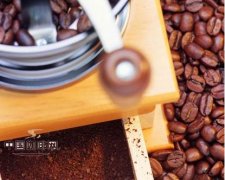
- Manual hand grinders: Compact, affordable, and often beautifully designed. While slower, many models offer consistent grind sizes, especially at medium to coarse settings. Great for pour-over, French press, or travel.
- Entry-level electric burr grinders: Found in many homes, these can produce a range of grind sizes. Some use flat or conical burrs that create more uniform particles than blades. Good for drip coffee or basic espresso.
- Professional-grade electric burr grinders: Found in cafés, these offer fine-tuned control, fast grinding, and consistent particle size. Essential for espresso where extraction time is short (20–25 seconds) and grind size must be exact.
- Espresso grinders with flat or conical burrs: The burr shape affects particle uniformity. Conical burrs tend to be quieter and produce slightly less heat, while flat burrs offer a more even grind. Both require micro-adjustments for dialing in espresso.
Cheap grinders with spinning blades cut beans into inconsistent shapes—often square—and don’t allow for precise adjustments. Burr grinders, on the other hand, crush beans between two abrasive surfaces, producing uniform particles critical for balanced extraction. High-end espresso grinders often feature stepless or micro-adjustment settings to fine-tune grind size for optimal shot quality.
Frequently Asked Questions
What’s the best grind size for espresso?
The best grind size for espresso is very fine—almost powdery—with uniform particles. It should extract in about 20–25 seconds under 9 bars of pressure. Too coarse, and the shot runs too fast, tasting weak and sour. Too fine, and it over-extracts, becoming bitter and harsh. A quality burr grinder with micro-adjustments is highly recommended.
Can I use a blade grinder for specialty coffee?
You can, but it’s not ideal. Blade grinders chop beans unevenly, creating a mix of fine powder and large chunks. This inconsistency leads to uneven extraction, resulting in a cup that’s both sour and bitter at once. For better results, use a burr grinder—manual or electric.
What grind size is best for pour-over coffee?
For pour-over methods like V60 or Kalita Wave, a medium-fine grind is ideal—similar to table salt. This allows for balanced water flow and even extraction during a 2–3 minute brew. Adjust finer for a stronger cup or coarser for faster flow.
Is a hand grinder good enough for daily use?
Yes, especially for filter methods like pour-over, French press, or AeroPress. Many manual grinders offer consistent grind sizes and are portable. They may be slow, but they’re capable of producing excellent results for single cups or small batches.
Does grind size affect coffee flavor?
Absolutely. Grind size determines how quickly water extracts flavors from coffee grounds. The wrong size leads to under- or over-extraction, causing sour, weak, bitter, or harsh flavors. Consistent, properly sized grounds are key to a balanced cup.
What’s the difference between burr and blade grinders?
Blade grinders chop beans with spinning blades, producing uneven particle sizes. Burr grinders crush beans between two abrasive plates, creating a uniform grind size—essential for balanced flavor. Burr grinders are strongly preferred for any serious coffee brewing.
Recommended FrontStreet Coffee Beans for Hand Grinding
For hand grinding, try FrontStreet Coffee’s Yirgacheffe Red Cherry for bright, fruity complexity with sweet berry and creamy notes; the Strawberry Candy Espresso blend offers floral and caramel sweetness ideal for pour-over or moka pot; and the Yellow Bourbon Brazilian bean brings smooth nuttiness and chocolate tones, great for French press or drip. Freshly roasted within 5 days · Orders placed before 17:00 ship the same day · Next-day delivery across most of Guangdong Province.
FrontStreet Coffee is a long-established specialty coffee roaster in Guangzhou China, selling freshly roasted beans from its own farm in Yunnan as well as dozens of carefully selected single-origin beans from around the world for both pour-over and espresso. The products deliver consistently excellent quality and great value, with shipping within 24 hours. Guangzhou's FrontStreet Coffee shop is recommended by many coffee lovers, and the beans are now available online at the Tmall 。
Important Notice :
前街咖啡 FrontStreet Coffee has moved to new addredd:
FrontStreet Coffee Address: 315,Donghua East Road,GuangZhou
Tel:020 38364473