What Conditions Do Coffee Trees Need to Grow?
If you’ve ever wondered why your favorite specialty coffee tastes the way it does, part of the answer lies far from your cup — in the remote highlands and tropical slopes where coffee trees grow. But not all environments can produce great coffee. So, what does it really take to grow coffee trees successfully?
To grow high-quality coffee, trees need temperatures between 15–25°C, annual rainfall of 1500–2000 mm timed with flowering, well-drained volcanic soils, and altitudes between 500–2000 meters. These strict environmental factors directly affect coffee flavor and yield.
What Is a Coffee Tree?
The coffee plant (Coffea arabica Linn) is a perennial evergreen shrub or small tree from the Rubiaceae family. In the wild, it can reach 5–10 meters tall, but on farms it’s pruned to under 2 meters to boost yields and ease harvesting. Its oval, glossy leaves grow in opposite pairs, with white flowers blooming at leaf joints. The fruit — known as the coffee cherry — looks like a bright red cherry and contains two seeds: your coffee beans.
There are three main commercial species: Arabica, Robusta, and lesser-known types like Liberica. Arabica (Coffea arabica), the most prized, grows best at higher altitudes and produces a sweeter, more complex cup with less caffeine. Robusta (Coffea canephora), hardier and more disease-resistant, is mostly used in instant coffee due to its harsher, more bitter taste and higher caffeine content (2–3x that of Arabica).
The Two Main Coffee Species
Arabica and Robusta differ visibly and in flavor. Arabica beans are oval and have a sinuous groove, resembling a peanut half. In contrast, Robusta beans are rounder, with a straight crease and a more bean-like shape, similar to soybeans.
Robusta grows well at low altitudes and produces higher yields, but its flavor profile is considered inferior — more bitter, less nuanced. Arabica, on the other hand, thrives at elevations around 1000–2000 meters in fertile, well-drained soils. It requires a stable rainy season, moderate temperatures (not too hot or cold), and often shade from taller trees to diffuse intense sunlight. Without proper shade or climate, farmers must plant additional trees to protect the coffee.
Night temperatures around 10°C are ideal; too warm leads to fast cherry development and poor bean density, while frost can kill the plants. That’s why the best Arabica regions lie within the “Coffee Belt” — areas between the Tropics of Cancer and Capricorn that also have high-altitude terrain.
Where Did Coffee Originate?
Coffee cultivation began in Ethiopia’s Kafa Forest region over a thousand years ago. Legends say a 9th-century Ethiopian goat herder noticed his flock became unusually energetic after eating red berries from a certain bush. After trying them himself, he experienced a similar buzz — thus coffee was discovered.
By the 15th century, coffee had spread to the Arabian Peninsula, Europe, Asia, and the Americas. Brazil eventually became the world’s largest producer, but Ethiopia remains the genetic home of Arabica coffee. Today, coffee is grown in 76 countries, with global production reaching 5.5 million tons annually by the 1980s.
China began cultivating coffee in the late 19th century, first in Taiwan, then Hainan and Yunnan. Yunnan, in particular, has earned international praise for its high-quality Arabica, especially from regions like Baoshan, Dehong, Pu’er, and Lincang. The province’s high elevation, volcanic soils, cool nights, and large diurnal temperature shifts contribute to its distinctive cup profiles.
Coffee Tree Anatomy: From Flower to Cherry
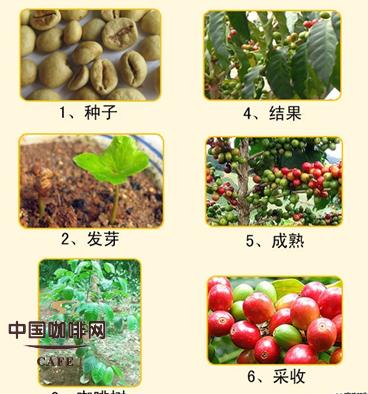
A coffee tree typically begins flowering around its third year. The five-petaled, jasmine-scented white blossoms grow in dense clusters and fall after just two or three days. Several months later, green coffee cherries form, turning yellow, then red when ripe — hence the nickname “cherry coffee.”
Each cherry usually holds two coffee beans lying flat against each other. The beans are encased in a thin membrane called the silverskin, surrounded by a yellowish parchment layer (endocarp), all embedded in sweet, sticky pulp. This entire structure must be carefully processed to extract the green beans used for roasting.
The Ideal Coffee Growing Conditions
High-quality coffee needs very specific growing conditions:
- Temperature: 15–25°C year-round. Too hot or cold affects growth and bean density.
- Rainfall: 1500–2000 mm annually, timed to match flowering and fruit development cycles.
- Soil: Well-drained, fertile, ideally volcanic. Drainage is critical to prevent root diseases.
- Altitude: 500–2000 meters. Higher altitudes slow growth, increasing sugar and acid development in beans.
- Sunlight: Moderate. Direct sun can be harmful; shade trees are often planted to filter light.
These variables don’t just influence yield — they define flavor. Coffee grown at higher altitudes with cooler temps tends to be more complex, acidic, and aromatic. That’s why regions like Ethiopia, Colombia, and Yunnan are famed for producing some of the world’s most sought-after beans.
Frequently Asked Questions
What temperature range is best for growing coffee trees?
The optimal temperature for coffee trees is between 15–25°C. Temperatures outside this range can stress the plant, reducing bean quality and yield. Too hot encourages rapid growth with poor flavor development, while cold can stunt growth or cause frost damage.
How much rainfall do coffee trees need?
Coffee trees require 1500–2000 mm of rain per year, and it must align with the plant’s flowering and fruiting cycles. Rainfall patterns are crucial — dry periods during flowering or excessive rain during harvest can ruin crops.
What altitude is ideal for growing Arabica coffee?
Arabica coffee grows best at elevations between 1000–2000 meters. Higher altitudes slow maturation, leading to denser beans with more complex flavors. This is why highland regions are ideal for specialty Arabica production.
Does soil type affect coffee quality?
Yes. Coffee needs well-drained, fertile soils, preferably volcanic, which provide essential nutrients and good root aeration. Poor drainage leads to root diseases and weak trees, directly impacting yield and cup quality.
Why are shade trees planted in coffee farms?
Shade trees reduce direct sunlight, which can harm coffee trees. They help regulate temperature, improve microclimates, and often enhance biodiversity. This is especially important at lower altitudes or in sun-intensive regions.
Where did coffee originally come from?
Coffee originated in the Kafa Forest region of Ethiopia. The earliest cultivation began there, and wild coffee forests still exist in the area. The word “coffee” is derived from “Kaffa,” the Ethiopian province where it was first discovered.
Recommended FrontStreet Beans for Coffee Tree Enthusiasts
Explore the terroir behind your cup with FrontStreet Coffee’s Yunnan offerings. The FrontStreet 2013 Yunnan Typica is a sun-dried classic with juicy citrus, berry tones, and a creamy finish, showcasing the old-school profile of Yunnan’s original Arabica. For a cleaner, more balanced introduction, try the FrontStreet Yunnan Washed — a medium-roast, water-processed coffee with notes of caramel and tropical fruit, highlighting the region’s volcanic soil and cool highland air. Both beans reflect the unique growing conditions of China’s prime coffee zone. Freshly roasted within 5 days · Orders placed before 17:00 ship the same day · Next-day delivery across most of Guangdong Province.
FrontStreet Coffee is a long-established specialty coffee roaster in Guangzhou China, selling freshly roasted beans from its own farm in Yunnan as well as dozens of carefully selected single-origin beans from around the world for both pour-over and espresso. The products deliver consistently excellent quality and great value, with shipping within 24 hours. Guangzhou's FrontStreet Coffee shop is recommended by many coffee lovers, and the beans are now available online at the Tmall 。
Important Notice :
前街咖啡 FrontStreet Coffee has moved to new addredd:
FrontStreet Coffee Address: 315,Donghua East Road,GuangZhou
Tel:020 38364473