How to Identify Coffee Roast Levels by Sight, Sound and Smell
If you’ve ever wondered why one bag of coffee tastes bright and citrusy while another is smoky and bitter, the answer often comes down to how the beans were roasted. But how can you tell a light roast from a dark roast, or know when your roaster hits the ideal level? Understanding the visual, auditory, and aromatic cues of coffee roasting can help you identify roast levels like a pro.
The simplest way to judge roast level is by listening for two key sounds—first crack and second crack—and observing color and aroma. First crack, occurring around 7 minutes in, signals the start of light roasting, while the more intense second crack, around 12 minutes, indicates a darker roast. Roast color ranges from light grayish-tan to deep brown or black, and aromas evolve from grassy to sweet, then to smoky and intense.
How Roasters Judge Roast Level: Color, Sound and Agtron
Coffee roasters rely on three main indicators to assess roast development: sound, color, and aroma. As green coffee beans roast, they go through two audible cracking stages. The first crack begins roughly 7 minutes in, producing low, cracking sounds that indicate moisture evaporation and starch converting to sugars. This marks the start of light roasting. Around 12 minutes in, the second crack occurs—sharp and loud—which signals the breakdown of bean cell structure and a move into darker roasts. Visually, beans shift from light grayish-tan to deep brown or black. Aromas also evolve: starting faint and grassy, becoming more vibrant and sweet, then turning rich, chocolaty, and eventually smoky. Roasters also use Agtron readings—a spectrophotometric measurement from 0 (very dark) to 100 (very light)—to quantify surface color and caramelization levels objectively. Higher Agtron numbers mean lighter, less caramelized roasts, and lower numbers indicate darker, more developed roasts.
Understanding the 8 Standard Coffee Roast Levels
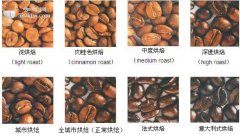
In the specialty coffee world, roast levels are commonly grouped into three broad categories—light, medium, and dark—but they can be broken down further into eight distinct stages. Each level has specific roast timing, color, flavor attributes, and typical usage. These stages help roasters and coffee drinkers understand how roast level affects taste and brewing potential.
1. Light Roast
Also called “Cinnamon Roast” in some regions, this is roasted from the start of first crack until just before it becomes intense. Beans appear pale tan to light cinnamon color. Flavor notes are grassy, with sharp acidity and underdeveloped sweetness. This roast is rarely used for drinking and more for green bean evaluation.
2. Cinnamon Roast
Roasted from the beginning to the peak of first crack. The beans show a cinnamon-brown hue. The grassiness fades, leaving a bright acidity and mild aroma. Common for brewed coffee, especially American-style.
3. Medium Roast
Roasted between the peak and end of first crack. The color is light to medium brown, resembling a chestnut. Acidity is present with some bitterness, balanced flavor, and moderate aroma. Often used for both single-origin and blended coffee. Retains more of the bean’s origin character.
4. High Roast
Roasted right at the end of first crack. The beans turn a light reddish-brown. Offers a clean, bright cup with balanced acidity and slight sweetness. Popular in Japan and Central/Northern Europe. Well-suited for beans like Blue Mountain and Kilimanjaro.
5. City Roast
Roasted just after first crack and before second crack begins. Beans are light brown. The cup is vibrant and balanced, with a softer acidity and more clarity of origin flavors. A very popular general-purpose roast, suitable for Brazilian and Colombian beans, often used in French-style coffee.
6. Full City Roast
Roasted to the beginning of second crack. Beans are medium brown. The flavor is richer and fuller, with stronger bitterness than acidity, a sweet finish, and bold aroma. Common in Latin American-style roasting. Ideal for black coffee and iced coffee.

7. French Roast
Roasted through the dense phase of second crack. The beans are dark brown to nearly black. Intense bitterness dominates, acidity is nearly gone, and flavors include deep chocolate and smokiness. Popular in France and other European countries, often used in Viennese coffee and café au lait.
8. Italian Roast
Roasted from the end of second crack until the beans become oily and black. Beans appear black with an oily sheen. The cup is harsh, complex, and dominated by bitterness with strong roasty and burnt notes. Primarily used for making espresso in Italy and Latin America.
How Roast Level Affects Flavor
As roast levels deepen, bitterness increases and acidity decreases. Light roasts preserve more origin characteristics with higher acidity and brighter flavors, while dark roasts develop bold, bitter, and smoky profiles with less fruit or floral nuance. The choice of roast should match the bean’s inherent traits—beans with mild acidity or strong bitterness often perform better at medium or lighter roasts to balance their profile.
Frequently Asked Questions
What are the two main cracking sounds in coffee roasting?
The first crack occurs around 7 minutes into roasting and sounds like low, cracking popcorn-like noises. It signals the start of light roasting. The second crack happens around 12 minutes, with sharp, popping sounds. It shows deeper roast development and the breakdown of bean structure.
What is an Agtron number and how is it used?
An Agtron number measures roast color and caramelization using infrared spectroscopy. The scale ranges from 0 to 100: higher numbers (lighter color) indicate a lighter roast with less caramelization, while lower numbers (darker color) mean a darker roast with more Maillard reaction and charring.
What is the difference between City and Full City roast?
City roast is stopped just after the first crack, yielding a light brown bean with balanced acidity and origin flavors. Full City roast is taken into the beginning of the second crack, resulting in a medium brown bean with bolder, richer flavors, more bitterness, and a sweeter finish.
Which roast level is best for tasting the coffee’s origin character?
Light to medium roasts (like City or Medium) best highlight a coffee’s unique origin qualities such as fruit, floral, or herbal notes. Darker roasts tend to mask these traits with more roast-driven flavors.
Why do some roasters avoid very dark roasts?
Very dark roasts (like French or Italian) can overpower the bean’s inherent flavors with excessive bitterness, smokiness, and charred notes. Many specialty roasters prefer lighter to medium roasts to showcase origin complexity and freshness.
Recommended FrontStreet Beans for Exploring Roast Levels
Try FrontStreet Coffee’s Ethiopia Humbera for a bright City-level roast showcasing blueberry and floral notes, their Brazil Queen Manor for a balanced Full City profile with chocolate and nuts, and their PWN Golden Mandheling for a deeper French-style roast with bold body and spice. Freshly roasted within 5 days · Orders placed before 17:00 ship the same day · Next-day delivery across most of Guangdong Province.
FrontStreet Coffee is a long-established specialty coffee roaster in Guangzhou China, selling freshly roasted beans from its own farm in Yunnan as well as dozens of carefully selected single-origin beans from around the world for both pour-over and espresso. The products deliver consistently excellent quality and great value, with shipping within 24 hours. Guangzhou's FrontStreet Coffee shop is recommended by many coffee lovers, and the beans are now available online at the Tmall 。
Important Notice :
前街咖啡 FrontStreet Coffee has moved to new addredd:
FrontStreet Coffee Address: 315,Donghua East Road,GuangZhou
Tel:020 38364473