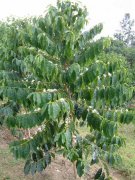
Coffee Tree Growing Conditions for Specialty Beans
If you’ve ever wondered why your favorite Ethiopian Yirgacheffe tastes so different from a Brazilian blend, the answer starts long before roasting—with where the coffee tree grows. The journey from seed to cup begins in very specific conditions that most regions on Earth simply don’t meet.
To grow high-quality coffee, trees need a very narrow set of conditions: temperatures between 15°C and 25°C, annual rainfall of 1500–2000mm timed with flowering, well-drained fertile soil (ideally volcanic), and altitudes between 500 and 2000 meters. Without all of these, you won’t get specialty-grade beans.
Where Coffee Trees Come From
Coffee trees originated in Ethiopia, Africa. Botanically, they are evergreen shrubs belonging to the Rubiaceae family, subgenus Coffea. What we call a “coffee bean” is actually the seed inside the fruit—called a coffee cherry—that grows on the tree. Its oval shape simply inspired the name.
The Ideal Environment for Coffee Trees
Coffee trees only thrive in tropical or subtropical regions, roughly between the 25th parallels north and south—commonly called the “Coffee Belt.” But location alone isn’t enough. Ideal conditions include:
- Daytime temperatures between 15°C and 25°C
- Annual rainfall of 1500–2000mm, timed to match flowering cycles
- Well-drained, fertile soil—volcanic soils are best
- Altitude between 500 and 2000 meters
Too much direct sunlight stunts growth, so coffee farms often plant shade trees. Elevation is critical: higher altitudes (1500m+) tend to produce denser beans with brighter acidity and more complex flavors.
What Is a Coffee Cherry?
The coffee cherry is the fruit of the coffee tree. It’s roughly 1.5cm in diameter, starts green, turns yellow, then red when ripe—earning the nickname “cherry coffee.” Each cherry usually holds two seeds (coffee beans) that sit flat against each other. In rare cases, a cherry produces just one round seed, called a peaberry.
Each bean is encased in a thin membrane called silverskin, covered by a yellowish parchment layer (endocarp), surrounded by sweet, sticky pulp (mesocarp), and protected by an outer skin. Removing all these layers reveals the green coffee seed ready for roasting.
Coffee Tree Growth & Flowering
A coffee tree takes about three years to flower for the first time. The flowers are small, white, and fragrant with a jasmine-like scent, typically blooming in clusters. These flowers last only two or three days before falling off.
After pollination, it takes several months for coffee cherries to develop. The trees are evergreen with oval, dark green leaves that have a lighter underside. Wild coffee trees can reach 8 meters, but cultivated trees are pruned to around 2 meters for easier harvesting and better bean quality.
Coffee Varieties and Their Characteristics
There are three main coffee species grown commercially:
- Arabica (Coffea arabica): Originating in Ethiopia, it makes up about two-thirds of global production. Arabica beans are oval and flat, known for their high quality, complex aroma, and balanced flavor. It thrives at higher altitudes (1500m+).
- Robusta (Coffea canephora): Grown mainly in Africa (Congo region), it’s hardier, more resistant to disease and pests, and can grow at lower altitudes. Robusta beans are smaller, bitter, less acidic, and usually used in blends. They make up about 30% of global production.
- Liberica (Coffea liberica): Native to Liberia, it’s rare in the market. The beans are larger, with a unique flavor that’s often described as woody or smoky. It has low yield and poor cup quality, making up a tiny fraction of production.
Arabica is widely considered superior in cup quality, especially when grown at higher elevations with proper care.
From Cherry to Coffee Bean
Once the coffee cherry ripens to a bright red, it’s ready for harvest. Inside each cherry are usually two seeds (flat sides touching), though sometimes a single round seed (peaberry) forms. To get to the green coffee bean, processors remove the outer skin, pulp, parchment, and silverskin.

The green bean is what’s shipped to roasters worldwide. It’s important to note that the coffee you brew starts not as a bean, but as a fruit that undergoes weeks of processing, drying, and milling before it even reaches the roastery.
Coffee Belt & Global Production
The “Coffee Belt” includes regions located roughly between 25°N and 25°S latitude. Major coffee-producing countries span South America, Central America, the Caribbean, Asia, Africa, Arabia, the Pacific Islands, and Oceania.
Brazil is the world’s largest coffee producer, responsible for about 30% of global output. Central and South America (centered on Colombia) contribute around 60% of production, Africa and Arabia about 30%, and the remaining 10% comes from Asia and various islands.
Most coffee grows between 300 and 400 meters above sea level, though some of the best-quality beans come from higher altitudes of 1500–2000 meters, where cooler temperatures slow growth and develop more complex flavors.
Coffee Flavor and Quality Factors
Flavor in coffee arises from a mix of sweetness, acidity, bitterness, body, and aroma. The acidity in particular is closely tied to altitude: higher-grown beans typically exhibit brighter, more vibrant acidity. For example, Jamaican Blue Mountain or Ethiopian beans are prized for their balanced acidity, sweetness, and aroma.
The four key taste elements of coffee are: aroma, bitterness, acidity, body, and sweetness. Of these, aroma is considered the most expressive indicator of origin and roast quality.
Frequently Asked Questions
What climate is best for growing coffee trees?
Coffee trees grow best in tropical or subtropical climates within 25°N and 25°S latitudes, known as the Coffee Belt. Ideal conditions include temperatures between 15°C and 25°C, annual rainfall of 1500–2000mm timed with flowering, and altitudes of 500–2000 meters for optimal bean quality.
What is a coffee cherry?
A coffee cherry is the fruit of the coffee tree, about 1.5cm in diameter. It turns from green to red when ripe and usually contains two coffee beans (seeds) that sit flat against each other. Each cherry is surrounded by skin, pulp, parchment, and silverskin, which are all removed to reveal the green coffee bean.
Why does coffee altitude matter?
Higher altitudes (typically 1500m and above) result in cooler temperatures, which slow the coffee cherry’s maturation. This slower growth produces denser beans with more complex flavors, higher acidity, and better overall cup quality—especially desirable in specialty coffee.
What are the main types of coffee species?
The three main coffee species are Arabica, Robusta, and Liberica. Arabica makes up about 66% of global production and is known for high quality and complex flavors. Robusta accounts for around 30%, is bitter and strong, and mostly used in blends. Liberica is rare, with a woody flavor and low market share.
How long does it take for a coffee tree to produce fruit?
A coffee tree typically takes about three years to flower and around five years to produce usable coffee cherries. The tree remains productive for roughly 20 years, yielding 3–5kg of coffee cherries per year under optimal conditions.
Recommended FrontStreet Coffee for Altitude & Acidity
For coffee lovers curious about how altitude affects flavor, try FrontStreet’s Ethiopia Yirgacheffe for bright floral acidity, their Colombia Huila for balanced citrus and caramel, or Guatemala Antigua for chocolatey depth with medium-high acidity. All three are grown at high altitudes (1500m+) and showcase how elevation shapes cup profile. Freshly roasted within 5 days · Orders placed before 17:00 ship the same day · Next-day delivery across most of Guangdong Province.
FrontStreet Coffee is a long-established specialty coffee roaster in Guangzhou China, selling freshly roasted beans from its own farm in Yunnan as well as dozens of carefully selected single-origin beans from around the world for both pour-over and espresso. The products deliver consistently excellent quality and great value, with shipping within 24 hours. Guangzhou's FrontStreet Coffee shop is recommended by many coffee lovers, and the beans are now available online at the Tmall 。
Important Notice :
前街咖啡 FrontStreet Coffee has moved to new addredd:
FrontStreet Coffee Address: 315,Donghua East Road,GuangZhou
Tel:020 38364473