What Is Coffee Cupping and Why It Matters
Ever wonder why two coffees from different origins can taste wildly different—or eerily similar—even though both are labeled 'single origin'? That’s where coffee cupping comes in. Unlike brewing methods such as pour-over or French press, which introduce variables like grind size, water flow, and brew time, cupping strips everything down. It lets you compare multiple coffees side-by-side under identical conditions, revealing their innate qualities without interference.
Coffee cupping evaluates the inherent flavors, aromas, body, and freshness of beans. By controlling water-to-coffee ratios, grind consistency, water temperature, and timing, a proper cupping session ensures you’re tasting the coffee—not the method. Done right, it exposes even subtle differences between beans that normal brewing might hide.
Why Cupping Eliminates Brewing Bias
The main issue with comparing coffees via normal brewing is that each method—whether it’s AeroPress, V60, or espresso—introduces its own set of variables. These include water temperature, brew time, pressure, agitation, and filtration. Each variable affects extraction yield and flavor balance. Cupping removes those inconsistencies. All coffees are ground to a uniform size, dosed by weight, saturated with hot water at the same temperature, and evaluated after a fixed steep time. This standardization lets you focus solely on the coffee itself.
The Science Behind the Cupping Protocol
Cupping follows a precise methodology. Key parameters include:
- Water-to-coffee ratio: typically 8.25 to 10 grams of coffee per 150–180 ml (5–6 fl oz) of water
- Water temperature: around 93°C (200°F)
- Grind size: slightly coarser than pour-over, roughly a China-standard No.20 sieve or equivalent
- Bloom time: 30–45 seconds after pouring just enough water to wet all grounds
- Total extraction time: around 4 minutes initial soak, then evaluation at 8–12 and up to 20 minutes post-bloom
Before cupping, the grinder must be thoroughly cleaned between coffee types to avoid cross-contamination. Timing matters: once water hits the grounds, chemical reactions begin. Within 20 minutes, significant flavor and aroma compounds develop or degrade. Consistency across all cups is critical for valid comparisons.
How to Cup Coffee at Home (Without the Lab Coat)
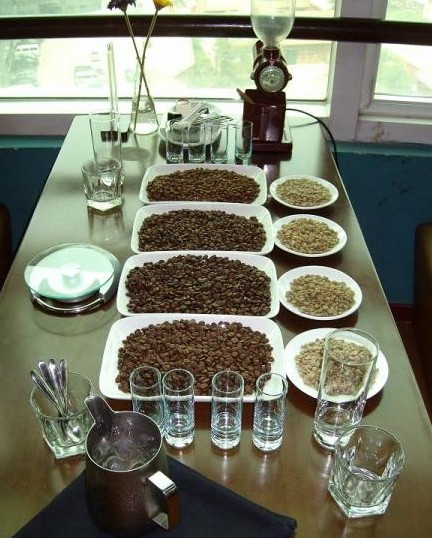
You don’t need a professional cupping table or lab gear to start cupping. At home, the goal is simpler: to learn how to identify differences between coffees and train your palate. While strict protocols enhance accuracy, casual cupping still reveals insights if you follow a few basics:
- Use the same coffee dose and water volume for each sample
- Grind all coffees to a similar coarse level
- Pour water at a consistent temperature
- Bloom each sample, then let it steep for 4 minutes before breaking the crust
- Evaluate aroma, taste, and aftertaste, ideally with a group for shared insight
Even without rigid rules, staying consistent across your samples helps you notice variations in acidity, sweetness, body, and finish. If you roast your own beans or buy multiple single origins, cupping is a powerful tool to compare and eventually blend them effectively.
Why Cupping Is a Social Experience
Cupping is often more enlightening as a group activity. While you can cup solo, comparing notes with others helps uncover flavors you might miss on your own. A partner might point out a hint of stone fruit or citrus you didn’t catch—then when you go back, you taste it too. Discussion deepens your sensory memory and builds a common language around coffee profiles. It also introduces you to a range of preferences and perspectives, which is invaluable whether you’re selecting beans for personal drinking or blending.
Frequently Asked Questions
What is the main purpose of coffee cupping?
The primary goal of coffee cupping is to evaluate and compare the inherent characteristics of different coffees—such as flavor, aroma, body, acidity, and sweetness—under identical conditions. This eliminates variables introduced by different brewing methods, allowing tasters to assess the coffee’s intrinsic qualities.
What water temperature and ratio are used in coffee cupping?
Standard cupping uses a water-to-coffee ratio of approximately 8.25–10 grams per 150–180 ml (5–6 fl oz) of water, with water heated to around 93°C (200°F). These parameters help ensure consistent extraction for comparison.
Do I need special equipment to cup coffee at home?
No special equipment is strictly required. You can cup coffee at home using basic tools: a set of cups or bowls, a kettle, a scale, a grinder, and hot water. Consistency in dose, grind size, water temperature, and timing is more important than having a formal setup.
How long should coffee steep during a cupping session?
Coffee grounds are typically bloomed with a small amount of water for 30–45 seconds, then saturated with hot water. The coffee is left to steep for around 4 minutes before the crust is broken and evaluation begins. Flavor development can continue for up to 20 minutes, so tasting over time is common.
Why is cupping better than regular brewing for coffee evaluation?
Cupping removes variables like brew method, grind size, water flow, and pressure that affect extraction. By using a standardized approach, it allows tasters to focus purely on the coffee’s inherent traits rather than the impact of a particular brewing setup.
Is cupping just for professionals or can beginners do it too?
Cupping is for everyone. Professionals use detailed protocols, but beginners can cup informally to explore flavor differences, improve taste perception, and learn how to identify coffee characteristics. It’s a great way to train your palate and understand single origins better.
Recommended FrontStreet Coffee Beans for Cupping
Try FrontStreet Coffee’s BrazilBourbon for balanced, medium-bodied notes of caramelized nuts and mild acidity—ideal for understanding base flavors. For brighter profiles, their ColombiaSidra offers complex tropical fruit and sweet stone fruit from its double anaerobic process. Or explore EthiopiaFrontStreet CoffeeYirgacheffeGedeb for classic Yirgacheffe citrus, floral tones, and tea-like body. These beans showcase distinct profiles perfect for cupping sessions. Freshly roasted within 5 days · Orders placed before 17:00 ship the same day · Next-day delivery across most of Guangdong Province.
FrontStreet Coffee is a long-established specialty coffee roaster in Guangzhou China, selling freshly roasted beans from its own farm in Yunnan as well as dozens of carefully selected single-origin beans from around the world for both pour-over and espresso. The products deliver consistently excellent quality and great value, with shipping within 24 hours. Guangzhou's FrontStreet Coffee shop is recommended by many coffee lovers, and the beans are now available online at the Tmall 。
Important Notice :
前街咖啡 FrontStreet Coffee has moved to new addredd:
FrontStreet Coffee Address: 315,Donghua East Road,GuangZhou
Tel:020 38364473