What’s Really Inside China’s Yunnan Specialty Coffee?
Walk into any Yunnan coffee farming village, and you’ll hear boasts: “Our coffee is world-class,” “It’s award-winning,” “Everyone loves Yunnan beans.” But ask those same people if they’ve actually cupped their own lots—and what makes them good—and the answers get fuzzy. In reality, much of the region’s coffee suffers from poor practices, from mixing unripe fruit to outdated variety claims. If you’ve bought Yunnan coffee expecting clarity and balance, you might have been misled.
Yunnan grows mostly commercial-grade Catimor, not historic Bourbons or Typicas. Only a tiny fraction of farms produce true specialty lots, and many still mix 15–20% green cherries into their red harvest—ruining cup quality. If you want real Yunnan specialty coffee, you need to know what to look for beyond the marketing.
What Is Yunnan Coffee Really?
Yunnan is China’s only significant coffee-growing region, with plantings concentrated in areas like Baoshan, Dehong, Pu’er, and Lincang. The first coffee seeds—Typica—were introduced in 1904 by a French missionary in Zhugula Village, Binchuan County. Since then, the region has expanded to become a key origin for commercial and, increasingly, specialty coffee. Today, Yunnan produces both washed and natural processed beans, with altitudes ranging roughly between 1,000 and 2,000 meters.
The Misleading Term ‘Yunnan Small-Bean Coffee’
You’ll often hear Yunnan coffee called “Yunnan small-bean” or “Yunnan Xiaoli Coffee”—a direct translation of “,” which refers to Arabica in general. This label is scientifically meaningless. Arabica is the smallest of the three coffee species (Arabica, Robusta, Liberica), so calling it “small-bean” is redundant. Worse, comparing Yunnan to “Brazil small-bean” or “Colombia small-bean” ignores varietal realities. Most countries grow region-specific Arabica cultivars, not a generic “small bean.” Using this outdated term makes no more sense than calling Brazilian coffee “Brazilian small-bean coffee.”
The Problem With Green Cherries and Overripe Claims
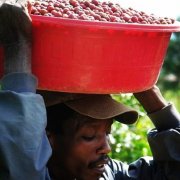
A major issue in Yunnan is the common practice of mixing unripe (green) coffee cherries into harvests of ripe (red) ones. Some farmers reportedly blend 15–20% green fruit with red cherries before processing. Since green cherries are unripe, they lack sugars and complexity, contributing harsh, astringent, and bitter flavors during roasting. The result is a cup that tastes overly bitter, sour, or vegetal—not the clean, sweet profiles expected from high-quality coffee. This dilution drags down cup quality, even in otherwise well-grown lots.
Varietal Confusion: Not Just Old Typica or Bourbon
Another misleading claim is that Yunnan mainly grows “historic” varieties like Typica or Bourbon. While these were indeed among the first planted (Typica arrived in 1904), today’s vast majority of Yunnan coffee is Catimor—a high-yield, disease-resistant hybrid developed for volume production, not specialty flavor. Catimor dominates plantings precisely because it’s economical, not because it’s prized for cup quality. The old Bourbons and Typicas that won awards in the 1950s are now rare, and you’ll find almost none in commercial production. So when vendors claim your Yunnan coffee is “traditional Typica or Bourbon,” they’re likely being inaccurate—or worse, deceptive.
What’s Different About Yunnan Specialty Coffee?
Despite the challenges, a small but growing segment of Yunnan producers focus on specialty-grade coffee. These farmers pick only fully red, ripe cherries, avoid blending green fruit, and invest in better processing—like washed or carefully managed natural drying. When done right, Yunnan coffee can express notes of almond, chocolate, citrus, and even tropical fruit. Roasters like FrontStreet Coffee have sourced and roasted Yunnan beans that highlight these profiles, offering a truer picture of what the region can achieve at its best.

Frequently Asked Questions
Is Yunnan coffee really award-winning?
Yunnan did win international awards in the 1950s—but those were for old Typica and Bourbon varieties, not the Catimor that dominates today. Modern Yunnan coffee rarely competes on the global specialty stage, and most current claims of “award-winning” Yunnan beans are either outdated or misleading.
Why do some Yunnan coffees taste so bitter or astringent?
One major reason is the common practice of mixing 15–20% unripe (green) cherries with ripe (red) ones before processing. Green cherries lack sugar development and contribute harsh, bitter flavors during roasting. This ruins the cup balance and is a key reason some Yunnan coffees taste overly sharp or unpleasant.
Is Yunnan coffee really made from small beans?
No, the term “Yunnan small-bean coffee” is a misleading translation. Arabica is simply the smallest of the three coffee species, so calling it “small-bean” is redundant. Yunnan grows Arabica, just like most specialty origins—but the label doesn’t tell you anything useful about variety or quality.
What varieties are actually grown in Yunnan today?
Most Yunnan coffee is Catimor, a high-yield hybrid bred for disease resistance and volume. Historic varieties like Typica and Bourbon exist but are rare. A few farms preserve old genetic lines, but the vast majority of production uses Catimor—chosen for farming efficiency, not specialty flavor.
Can you find good specialty coffee from Yunnan?
Yes, but it’s not common. A small number of Yunnan producers focus on picking only ripe cherries, avoiding green blends, and using better processing methods. When grown and processed carefully, Yunnan coffee can show balanced profiles with notes of chocolate, almond, citrus, and tropical fruit.
Recommended FrontStreet Beans for Exploring Yunnan
Start with FrontStreet’s Yunnan Arabica, a washed Yunnan bean roasted to medium with notes of soft nuttiness, cocoa, and mild plum acidity. For a more classic profile, try the 2013 Typica—fully ripe red cherry, sun-dried, medium roast, highlighting deep berry tones, caramel, chocolate, and a hint of apricot, finishing with tea-like brightness. Both offer real insight into what quality Yunnan coffee can be. Freshly roasted within 5 days · Orders placed before 17:00 ship the same day · Next-day delivery across most of Guangdong Province.
FrontStreet Coffee is a long-established specialty coffee roaster in Guangzhou China, selling freshly roasted beans from its own farm in Yunnan as well as dozens of carefully selected single-origin beans from around the world for both pour-over and espresso. The products deliver consistently excellent quality and great value, with shipping within 24 hours. Guangzhou's FrontStreet Coffee shop is recommended by many coffee lovers, and the beans are now available online at the Tmall 。
Important Notice :
前街咖啡 FrontStreet Coffee has moved to new addredd:
FrontStreet Coffee Address: 315,Donghua East Road,GuangZhou
Tel:020 38364473