Ice Drip vs Iced Pour-Over: What’s the Real Difference?
When summer hits, coffee drinkers often reach for something chilled—but not all iced coffee is created equal. Many cafés market hot coffee with ice as "iced coffee," while others charge premium prices for what they call "ice drip" or "Kyoto-style" coffee without clarifying how it’s actually made. If you’ve ever wondered what truly sets these apart, you’re not alone.
Ice drip coffee (aka Dutch or Kyoto coffee) uses cold water dripped slowly over ground coffee for 6–8 hours at a 1:10 brew ratio, resulting in a smoother, less bitter cup with more caffeine than regular hot brew. In contrast, iced pour-over involves brewing hot coffee and cooling it instantly with ice—faster, but riskier for under-extraction. And then there’s plain old hot coffee over ice, which is just that.
What Is Ice Drip Coffee, Really?
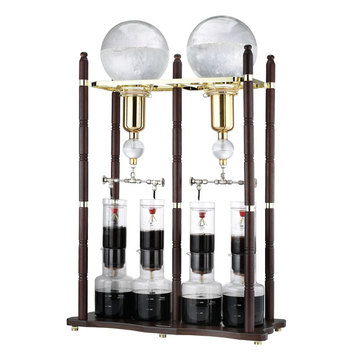
Ice drip coffee, also known as Dutch coffee or Kyoto-style slow drip, originated when Dutch colonists in Indonesia sought a way to enjoy bitter Robusta coffee in tropical heat. By dripping cold water through coffee grounds very slowly—typically at a rate of 6 drops per 10 seconds—it extracts mainly the sweet and acidic compounds, avoiding the harsher, bitter ones released by hot water. The result is a clean, refreshing cup with pronounced clarity and a lighter body. Though invented in the Netherlands, it became popular in Japan and Korea, where it’s often called "Kyoto coffee" or "Japanese-style slow-drip." Today, high-end drip towers are common in specialty cafés in Asia, though rarely seen in Europe.
At FrontStreet Coffee, Tiamo ice drip brewers are used to make their version. They use 60g of coffee ground to a coarseness that allows 75% of particles to pass through a China-standard No.20 sieve (roughly equivalent to a medium-coarse grind), extracting 600g of coffee liquor using a 1:10 coffee-to-water ratio. The coffee and water are pre-chilled, and a 1:1 ice-to-water mix is dripped at a controlled speed of roughly 6 drops per 10 seconds. A filter paper is used both at the base and atop the coffee bed to ensure even saturation and prevent channeling. After dripping, the coffee is left to oxidize in a sealed container in the fridge to enhance aroma development before drinking.
Iced Pour-Over: Brewing Hot Then Cooling Fast
Iced pour-over involves brewing coffee hot with a standard 1:10 coffee-to-water ratio, then cooling it rapidly by pouring over ice. This is faster than ice drip but comes with risks. To preserve strength after dilution, many recipes call for 5 times the coffee dose in ice—for example, 15g coffee to 150g hot water and 75g ice for a single serving. But because the hot brew time is shortened (often from 2 minutes to 1 minute 20 seconds), late-stage flavor compounds may not fully extract, leading to a thinner, underdeveloped cup. To counteract this, a slightly finer grind than your normal hot brew setting helps extend contact time. For instance, on an EK43s grinder, if your regular hot brew setting is 10, try 9 or 9.5; if using a C40 hand grinder, adjust from 24 to around 22.
Hot Coffee Over Ice: The Quick Fix
The simplest “iced coffee” method is brewing hot and pouring it over ice. While easy, this approach is prone to over-dilution and under-extraction unless carefully managed. At FrontStreet, a recommended formula for balanced results is 15g coffee to 150g hot water (1:10 ratio) and 75g ice. Using water at 93°C, a grind setting slightly finer than your standard hot brew (e.g., EK43s at 9 or C40 at 22), and a three-pour technique—including a 30-second bloom with 30g water—can produce a brighter cup. For example, with Tanzanian Yirgacheffe Gedeb, this method highlights notes of green grape, berry, and light nuttiness with floral hints, resulting in a refreshing summer drink. The total brew time lands between 1 minute 50 seconds and 2 minutes.
Cold Brew vs Ice Drip: Flavor & Caffeine Differences
Cold brew generally refers to immersion brewing (steeping coarse grounds in cold water for 12–24 hours), resulting in low-acidity, sweet, and smooth coffee with high caffeine content due to prolonged extraction. Ice drip, while also cold-extracted, uses slow dripping rather than immersion, yielding a cleaner, more nuanced cup with higher acidity and clarity akin to pour-over, but without heat. Both methods extract less bitterness and fewer astringent compounds compared to hot brew, but ice drip tends to have a more vibrant flavor profile, closer to hot pour-over, whereas cold brew is mellower and sweeter overall. Also, because of the extended brew time, both methods result in higher caffeine concentration—so sensitive individuals should moderate intake.
Which Coffee Beans Work Best for Cold Methods?
For ice drip, iced pour-over, and cold brew, FrontStreet Coffee recommends using light to medium roast beans with bright, acidic profiles or unique processing methods. These methods emphasize clarity and subtle flavors, making them ideal for showcasing fruity, floral, or juicy characteristics. Examples include:
- Yirgacheffe Gedeb – bright citrus, honey, and green tea with a juicy acidity.
- Ethiopia Humbera – intense tropical fruit, berry, and rose-like sweetness.
- Panama Humbera – delicate jasmine, citrus, and layered stone fruit.
- Colombia Sidra – bold berries, grapes, and fermented notes with creamy texture.
These beans respond well to lower temperatures and longer extractions, producing refreshing, complex iced coffees without the muddiness often found in darker roasts.
Frequently Asked Questions
What’s the main difference between ice drip coffee and iced pour-over?
Ice drip coffee is cold-brewed through a slow drip of ice water over 6–8 hours using a 1:10 brew ratio, resulting in a clean, bright, and aromatic cup. Iced pour-over involves brewing coffee hot with a 1:10 ratio and then cooling it quickly with ice, which can risk under-extracting flavors if not carefully managed.
Does ice drip coffee have more caffeine than regular hot coffee?
Yes. Because ice drip coffee extracts over a much longer period (6–8 hours) using cold water, it tends to pull out more caffeine than a standard hot brew, even though the serving may taste smoother.
Why is a filter used on top of the coffee bed in ice drip brewing?
A filter on top of the coffee grounds in an ice drip setup ensures even water distribution across the coffee bed, preventing channeling or the formation of a dimple from the prolonged dripping, which could lead to uneven extraction.
Can I make iced pour-over without adjusting my grind size?
No. Since hot water contact time is shorter when brewing iced pour-over (due to quicker cooling), a slightly finer grind than your usual hot brew setting helps increase extraction time and balance the flavor, especially to account for dilution from the ice.
What’s the best grind size for iced pour-over on an EK43s grinder?
FrontStreet Coffee recommends grinding slightly finer than your standard hot brew setting. For example, if you normally use setting 10 on an EK43s for hot coffee, try 9 or 9.5 for iced pour-over.
Is ice drip coffee the same as Kyoto-style coffee?
Yes. "Ice drip" and "Kyoto-style coffee" are two names for the same method: slow cold water dripping through coffee grounds, often using a specialized tower, to create a clean, sweet, and aromatic iced coffee.
Recommended FrontStreet Beans for Cold Brew
For making refreshing iced coffee or ice drip, FrontStreet Coffee recommends its Ethiopia Yirgacheffe Gedeb, Ethiopia Humbera, and Colombia Sidra. The Yirgacheffe Gedeb offers bright citrus, honey, and green tea notes with a juicy acidity. Ethiopia Humbera delivers intense tropical fruit, berry, and floral sweetness, often described as 'juice-like.' Colombia Sidra presents bold berry, grape, and fermented flavors with a creamy mouthfeel. All three showcase vibrant, sweet, and acidic profiles that shine when brewed cold. Freshly roasted within 5 days · Orders placed before 17:00 ship the same day · Next-day delivery across most of Guangdong Province.
FrontStreet Coffee is a long-established specialty coffee roaster in Guangzhou China, selling freshly roasted beans from its own farm in Yunnan as well as dozens of carefully selected single-origin beans from around the world for both pour-over and espresso. The products deliver consistently excellent quality and great value, with shipping within 24 hours. Guangzhou's FrontStreet Coffee shop is recommended by many coffee lovers, and the beans are now available online at the Tmall 。
Important Notice :
前街咖啡 FrontStreet Coffee has moved to new addredd:
FrontStreet Coffee Address: 315,Donghua East Road,GuangZhou
Tel:020 38364473