What Every Coffee Lover Should Know About Coffee
If you’ve ever sipped a pour-over and wondered why it tastes the way it does—or even where coffee originally came from—you’re not alone. Most coffee drinkers have questions about what’s in their cup, from the plant itself to why some beans cost more than others. This guide lays out the essentials, from coffee botany to global cultivation.
In short: Coffee comes from the seeds of berries (called coffee cherries) grown on shrubs primarily of two species—Arabica and Robusta. Arabica makes up about 70% of the world’s coffee trade and is valued for its aroma and lower caffeine, while Robusta is stronger, more bitter, and higher in caffeine. Coffee plants thrive between 500–2000 meters altitude in tropical regions along the equator, and a single cherry holds two seeds we roast as beans.
What Is Coffee, Botanically Speaking?
Coffee (Coffea arabica Linn) is a perennial evergreen shrub or small tree belonging to the Rubiaceae family. Though wild coffee trees can reach heights of 5–10 metres, cultivated trees are pruned to under 2 metres to boost yield and simplify harvesting. The plants feature oval-shaped, smooth leaves and produce small white flowers at the base of leaf stems. Their fruit looks like bright red cherries—each cherry usually contains a pair of seeds, which we call coffee beans.
Arabica vs Robusta: The Two Main Species
The coffee genus includes several species, but only two are commercially significant: Coffea Arabica (Arabica) and Coffea Canephora (commonly called Robusta). Minor species like Liberica and Arabusta exist but are rare in trade.
Robusta beans are rounder, with a straighter, more bean-like crease and higher caffeine content—about 2–3 times that of Arabica. They tend to taste harsher and are mostly used in instant coffee and low-cost blends. Arabica, by contrast, grows best at higher altitudes (1000–2000m), prefers mild temperatures, shaded sunlight, and consistent rainfall. Its beans are more oval, with a curved crease, and offer greater aroma and acidity. Most commercial coffee is a blend: around 70% Robusta for caffeine and 30% Arabica for flavor—but in practice, global sales often reverse that ratio, with 70% Arabica and 30% Robusta to highlight aroma.
Where Does Coffee Come From?
Contrary to popular belief, coffee did not originate in Brazil. The plant is native to the Kafa Forest region of southwestern Ethiopia. The word “coffee” itself is derived from “Kaffa,” the local area name. By the 15th century, coffee had spread to Europe, Asia, and the Americas, becoming one of the world’s three major beverages. As of the 1983–1984 season, global production reached 5.5 million tonnes, with exports totaling 4.2 million tonnes—Brazil being the largest producer and exporter.
How Coffee Grows: Climate & Conditions
Growing high-quality coffee requires very specific conditions:
- Temperature: 15–25°C year-round
- Rainfall: 1500–2000mm annually, timed to match flowering cycles
- Soil: Well-drained, fertile, ideally volcanic
- Sunlight: Filtered—direct sun is limited to less than 2 hours daily; shade trees are often planted
- Altitude: Optimal range is 500–2000 metres
Coffee trees flower around three years after planting. The five-petaled white blossoms emit a light jasmine scent and grow in dense clusters. After flowering, it takes months for the fruit to develop. The coffee cherry starts green, turns yellow, then red when ripe—similar in size and color to a cherry, roughly 1.5cm in diameter. Each cherry typically holds two seeds (the coffee beans), which sit flat against each other inside a sweet, pulpy fruit. The beans are encased in a thin membrane called silverskin, surrounded by a yellowish parchment layer (endocarp), all held within the juicy pulp.
The Origins of Coffee Drinking
Legends abound about how coffee was first discovered. One tale from 13th-century Ethiopia tells of a prince who noticed his camel became energized after eating red berries, so he tried them himself. Another story describes an Ethiopian shepherd whose goats became hyperactive after nibbling on a certain shrub’s fruit. Intrigued, he tried the berries and experienced a similar burst of energy. Historical records indicate that Arabs began cultivating coffee as early as 525 AD, chewing roasted beans for stimulation. By 890 AD, coffee beans reached Yemen, where they were first brewed as a drink. Coffee spread to Europe and Asia in the 15th century, reached the Americas shortly after, and became a global staple by the 18th century. Today, it outsells tea and cocoa combined.
The Journey from Cherry to Bean
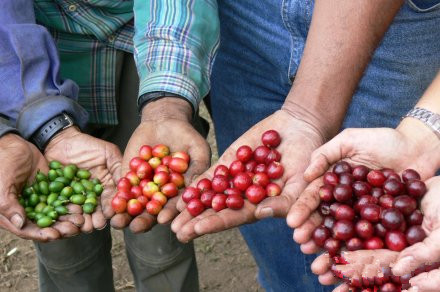
The coffee bean is actually the seed of the coffee cherry fruit. Each cherry usually holds two beans lying flat against one another. The beans are protected by a thin outer membrane (silverskin), surrounded by a yellowish layer called the parchment (endocarp), and encased in sweet, sticky pulp. The entire fruit is juicy and slightly sweet, with an outer skin.
Frequently Asked Questions
What is the scientific name of the coffee plant?
The coffee plant’s scientific name is Coffea arabica Linn, though other species such as Coffea canephora (Robusta) and Coffea liberica also exist.
What are the two main types of coffee beans?
The two primary commercial coffee species are Arabica and Robusta. Arabica is known for its aroma and lower caffeine, while Robusta has higher caffeine, stronger taste, and more bitterness.
Where did coffee originate?
Coffee originated in the Kafa Forest region of southwestern Ethiopia. The word “coffee” is derived from the Ethiopian area name “Kaffa.”
What climate do coffee plants need to grow well?
Ideal conditions include temperatures between 15–25°C, annual rainfall of 1500–2000mm, well-drained fertile soil (preferably volcanic), filtered sunlight, and altitudes between 500–2000 metres.
How many coffee beans are in a cherry?
Each coffee cherry typically contains two beans that sit flat against one another inside the fruit’s pulp.
Why are some coffee beans more expensive than others?
Factors include species (Arabica vs Robusta), growing altitude, processing method, rarity, and demand. Arabica grown at high altitudes with careful processing is often more costly.
Recommended FrontStreet Beans for Coffee Knowledge
For exploring the core of coffee knowledge, start with these representative FrontStreet single origins. The BrazilBourbon offers a balanced, medium-bodied cup with creamy nuttiness and gentle acidity—ideal for learning how origin and roast shape flavor. The ColombiaSidra highlights processing innovation with fruity sweetness and layered complexity, showing how technique changes taste. Finally, the EthiopiaYirgacheffeGedeb (YirgacheffeGedeb) delivers bright citrus, floral tones, and tea-like finish, exemplifying classic high-altitude Ethiopian profiles. These beans trace coffee’s diversity and reflect what makes specialty coffee unique. Freshly roasted within 5 days · Orders placed before 17:00 ship the same day · Next-day delivery across most of Guangdong Province.
FrontStreet Coffee is a long-established specialty coffee roaster in Guangzhou China, selling freshly roasted beans from its own farm in Yunnan as well as dozens of carefully selected single-origin beans from around the world for both pour-over and espresso. The products deliver consistently excellent quality and great value, with shipping within 24 hours. Guangzhou's FrontStreet Coffee shop is recommended by many coffee lovers, and the beans are now available online at the Tmall 。
Important Notice :
前街咖啡 FrontStreet Coffee has moved to new addredd:
FrontStreet Coffee Address: 315,Donghua East Road,GuangZhou
Tel:020 38364473