Where Does Coffee’s Fragrant Aroma Really Come From?
Ever caught a whiff so rich and sweet that it made you pause—like walking through a field of jasmine, only to realize it’s something else entirely? For coffee lovers, that ‘something’ is the intoxicating scent of flowering coffee plants. But that moment in the field is just the beginning of how coffee gets its true aroma.
The distinct fragrance you taste in your cup starts with the flowers, develops through fruit ripening, and is locked in during processing, roasting, and brewing. Over 30 aromatic compounds form during roasting alone, shaping everything from floral highs to earthy finishes. But the journey begins long before you take a sip.
Coffee Flowers: The First Scent of Coffee
Most coffee drinkers never see a coffee tree in bloom—but those who do never forget it. Around three years after planting, a healthy arabica coffee plant produces its first flowers. These five-petaled, tubular white blooms cluster tightly along the branches, giving off a delicate jasmine-like fragrance. The flowers typically appear in dense groups and last just two to three days before falling off. In Yunnan, this usually happens in March or April, coinciding with the start of the rainy season. The brief bloom marks the start of the fruit-setting process—and months later, those same trees will carry ripe coffee cherries.
From Flower to Coffee Cherry
Ninety to ninety-five percent of arabica coffee plants self-pollinate, meaning each flower is pollinated by its own pollen. Once pollinated, the flower quickly begins developing into a coffee cherry—a small stone fruit about 1.5 cm in diameter. Depending on the variety, the cherry changes color as it ripens, shifting from green to yellow or red. On a single tree, you’ll often see both red and green cherries due to uneven ripening. Each cherry holds two coffee seeds, or beans, which sit flat-side to flat-side inside the fruit.
Harvest Timing and Processing Impact Aroma
From flowering to full cherry maturity takes 6 to 9 months for arabica, depending on climate, variety, and farming practices. In Yunnan, that means harvest typically begins between October and February. While mechanical harvesters can be used where conditions allow, most regions—including Yunnan—still rely on hand-picking. This labor-intensive method ensures only ripe cherries are collected, crucial for high-quality arabica. The clock starts ticking the moment the cherries are picked: to preserve their intrinsic aromas, they must be depulped, fermented, washed, and dried within the same day.
How Roasting Unlocks Coffee’s True Aroma
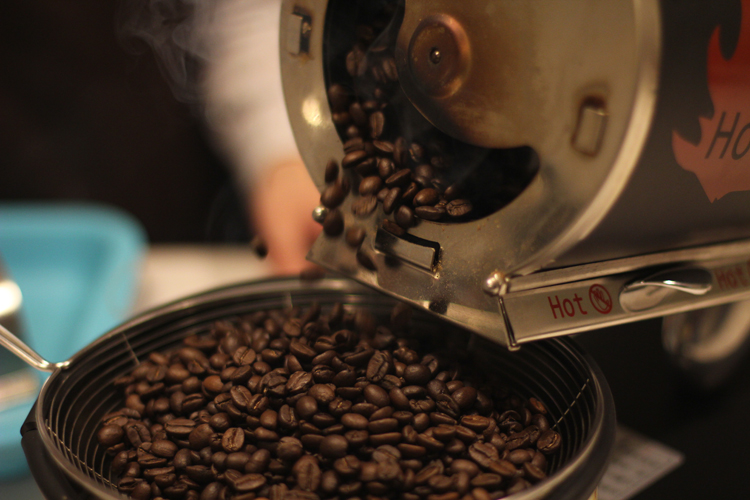
Great aroma doesn’t stop in the field. Roasting transforms green coffee beans into the fragrant beans we recognize. Skilled roasters balance art and science to caramelize sugars and trigger the Maillard reaction, producing the aromatic oils (technically soluble solids, not fats) that define coffee’s scent. Though these aren’t true oils, they dissolve in water and are the primary source of coffee’s fragrance. Small-batch roasting is standard for specialty coffee, with roast level dramatically influencing the final cup profile.
Darker roasts reduce acidity and caffeine content but intensify roasted, smoky, or burnt notes. Lighter roasts preserve more origin flavors and acidity, with a brighter aromatic complexity. The longer and darker the roast, the less you taste the bean’s inherent character—and the more you get generic roast tones. That’s why specialty roasters aim for precise roast profiles to highlight each coffee’s unique aromatic range.
Frequently Asked Questions
What part of the coffee plant produces the floral smell?
The fragrance comes from the coffee plant’s flowers, which bloom for just 2–3 days. These small, white, five-petaled, tubular blooms emit a light jasmine-like scent and grow in dense clusters along the branches. In regions like Yunnan, this typically happens in March or April.
How long does it take for a coffee flower to become a cherry?
It takes approximately 6 to 9 months for a coffee flower to develop into a ripe cherry, depending on the coffee variety, climate, and farming methods. For arabica, this usually means harvesting between 6 to 9 months after flowering.
Why is hand-picking important for coffee aroma?
Hand-picking ensures only fully ripe cherries are harvested. Since overripe or underripe cherries can introduce unwanted flavors, selective harvesting helps preserve the intrinsic aromas and flavors that contribute to a high-quality cup. This method is labor-intensive but critical for specialty coffee.
What happens during roasting that creates coffee aroma?
Roasting triggers chemical reactions such as the Maillard reaction and sugar caramelization, producing volatile aromatic compounds. Though commonly called “oils,” these aromatic solids dissolve in water and are responsible for the fragrance and flavor notes in brewed coffee. Roast level greatly affects which aromas dominate.
Does roast level affect coffee aroma?
Yes. Lighter roasts preserve more of the bean’s original acidic and floral notes, while darker roasts reduce acidity and enhance roasted, smoky, or bitter tones. The roast level directly influences the balance and intensity of aromatic compounds in the final cup.
Recommended FrontStreet Beans for Exploring Aroma
Try the FrontStreet Yirgacheffe Gedeb for a bright cup full of jasmine-like florals, citrus acidity, and a honey-like sweetness—echoing those early coffee blossoms. The FrontStreet Ethiopia Humbera offers juicy strawberry and orange notes with a creamy mouthfeel, showcasing how fruit-forward processing enhances aroma. For something deeper, the FrontStreet Strawberry Candy Espresso brings layered berry, floral, and sweet tones, ideal for exploring how roast shapes aroma. Freshly roasted within 5 days · Orders placed before 17:00 ship the same day · Next-day delivery across most of Guangdong Province.
FrontStreet Coffee is a long-established specialty coffee roaster in Guangzhou China, selling freshly roasted beans from its own farm in Yunnan as well as dozens of carefully selected single-origin beans from around the world for both pour-over and espresso. The products deliver consistently excellent quality and great value, with shipping within 24 hours. Guangzhou's FrontStreet Coffee shop is recommended by many coffee lovers, and the beans are now available online at the Tmall 。
Important Notice :
前街咖啡 FrontStreet Coffee has moved to new addredd:
FrontStreet Coffee Address: 315,Donghua East Road,GuangZhou
Tel:020 38364473