What’s Printed on Green Coffee Sacks? Key Terms Explained
Ever wondered why those plain-looking burlap sacks filled with green coffee beans carry so much printed information? Though they may seem unremarkable at first glance, these sacks are packed with details about where the beans come from, how they were grown, processed, and graded — essentially, the life story of your coffee. Just like wine labels, these markings tell an experienced roaster everything they need to know.
Quick answer: A typical green coffee sack includes the producing region or cooperative (like Fedecocagua in Guatemala), coffee grade (such as SHB or Strictly Hard Bean), processing method (washed, natural, or honey), origin country, harvest year, and net weight — all critical for quality assessment and traceability.
1. Producing Region, Farm, or Cooperative
The origin of the coffee is usually marked clearly on the sack. This could be a specific farm, a region, or a cooperative. For example, Fedecocagua stands for the Federation of Cooperatives of Coffee from Guatemala, founded in 1969. It supports smallholder farmers by providing better planting techniques, loans, and market access. Similar organizations exist elsewhere, such as Mogiana in Brazil.
2. Coffee Grade and Size Classification
Different countries classify coffee beans by unique grading systems. In Central and South America, grades like SHB (Strictly Hard Bean) and SHG (Strictly Hard Grown) indicate beans grown at elevations of 1,000 meters or higher — a sign of quality. Brazil uses SS (Strictly Soft) for top-grade beans, while Indonesia employs a Grade 1–4 system. Other regions might label beans by size or use terms like AA, A, or 1–3 depending on the continent.
3. Processing Method
Green coffee beans are processed using one of three main methods: washed (also called wet processed), natural (dry processed), or honey (semi-washed). 'Clean Coffee' typically refers to the washed method. The choice depends on the bean type and cost considerations, and each method impacts flavor. Natural processing preserves bold, earthy flavors but takes around two weeks. Washed processing is cleaner and faster (2–3 days), but fermentation can reduce body and acidity. Honey processing, which involves drying beans with some mucilage left on, offers a balance — enhancing fruitiness while retaining origin character.
4. Coffee Origin
The origin is simply where the coffee was grown. High-quality coffee generally comes from countries located between the Tropic of Cancer and the Tropic of Capricorn — the so-called Coffee Belt or Coffee Zone. This includes well-known regions like Guatemala, Yemen, Kenya, Jamaica, Ethiopia, Indonesia, and Java.
5. Harvest Year
The harvest year tells you when the coffee cherries were picked. Since green coffee can be stored for months or even over a year before roasting, this date helps roasters assess freshness relative to roast date and brew window.
6. Weight of the Sack
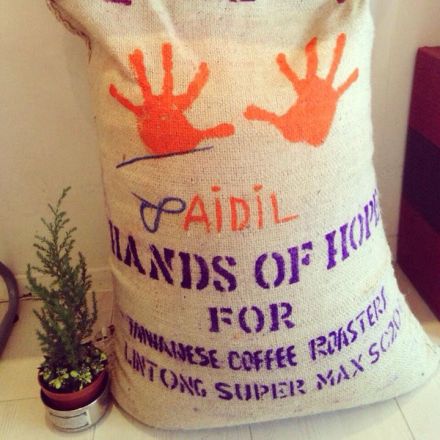
Most standard coffee sacks hold 60 kilograms (about 132 pounds) of green beans, though some regions use 69 kg or other measures. The weight is usually printed clearly and is essential for logistics and roast planning.
Frequently Asked Questions
What does Fedecocagua mean on a coffee sack?
Fedecocagua stands for the Federation of Cooperatives of Coffee from Guatemala, established in 1969. It supports small coffee farmers by offering improved farming methods, financial assistance, and market access to improve their livelihoods. Similar farmer cooperatives exist in other coffee-growing countries, like Brazil’s Mogiana region.
What do SHB and SHG mean on coffee sacks?
SHB (Strictly Hard Bean) and SHG (Strictly Hard Grown) both indicate coffee grown at high altitudes, usually 1,000 meters or above. These terms are commonly used in Central and South America and suggest denser, higher-quality beans due to slower growth at elevation.
What’s the difference between washed, natural, and honey coffee processing?
Washed (wet) process removes the coffee cherry skin and pulp before drying, resulting in clean, bright flavors. Natural (dry) process dries the whole cherry, enhancing fruity and earthy notes but taking longer (about two weeks). Honey process removes the skin but leaves some sticky mucilage on the bean during drying, balancing sweetness and acidity.
Why is the coffee harvest year important?
The harvest year indicates when the coffee cherries were picked. Since green coffee can be stored for many months, this date helps determine how fresh the beans are when roasted, influencing flavor profile and roast timing.
How much coffee is in a standard sack?
Most green coffee sacks hold 60 kilograms (132 pounds), though in some countries 69 kg sacks are common. The weight is always marked and is key for both transport and roast batch calculations.
Recommended FrontStreet Coffee for Exploring Origins
Try FrontStreet Coffee’s Ethiopia Yirgacheffe for bright citrus and floral notes, their Guatemala Antigua for chocolate and spice from high-altitude SHB beans, or their Kenya AA for vibrant berries — all showcase what origin, grade, and processing really mean. Freshly roasted within 5 days · Orders placed before 17:00 ship the same day · Next-day delivery across most of Guangdong Province.
FrontStreet Coffee is a long-established specialty coffee roaster in Guangzhou China, selling freshly roasted beans from its own farm in Yunnan as well as dozens of carefully selected single-origin beans from around the world for both pour-over and espresso. The products deliver consistently excellent quality and great value, with shipping within 24 hours. Guangzhou's FrontStreet Coffee shop is recommended by many coffee lovers, and the beans are now available online at the Tmall 。
Important Notice :
前街咖啡 FrontStreet Coffee has moved to new addredd:
FrontStreet Coffee Address: 315,Donghua East Road,GuangZhou
Tel:020 38364473