From Planting to Harvest: The Journey of Coffee Beans
Ever wondered why your morning cup of coffee took years to make its way to your mug? Before that espresso shot or pour-over even existed, a coffee tree had to be planted, nurtured, and harvested by hand over several years. Understanding the journey from seedling to roasted bean reveals why coffee is such a labor-intensive and climate-sensitive crop.
Coffee trees typically take 3–5 years to bear fruit, hit peak productivity between years 6–10, and remain in their prime yielding period for 15–20 years. Each tree yields less than 5 kilograms (11 pounds) of fruit per year, producing roughly 1 kilogram (2.2 pounds) of green coffee beans.
The Lifecycle of a Coffee Tree
Coffee trees begin their life in nurseries, where they’re grown from seed into seedlings. After about a year, these young trees are transplanted to coffee farms — a method that traces back to traditional Arabic cultivation practices. In their first four to five years, the trees focus energy on root development, building a strong trunk, and forming a broad, umbrella-like canopy of branches to support future fruit production.
Growing Conditions and Shade Cultivation
Coffee only thrives in tropical and subtropical regions, within the so-called “coffee belt.” This zone encompasses diverse climates, soils, altitudes, and rainfall patterns. Whether in the hot, humid rainforests of Africa, the cool, misty highlands of Central America, or the unpredictable weather of the Caribbean, coffee adapts — and those environmental differences contribute to the wide variety of coffee flavors worldwide.
To protect young coffee trees from direct sunlight — which can raise leaf temperatures, close stomata, and halt photosynthesis — farmers often plant taller companion crops like bananas or areca palms nearby. These trees offer shade, regulate temperature, and even supply carbohydrates through photosynthesis. Bananas grow quickly and can provide additional income, making them ideal shade companions in coffee farming systems.
How Coffee Cherries Are Harvested
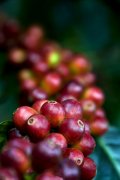
Coffee trees are unique in that they can flower and produce cherries multiple times a year. What’s more, flowers and cherries (also called coffee berries) often exist on the tree simultaneously at varying stages of ripeness. This irregular maturation means skilled pickers must return to the same tree many times to selectively harvest only ripe cherries — a physically demanding task where pickers may collect just 2 pounds of fruit after several visits, and a single tree yields no more than 5 kilograms (11 pounds) of cherries annually, resulting in around 1 kilogram (2.2 pounds) of green beans.
Because hand-picking is the most common method globally, coffee harvesting remains a highly seasonal and labor-intensive process. Pickers use their thumb and forefinger to pluck only ripe berries — a level of selectivity no machine or branch-stripping technique can achieve. Using tools to scrape whole branches or automated harvesters results in a mix of unripe and overripe cherries, which compromises quality.
Common Harvesting Mistakes and Their Impact
Some producers opt for faster, less selective methods to save on labor costs — but these shortcuts reduce coffee quality. In parts of Africa, shaking trees to drop cherries is common, though the risk of fruit damage increases. In Brazil, lower-grade coffee regions often strip entire branches of leaves, flowers, and all fruit regardless of ripeness. This brutal method damages the tree so severely that it can take up to two years to recover and return to normal production.
Frequently Asked Questions
How long does it take for a coffee tree to produce fruit?
A coffee tree generally takes 3 to 5 years to bear fruit after being planted. It reaches optimal fruit production between 6 and 10 years of age, and remains in its prime production period for around 15 to 20 years.
What conditions do coffee trees need to grow well?
Coffee trees require tropical or subtropical climates found within the coffee belt. They thrive in varied altitudes, rainfall levels, and soil types. They do best with some shade to protect them from direct sunlight, which can harm their leaves and halt growth. Common shade trees include bananas and areca palms.
Why are coffee cherries harvested by hand?
Coffee cherries ripen at different rates on the same tree, so selective hand-picking is required to gather only ripe fruit. Machines or strip-harvesting methods cannot differentiate between ripe and unripe cherries, which would lower the quality of the harvested coffee.
How much coffee does one tree produce per year?
A typical mature coffee tree produces less than 5 kilograms (11 pounds) of coffee cherries annually, which yields around 1 kilogram (2.2 pounds) of green coffee beans after processing.
What are the risks of mechanical or non-selective harvesting?
Mechanical harvesting or shaking trees to drop cherries can result in damaged or unripe fruit being collected. This lowers coffee quality and can even harm the tree. In some cases, stripping all branches causes long-term damage that takes years for the tree to recover from.
Recommended FrontStreet Coffee for Coffee Growers
Explore the origins of your coffee with FrontStreet’s Ethiopia Humbera — a bright, floral Ethiopian offering with notes of jasmine and bergamot, reflecting the careful cultivation behind each cherry. For a classic balanced cup, try Yirgacheffe, known for its citrus and stone fruit brightness. Both beans showcase the care needed in coffee farming and harvesting, from blossom to bean. Freshly roasted within 5 days · Orders placed before 17:00 ship the same day · Next-day delivery across most of Guangdong Province.
FrontStreet Coffee is a long-established specialty coffee roaster in Guangzhou China, selling freshly roasted beans from its own farm in Yunnan as well as dozens of carefully selected single-origin beans from around the world for both pour-over and espresso. The products deliver consistently excellent quality and great value, with shipping within 24 hours. Guangzhou's FrontStreet Coffee shop is recommended by many coffee lovers, and the beans are now available online at the Tmall 。
Important Notice :
前街咖啡 FrontStreet Coffee has moved to new addredd:
FrontStreet Coffee Address: 315,Donghua East Road,GuangZhou
Tel:020 38364473