What Makes Up a Coffee Tree’s Main Trunk?
If you’ve ever wondered how a coffee tree supports itself—year after year, harvest after harvest—you’re asking about its trunk. But the trunk doesn’t work alone. Beneath the soil and above it, a complex system of roots, branches, and growth habits determines how strong, productive, and manageable a coffee tree will be. Whether you're a coffee grower or simply curious how your cup begins, understanding the trunk and its support structure is essential.
In short: A healthy mature coffee tree develops a single main trunk with 14–15 pairs of branches by year three, roots that reach up to 90 cm deep but concentrate absorption in the top 30 cm, and shows clear seasonal growth patterns that affect pruning and training decisions.
What Is a Coffee Tree’s Root System?
Coffee is a shallow-rooted crop. Plants grown from seed develop what’s called a conical (or “cone-shaped”) root system. This root system includes all the roots of the plant—main, lateral, and branching roots—and its shape, depth, and spread vary depending on coffee variety, soil conditions, and farming practices.
Generally, smaller-seeded varieties like Typica and Caturra-like types have shallower roots, while larger-seeded varieties develop deeper ones. Under normal conditions, a coffee tree forms one thick, relatively short taproot along with many well-developed lateral roots.
In Yunnan, small-seed Arabica coffee trees (Yunnan Arabica) begin fruiting around 3–4 years old. By that age, the main taproot typically reaches about 70 cm in depth. Below 70 cm, the taproot tends to thin out and turn into fine, absorptive roots that continue downward. The taproot usually does not branch, but if damaged during transplanting, one or two replacement roots may grow from the healed wound.
From the main taproot grow lateral roots. Those that grow outward, roughly parallel to the soil surface, are called horizontal lateral roots; those growing downward are vertical laterals. Branches from these lateral roots are termed secondary and tertiary roots .
How Are Coffee Roots Structured and Distributed?
Coffee roots exhibit distinct layering, generally arranged in layers about every 5 cm. However, the majority of absorbing roots—those responsible for taking up water and nutrients—are found in the top 30 cm of soil, especially in the upper 15 cm. A smaller number extend between 30–60 cm deep, and very few reach between 60–90 cm.
The absorptive roots near the surface (in the topsoil) are thick and white, while those below 30 cm tend to be yellowish and more brittle. In young coffee plants, the horizontal spread of roots often extends 15–20 cm beyond the canopy. In mature trees, roots spread out between rows, often filling shaded or covered areas of the soil surface. Exposed roots, however, are prone to sun damage.
Deeper tillage encourages roots to grow further down. Coffee roots also regenerate well—if injured or cut, they heal quickly, forming new callus tissue within 7–10 days and sprouting numerous new lateral roots. These new roots are highly active in seeking moisture and nutrients.
What Does a Coffee Tree’s Trunk and Stem Look Like?
The coffee stem is upright. Young stems are slightly square in cross-section and green, becoming round and brown as they mature and develop bark . In small-seed varieties, the distance between stem nodes—or internodes—ranges from 4–7 cm. Plants grown in shade tend to have longer internodes, sometimes reaching 20–30 cm under heavy shade.
Each node produces a pair of leaves, and in the leaf axils are stacked buds known as overlapping buds. The upper bud is called the upper bud, the lower one the lower bud. The upper bud typically grows into a branch, while the lower bud becomes a vertical shoot. Both upper and lower buds can activate simultaneously with the apical (top) bud, but the upper bud usually only grows once, whereas the lower bud can sprout multiple times.
If the apical bud is damaged or the main stem bends, the lower bud may activate and grow into a vertical shoot that mimics the main trunk’s structure. These vertical shoots can be trained to become a new central leader or main trunk.
How Does the Coffee Tree’s Main Trunk Grow?
The main trunk exhibits strong apical dominance—the uppermost part of the trunk grows more vigorously than lower sections. This dominance weakens as the trunk gets taller. Growth rates vary by coffee variety and local climate.
For small-seed coffee , when the main trunk has developed 6–9 pairs of true leaves , the first pair of side branches appears. In the year of planting, 4–8 pairs of side branches usually form. In the second year, growth increases, typically producing 7–12 pairs. By year three, under good management and favorable weather, the tree may develop 14–15 pairs of branches, and in ideal cases, up to 18–20 pairs.
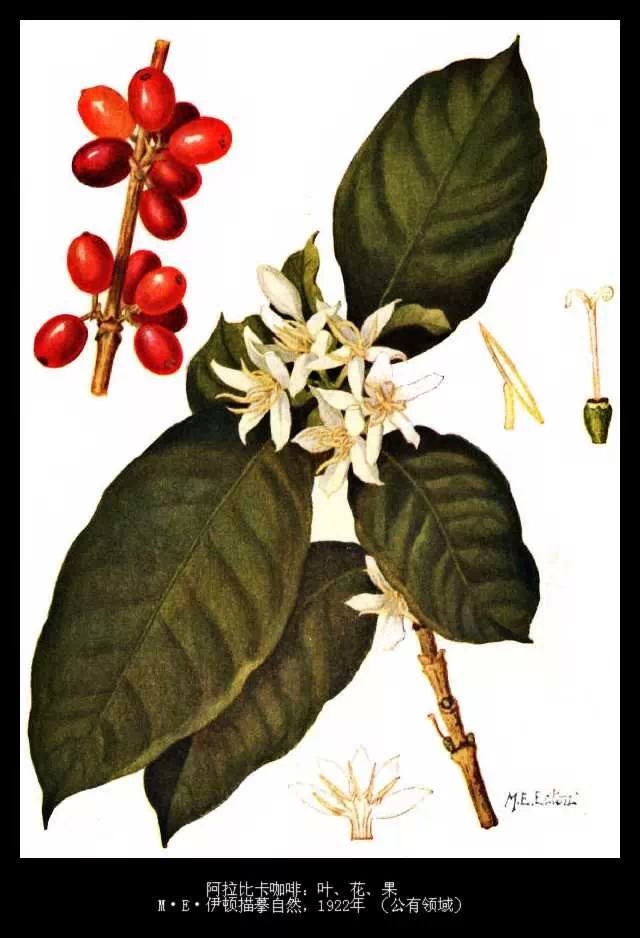
During the same period, the lower part of the tree begins developing secondary branches , gradually forming the tree canopy and producing a small initial yield. Year three is usually the tree’s most vigorous year of vegetative growth, so proper care—especially watering and fertilization—is crucial to build a strong, productive canopy.
By year four, trunk growth slows, internodes shorten, and the tree enters its fruiting stage. (Some trees with extra vigor may branch heavily in year two or three and fruit earlier.) If left unmanaged, coffee trees will continue growing taller according to their genetic potential: small-seed varieties may reach 4–6 meters, medium-seed 6–8 meters, and large-seed types over 10 meters. Such heights make harvesting difficult and reduce yields, which is why controlling trunk height is standard practice.
Small-seed varieties are often trained with a single-trunk system and topped to encourage a cylindrical canopy within 3–4 years.
How Does Seasonality Affect Coffee Trunk Growth?
The coffee tree’s trunk growth changes with the seasons. During dry periods, growth slows, internodes are shorter, and less wood is produced. In the rainy season, growth accelerates—internodes lengthen noticeably. Winter sees the slowest growth, with the shortest internodes and the formation of tightly spaced nodes .
These seasonal growth patterns allow farmers to estimate a tree’s age based on its visible physical characteristics.
Frequently Asked Questions
How deep do coffee tree roots typically grow?
Coffee roots can reach depths of up to 90 cm, but most absorptive roots are concentrated in the top 30 cm of soil—especially in the upper 15 cm, where they are most active. Below 30 cm, root presence declines significantly.
What is the difference between small-seed, medium-seed, and large-seed coffee varieties?
Small-seed varieties (like Yunnan Arabica / Typica) have shallower roots and generally shorter trees. Medium-seed types (like Caturra-like cultivars) have moderately deep roots. Large-seed varieties develop the deepest root systems and can grow much taller if unpruned.
When does a coffee tree start producing fruit?
In Yunnan, small-seed Arabica coffee trees typically begin fruiting at around 3–4 years of age. Some vigorous trees may produce fruit as early as year two or three, depending on growing conditions and management.
What is apical dominance in coffee trees?
Apical dominance is the tendency of the top part of the coffee trunk (the apical bud) to grow more strongly than lower sections. This causes vertical, upward growth to outpace branching unless managed. The effect weakens as the tree gets older or taller.
How can I control the height of a coffee tree?
Pruning methods such as single-trunk training and topping are used to limit height, especially in small-seed varieties. Managing internode length and encouraging horizontal growth also help keep trees at a harvestable height.
Recommended FrontStreet Beans for Root & Trunk Study
Explore the origins of Yunnan’s coffee with FrontStreet’s Yunnan Arabica, a washed, medium-roasted single origin sourced from the high-altitude hills of Baoshan. It delivers soft nutty tones, chocolatey sweetness, and a gentle lift of plum acidity—ideal for learning how terroir shapes flavor from young trees. For historical context, try the 2013 Typica lot, a sun-dried classic with balanced brightness, deep berry notes, and a tea-like finish. Both beans reflect the trunk and root systems discussed here. Freshly roasted within 5 days · Orders placed before 17:00 ship the same day · Next-day delivery across most of Guangdong Province.
FrontStreet Coffee is a long-established specialty coffee roaster in Guangzhou China, selling freshly roasted beans from its own farm in Yunnan as well as dozens of carefully selected single-origin beans from around the world for both pour-over and espresso. The products deliver consistently excellent quality and great value, with shipping within 24 hours. Guangzhou's FrontStreet Coffee shop is recommended by many coffee lovers, and the beans are now available online at the Tmall 。
Important Notice :
前街咖啡 FrontStreet Coffee has moved to new addredd:
FrontStreet Coffee Address: 315,Donghua East Road,GuangZhou
Tel:020 38364473