How Non-Coffee Brands Are Competing With Starbucks
When you walk into a Starbucks, you might be there for a tea or a sandwich—not just a double espresso. That’s not a coincidence. Over the past few years, the global coffee chain has been steadily diversifying beyond just coffee, acquiring tea brands like Teavana, adding more tea-based drinks, and even selling beer, wine, and baked goods (though not yet in China). Yet, while Starbucks branches out, an unexpected wave of non-traditional coffee players are moving in the opposite direction: rushing headfirst into the coffee business.
Non-coffee brands like McDonald’s, KFC, Pizza Hut, Haagen-Dazs, and even the Chinese dumpling chain Goubuli are all launching or expanding coffee offerings—and they’re doing it fast, often undercutting Starbucks on price, targeting niche demographics, or embedding coffee in completely different brand experiences. Here’s how they’re doing it, and what it means for the wider coffee market.
McDonald’s: McCafé, More Than Just Cheap Coffee
McDonald’s got into the coffee game early. It began testing coffee sales in standalone Australian stores back in 1993, but didn’t expand globally until 2007. In China, McCafé espresso drinks were initially limited to regular McDonald’s outlets, with the first standalone McCafé stores only opening in Beijing, Shanghai, Guangzhou, and Shenzhen in 2010.
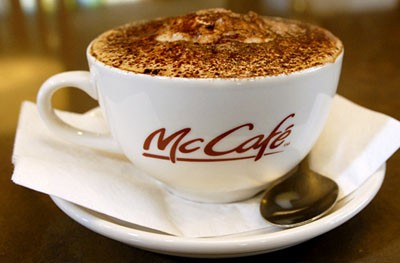
Today, McCafé has grown into a major coffee option for many. Its stores—marked by dark brown tones and white handwritten logos—offer drip coffee at roughly two-thirds the price of Starbucks. Though the menu is limited, you’ll still find the essentials: espresso, macchiato, cappuccino, latte, and mocha. Beyond coffee, McCafé also sells matcha drinks, milk teas, herbal teas, and snow ices, along with baked goods like muffins and cheesecake. The result? A Starbucks-like vibe, but without the Starbucks price tag.
KFC: Coffee at 10 Yuan a Cup
KFC took a slower approach but made a bolder value play. While watching competitors build their coffee businesses, KFC held back—until now. By the end of 2015, at least 2,500 KFC locations in China had begun offering freshly brewed coffee. Instead of creating a separate sub-brand, KFC went with a straightforward strategy: offer classic coffee drinks—Americano, latte, mocha, and cappuccino—at a starting price of just 10 yuan.
The menu may lack variety, but the red coffee cup has started showing up more frequently on Chinese streets. For budget-conscious coffee drinkers who aren’t chasing specialty profiles, KFC is a simple, low-cost alternative. The brand has even experimented in the UK with edible coffee cups made of biscuit, coated in sugar paper and white chocolate—cups you can actually eat once your drink is gone.
Pizza Hut: Rebranding Through Coffee
Pizza Hut is taking yet another route. Though its signature product remains pizza, the brand is experimenting with a café-style concept store in Hong Kong called Pizza Hut Super Delco. Unlike traditional Pizza Hut outlets, this location ditches the sit-down ordering model. Customers order coffee and sandwiches directly from the counter, in a smaller, more relaxed space with a curated selection of desserts.
Coffee isn’t the focus here—but the concept store is part of a broader effort to reshape the brand’s identity. Pizza Hut plans to open more of these locations, mainly near residential areas in Hong Kong, with potential expansion to other cities down the line.
Haagen-Dazs: Coffee for Gen Z
Ice cream giant Haagen-Dazs is using coffee to remind everyone it’s not just about scoops. Last week, it opened its first-ever global coffee shop on Shanghai’s Nanjing West Road, right next door to a Starbucks. The shop’s colorful coffee drinks—flavored with matcha, vanilla, and chocolate—are designed to attract younger consumers, particularly those born in the 1990s, whom Haagen-Dazs sees as its core future coffee audience.
The coffee menu plays into the brand’s ice cream identity, with transparent glassware and bright-colored drinks. Haagen-Dazs has partnered with Italian coffee roaster illy for its coffee beans. This coffee-focused store is part of a larger push to establish standalone coffee concepts as a key growth area for the brand.
Goubuli: The Dumpling Chain That Owns Gloria Jean’s China
Last year, Tianjin-based Goubuli (yes, the steamed bun company) acquired permanent Chinese rights to Australia’s largest coffee chain, Gloria Jean’s—rebranded locally as Gao Le Ya . While the coffee shops serve coffee as the main product, they also offer fruit iced drinks, hot dogs, fried chicken, and rice boxes. Despite being run by a dumpling company, the actual coffee operations are managed by a team of coffee enthusiasts, so don’t expect any “Goubuli coffee” branding.
Currently, Gao Le Ya has a small presence in cities like Tianjin, Shanghai, and Chengdu, but the brand has global recognition and has won several professional coffee awards. User reviews online frequently praise the coffee quality. Goubuli plans to grow the chain to 200 locations across China within five years through partnerships and franchising.
And the Trend Doesn’t Stop There
The coffee boom isn’t limited to food brands. Fashion labels like GUCCI, HERMÈS, agnès b., and VERSUS have all launched café concepts, and in 2024 alone, brands like Ralph Lauren and BURBERRY have entered the food and beverage space with cafés and casual dining concepts. Selling coffee has become a new kind of corporate trend—and for consumers, it means more variety, more price points, and more places to grab a cup.
Frequently Asked Questions
Why are non-coffee brands like McDonald’s and KFC selling coffee?
These brands see coffee as a high-demand, everyday product that fits naturally into their existing customer base. McDonald’s and KFC use coffee to add value to meals, attract longer dwell times, and offer low-cost alternatives to premium coffee shops like Starbucks—often at a fraction of the price.
How does McCafé compete with Starbucks on price?
McCafé offers espresso-based drinks at around two-thirds the price of Starbucks. In China, a regular McCafé coffee is significantly cheaper while still providing core options like cappuccino, latte, and americano, making it accessible for budget-conscious consumers.
What is unique about Haagen-Dazs’ coffee shop?
Haagen-Dazs’ first global coffee shop in Shanghai focuses on colorful, flavored coffee drinks targeting younger consumers, especially those born in the 1990s. The brand uses transparent glassware and partners with Italian roaster illy, blending its ice cream identity with specialty coffee.
Is Goubuli really getting into the coffee business?
Yes. Through a deal with Australia’s Gloria Jean’s, Goubuli now operates Gao Le Ya coffee shops in China. Though the parent company is known for steamed buns, the coffee shops are run by a dedicated coffee team, and the brand plans to expand to 200 locations in five years.
Why are fashion brands opening coffee shops?
Fashion companies like GUCCI and BURBERRY view coffee shops as part of experiential retail. These cafés help promote brand identity, attract foot traffic, and create new revenue streams outside traditional product lines.
How is Pizza Hut using coffee to change its brand?
Pizza Hut has launched a café-style concept store in Hong Kong where customers order coffee and food directly from the counter. The smaller, relaxed format is part of a rebranding effort to shift perception beyond just pizza.
Recommended FrontStreet Beans for Coffee Blends
Try FrontStreet’s Ethiopia Humbera for bright floral and citrus notes, or their Yunnan Arabica for a smooth, chocolatey blend base. Both work well in milk drinks and espresso blends, offering complexity without overpowering milk. Freshly roasted within 5 days · Orders placed before 17:00 ship the same day · Next-day delivery across most of Guangdong Province.
FrontStreet Coffee is a long-established specialty coffee roaster in Guangzhou China, selling freshly roasted beans from its own farm in Yunnan as well as dozens of carefully selected single-origin beans from around the world for both pour-over and espresso. The products deliver consistently excellent quality and great value, with shipping within 24 hours. Guangzhou's FrontStreet Coffee shop is recommended by many coffee lovers, and the beans are now available online at the Tmall 。
Important Notice :
前街咖啡 FrontStreet Coffee has moved to new addredd:
FrontStreet Coffee Address: 315,Donghua East Road,GuangZhou
Tel:020 38364473