3 Essential Environmental Factors for Growing Coffee Trees
If you've ever wondered why your favorite Ethiopian or Colombian coffee tastes the way it does, the secret starts long before roasting. Over 60 coffee-producing countries lie within a specific global zone where climate, soil, and elevation align just right. Without these factors, you simply wouldn’t get high-quality coffee beans. So what exactly makes a place suitable for growing coffee trees?
In short: coffee needs average annual temperatures above 20°C, steady rainfall of 1,000–2,000 mm, well-drained fertile soil, and ideal altitudes between 1,000 and 2,000 meters—though exceptions exist. These three core conditions shape not just survival, but flavor potential.
What Is the Coffee Belt?
The term 'Coffee Belt' refers to the tropical and subtropical region between the Tropic of Cancer (23°26′ N) and the Tropic of Capricorn (23°26′ S). This global band includes over 60 coffee-growing nations. Most of the world’s coffee is cultivated here because only within this zone do conditions stay warm enough year-round—above 20°C—for coffee plants, especially arabica, to develop correctly.
1. Climate Conditions: Temperature, Rainfall & Sunlight
Coffee trees are highly sensitive to their climate. Two main species dominate: Arabica and Robusta, each with distinct tolerances. Arabica (Coffea arabica) struggles with extreme heat or cold. It grows best at elevations between 1,000 and 2,000 meters in cooler, high-altitude regions where daytime temperatures stay moderate. It cannot tolerate constant highs above 30°C or frost below 5°C. For this reason, arabica farms are often located on steep mountain slopes where microclimates offer relief from intense sun.
Robusta (Coffea canephora), on the other hand, is far hardier. Its name literally means 'robust.' It thrives at lower altitudes, usually under 1,000 meters, and tolerates warmer temperatures and higher humidity better than arabica.
Ideal coffee-growing climates feature consistent annual rainfall between 1,000 and 2,000 millimeters. Too little rain causes drought stress; too much leads to disease. Additionally, arabica benefits from growing in areas with morning fog and significant diurnal temperature variation—cool nights and warm days slow ripening, allowing flavors to develop more fully. In some regions, farmers plant shade trees such as bananas, maize, or mangoes to filter intense sunlight and regulate temperature.
2. Soil: Volcanic, Rich, and Well-Drained
Coffee trees demand fertile, well-aerated soil rich in organic matter and moisture. The best soils are volcanic in origin, offering excellent drainage alongside high mineral content. Ethiopia’s highlands, for example, are covered with volcanic soils rich in humus, creating naturally productive coffee land.
Similar ideal soils are found in Brazil’s Terra Rossa (red earth formed from weathered basalt), the Central American highlands, the Andes foothills, parts of Africa, the West Indies, and even some regions of Java. These soils retain water without becoming waterlogged, a critical balance for root health.
Soil pH and composition subtly influence coffee flavor. Acidic soils tend to produce fruitier, brighter cups with more pronounced acidity. Meanwhile, regions like Rio de Janeiro have iodine-rich soils; when coffee cherries are harvested by shaking them onto the ground, the beans absorb distinctive earthy tones from the soil surface.
3. Terrain & Altitude: Why Higher Isn’t Always Better—But Often Is
It’s a common assumption: higher elevation equals better coffee. And in many cases, it’s true. In Central America, coffee farms are graded by altitude. Guatemala’s SHB (Strictly Hard Bean) grade, for instance, designates beans grown at around 1,370 meters—the highest and most sought-after classification in that system.
High-altitude environments typically feature cooler temperatures and frequent morning fog, both of which slow coffee cherry development. This extended growing period allows sugars and acids to develop more complexity in the bean. Steep, rugged slopes also make farming more difficult—but the resulting microclimates help protect coffee from harsh midday sun and create optimal temperature swings for flavor maturation.
That said, not all premium coffees come from great heights. Jamaica’s Blue Mountain and Hawaii’s Kona coffees grow at relatively moderate elevations but still achieve world-class quality thanks to ideal overall conditions: balanced rainfall, cool temperatures, volcanic soils, and consistent fog.
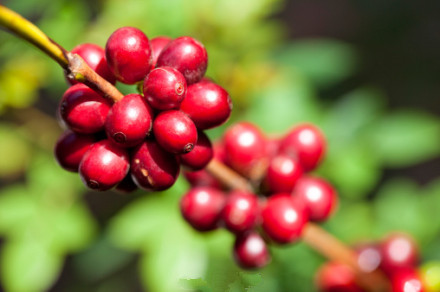
This is why altitude acts more as a general indicator within a broader context. While higher elevation often correlates with higher cup quality—especially due to increased concentration and complex acidity—it’s the combination of climate, soil, and terrain that ultimately determines a coffee’s profile. European markets have long prized Kenyan and Colombian highland coffees not just for their origin, but for their higher solubility during brewing, which contributes to a richer extraction.
As for Robusta? It’s almost always grown below 1,000 meters. It grows faster, resists pests more easily, and tolerates poor soils—but delivers significantly less desirable aroma and taste compared to arabica. That’s why most specialty-focused roasters, including us, avoid it unless there’s a specific purpose. We want better-tasting coffee, and we believe you do too.
Frequently Asked Questions
What is the coffee belt?
The Coffee Belt is the region between the Tropic of Cancer (23°26′ N) and the Tropic of Capricorn (23°26′ S) where most of the world’s coffee is grown. This zone provides the warm, stable temperatures—above 20°C annually—necessary for coffee trees to thrive.
What temperature range is best for growing coffee?
Coffee grows best in areas with average annual temperatures above 20°C. Arabica coffee struggles below 5°C and above 30°C, and flourishes between 1,000–2,000 meters where temperatures are moderate. Robusta is more heat-tolerant and can grow in lower, hotter zones under 1,000 meters.
How much rainfall do coffee plants need?
Ideally, coffee needs steady annual rainfall between 1,000 and 2,000 millimeters. Too little causes drought stress; too much risks fungal diseases. Regions with distinct wet and dry seasons and some fog can offer optimal conditions, especially for arabica.
Does coffee soil need to be volcanic?
Volcanic soils are ideal because they’re rich in organic matter, drain well, and hold nutrients. But coffee can also grow well in other fertile, well-drained soils like Brazil’s Terra Rossa or Andean red clays—as long as they’re rich in humus and moisture-retentive without being waterlogged.
Why does altitude affect coffee quality?
Higher altitudes usually mean cooler temperatures and larger day-night temperature shifts. These slow down cherry ripening, allowing more time for sugar and acid development, which leads to more complex and flavorful beans. However, altitude works alongside climate and soil—not alone.
Can coffee grow at low altitudes?
Yes. Robusta coffee is commonly grown below 1,000 meters because it tolerates heat, humidity, and poorer soils. Some arabica regions also produce quality coffee at moderate elevations if other conditions like climate and soil are ideal—like Jamaica’s Blue Mountain or Hawaii’s Kona.
Recommended FrontStreet Coffee for Altitude & Terroir Fans
Try our FrontStreet Yirgacheffe for bright citrus and floral notes typical of high-altitude Ethiopian arabica. For something more chocolatey and structured, our FrontStreet Colombia Huila offers balanced acidity and caramel sweetness from volcanic Andean soil. Both beans highlight how elevation, soil, and climate shape flavor. Freshly roasted within 5 days · Orders placed before 17:00 ship the same day · Next-day delivery across most of Guangdong Province.
FrontStreet Coffee is a long-established specialty coffee roaster in Guangzhou China, selling freshly roasted beans from its own farm in Yunnan as well as dozens of carefully selected single-origin beans from around the world for both pour-over and espresso. The products deliver consistently excellent quality and great value, with shipping within 24 hours. Guangzhou's FrontStreet Coffee shop is recommended by many coffee lovers, and the beans are now available online at the Tmall 。
Important Notice :
前街咖啡 FrontStreet Coffee has moved to new addredd:
FrontStreet Coffee Address: 315,Donghua East Road,GuangZhou
Tel:020 38364473