Peru’s Raccoon Coffee Sells for $60 a Cup
In a small Lima café, a single cup of coffee sells for up to $60—ten times the price of standard brews. Customers aren’t paying for branding or ambiance. They’re buying a rare, naturally processed coffee bean collected from the droppings of a wild jungle animal. This isn’t marketing hype. It’s Peru’s controversial and costly contribution to the world of ultra-premium coffee.
The answer to why this coffee commands such a high price lies in its unique production: it’s made from beans eaten, fermented, and excreted by a wild South American mammal, then carefully cleaned and roasted. Annual production is under 2,000 kg, with most exported to the U.S., where a single cup can cost $60 and a kilogram sells for up to $1,400.
What Is Peru’s Raccoon Coffee?
Often dubbed “raccoon poop coffee,” this Peruvian brew is actually made from beans processed by a native mammal known as the long-nosed or coati—a small, raccoon-like creature with a long snout. Native to the Andean-Amazon region, coatis are frugivorous and selectively eat ripe coffee cherries. Inside the animal’s digestive tract, the coffee beans undergo partial fermentation as the fruit pulp is digested, but the hard beans remain intact. After roughly four to six hours, the beans are excreted, collected, washed, and roasted. The result is said to have a smoother, less bitter profile due to reduced protein content and altered fermentation.
Why Is It So Expensive?
Several factors drive the extraordinary price. First, the production process is entirely natural and uncontrolled—coatis roam wild and choose only the ripest, freshest coffee cherries to eat. Each animal consumes just 25 grams of cherries per day, limiting overall yield. Annual global production is under 2,000 kilograms, with around 1,400 kg exported to the United States. In the U.S. market, a single cup sells for $60, while in Peru, a small cup goes for over $10. Globally, prices reach up to $1,400 per kilogram, placing it among the most expensive coffees in the world, alongside kopi luwak and other exotic brews.
Peru’s Rise in Global Coffee
Peru has become the world’s third-largest coffee exporter, celebrated for its high-quality arabica beans grown in the Andes and Amazon regions. The country’s coffee is known for bright acidity, smooth body, and complex fruit notes. Most of Peru’s coffee is cultivated at elevations between 1,300 and 2,000 meters, with some areas reaching up to 2,000 meters. Major producing regions include Cajamarca, San Martín, and Amazonas in the north, and Ayacucho, Puno, and Cusco in the south. The country’s diverse microclimates contribute to distinct regional profiles, with many farms now focusing on organic and specialty-grade production. Peru also promotes coffee culture through its annual National Coffee Day on August 28, established in 2008 to boost domestic consumption—currently just 500 grams per person per year, compared to 2.5 kg in Colombia and 6 kg in Brazil.
How Coatis Process the Coffee
The coati, resembling a small raccoon, plays the central role in creating this coffee. Native to elevations between 1,800 and 4,000 meters in the South American Andes and Amazon, coatis are known for selecting only the ripest coffee cherries. Once consumed, the coffee cherries pass through the animal’s digestive system, where the fleshy pulp is digested but the coffee beans remain unharmed. During the roughly 4–6 hours inside the coati’s stomach, natural fermentation occurs. This process breaks down some of the bean’s proteins, which are responsible for bitterness. After being excreted, the beans are gathered, thoroughly cleaned, and roasted. Crucially, this fermentation and pulp removal happen naturally, without human or mechanical intervention, making the final product a true wild-processed coffee.
Frequently Asked Questions
What is raccoon coffee and where does it come from?
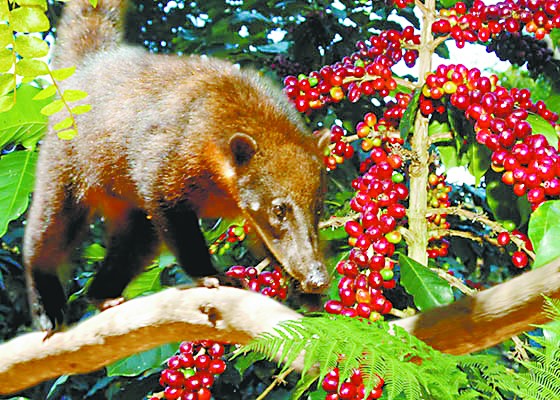
Raccoon coffee, more accurately called coati coffee, is made from coffee beans that are eaten, fermented, and excreted by wild coatis—small mammals native to the Peruvian Amazon. These animals select ripe coffee cherries, and after digestion, the beans are collected, cleaned, and roasted. It originates from the Amazon region of Peru, primarily at altitudes of 1,800 to 4,000 meters.
Why does coati coffee cost up to $60 per cup?
Coati coffee is extremely rare, with annual production under 2,000 kg. The beans are processed naturally by wild animals, which limits output and makes collection labor-intensive. With most of the supply exported to the U.S., where demand is high, a single cup can cost $60, and a kilogram can sell for up to $1,400 due to scarcity and the unique processing method.
How is coati coffee different from regular coffee?
The key difference lies in the fermentation process. Inside the coati’s digestive tract, the coffee beans undergo natural fermentation that reduces proteins responsible for bitterness. This results in a smoother, less acidic cup with a distinctive flavor profile compared to conventionally processed coffee.
Is coati coffee safe to drink?
Yes, coati coffee is safe. The beans are collected from the animal’s feces, thoroughly washed, and roasted at high temperatures, which eliminates any potential health risks. The process is similar in concept to other animal-processed coffees like kopi luwak, though it remains controversial among animal welfare advocates.
Which countries drink the most coffee per person?
Per capita, Colombia consumes 2.5 kg of coffee annually, Brazil 6 kg, while Peru lags behind with just 500 grams. This low consumption is part of the reason Peru launched National Coffee Day in 2008 to encourage local drinking habits and promote its growing specialty coffee industry.
What other regions in Peru produce specialty coffee?
Besides the Amazon, key specialty coffee regions in Peru include Cajamarca, San Martín, and Amazonas in the north, as well as Ayacucho, Puno, and Cusco in the south. These areas benefit from high altitudes (1,300–2,000+ meters), volcanic soils, and diverse microclimates, which contribute to Peru’s reputation for high-quality, aromatic coffees.
Recommended FrontStreet Beans for Coffee Adventurers
For fans of rare and distinctive coffees, try FrontStreet’s Brazil Queen Manor (Yellow Bourbon, sun-dried with thick sweetness and intense fruit notes) or the Panama-sourced Esmeralda Red Label Geisha (known for explosive citrus, floral, and stone fruit layers). Both highlight how natural processes and high altitudes can shape unique flavor profiles. Freshly roasted within 5 days · Orders placed before 17:00 ship the same day · Next-day delivery across most of Guangdong Province.
FrontStreet Coffee is a long-established specialty coffee roaster in Guangzhou China, selling freshly roasted beans from its own farm in Yunnan as well as dozens of carefully selected single-origin beans from around the world for both pour-over and espresso. The products deliver consistently excellent quality and great value, with shipping within 24 hours. Guangzhou's FrontStreet Coffee shop is recommended by many coffee lovers, and the beans are now available online at the Tmall 。
Important Notice :
前街咖啡 FrontStreet Coffee has moved to new addredd:
FrontStreet Coffee Address: 315,Donghua East Road,GuangZhou
Tel:020 38364473