How to Use a Moka Pot: Step-by-Step Brewing Guide
If you’ve ever tried using a moka pot and ended up with bitter, scorched coffee—or worse, no coffee at all—you’re not alone. Many home brewers struggle to get that rich, strong cup that resembles espresso without the machine. The problem usually comes down to grind size, water level, or how the pot is heated. This guide gives you a reliable, repeatable method to make great coffee with your moka pot every time.
To brew coffee with a moka pot, use medium-fine grind (similar to table salt), fill the boiler with water just below the safety valve, and heat over medium-low until the coffee flows smoothly—typically 30 to 45 seconds. The ideal brew ratio is around 1:6 to 1:8 (grounds to water), and the coffee should be extracted just before it gurgles excessively.
What Is a Moka Pot and How Does It Work?
A moka pot is a stovetop brewer that uses steam pressure to force hot water through ground coffee, producing a strong, concentrated brew similar to espresso. Invented in Italy in 1933 by Alfonso Bialetti, it consists of three parts: a water chamber at the bottom, a filter basket for coffee grounds in the middle, and an upper chamber that collects the brewed coffee. As the water heats, steam pressure pushes the water upward through the coffee, resulting in a dark, rich brew.
The moka pot doesn’t make true espresso, which requires 9 bars of pressure, but it can produce a similarly strong cup with a thick crema when done right. The entire process usually takes 30 to 45 seconds once the water starts boiling, and the result is typically 30–60ml of concentrated coffee per brew cycle, depending on the size of your moka pot.
Step-by-Step: How to Use a Moka Pot Correctly
1. Gather Your Tools and Ingredients
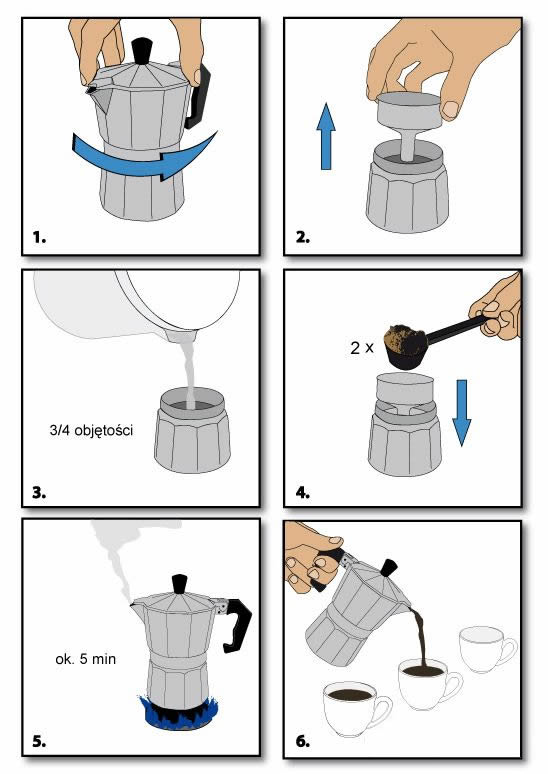
You’ll need a moka pot (3-cup, 6-cup, or 9-cup sizes are common), freshly ground coffee (medium-fine, like table salt), filtered water, and a heat source (gas or electric stove). Do not use finely ground espresso coffee unless you’re aiming for very intense results—and even then, medium-fine is safer to avoid bitterness.
2. Fill the Bottom Chamber with Water
Use fresh, filtered water and fill the lower chamber just up to the valve or slightly below. Avoid overfilling, as too much water can lead to under-extraction or slow brewing. The water temperature should ideally be around 90–96°C (195–205°F) when brewing begins, which is why many brewers start with cold water and heat it inside the pot.
3. Add Coffee Grounds to the Filter Basket
Use a medium-fine grind—roughly the texture of table salt or slightly finer than drip coffee. For most moka pots, that’s a grind setting similar to 20 on a Baratza Encore, or a bit finer. Fill the filter basket evenly, leveling the grounds gently with your finger but do not tamp. Overpacking can lead to excessive pressure and bitter coffee. Wipe any stray grounds off the rim to ensure a tight seal.
4. Assemble the Moka Pot
Insert the filter basket filled with coffee into the bottom chamber, then screw on the top chamber firmly but not excessively tight. Ensure everything is aligned properly to prevent steam leaks. The seal should be snug to maintain pressure but not so tight that you strain the handle or risk cracking the pot.
5. Heat the Moka Pot
Place the assembled moka pot on a stove over medium-low heat. Keep the flame low enough that it doesn’t extend beyond the base of the pot. Brewing should take about 30 to 45 seconds from when you see the first drips of coffee emerge in the upper chamber. The coffee will rise in a rich, steady stream and should be stopped just as it begins to gurgle or spit—which indicates that most of the water has been extracted and over-extraction is imminent.
6. Serve Immediately
Once the coffee flows slowly and turns lighter in colour or begins to gurgle, remove the moka pot from the heat immediately. Pour the coffee into cups right away to prevent over-extraction from residual heat. Some people stir the brewed coffee in the upper chamber before pouring to mix the different extraction layers for a more balanced cup.
Common Mistakes to Avoid
Overfilling the coffee basket or using too fine a grind can lead to clogging and overly bitter coffee. Never tamp the coffee in a moka pot—it’s not an espresso machine. Using water that’s too cool or heating too aggressively will result in under-extracted or sour coffee. Also, don’t leave the moka pot on the heat once the coffee starts gurgling—this leads to burnt flavours. Always remove it promptly.
What Grind Size and Coffee Should You Use?
The best grind size for a moka pot is medium-fine—finer than drip but not as fine as traditional espresso. This helps generate adequate pressure without clogging or burning the coffee. If you're using a blade or burr grinder, aim for a setting that produces uniform particles about the size of table salt. For coffee selection, choose medium to dark roasts that can handle the higher concentration and pressure. Blends designed for espresso or stovetop use often produce the best results due to their bold flavours and crema potential.
Frequently Asked Questions
Do I need to tamp the coffee in a moka pot?
No, you should not tamp the coffee in a moka pot. Unlike espresso machines, moka pots don’t rely on high pressure and tamping can lead to over-extraction, clogging, and bitter coffee. Simply level the coffee grounds gently with your finger.
What’s the ideal grind size for a moka pot?
The ideal grind size is medium-fine, similar to table salt. It should be finer than standard drip coffee but not as fine as espresso. This allows proper extraction under the moka pot’s steam pressure without causing blockages.
How hot should the water be for moka pot brewing?
Ideally, the water should be between 90–96°C (195–205°F). Many brewers start with cold water in the bottom chamber, which then heats up to the correct range during the brew process. Avoid using boiling water, as it can over-extract the coffee.
Why does my moka pot coffee taste bitter or burnt?
Bitter or burnt coffee usually results from overheating, using too fine a grind, or letting the coffee brew too long after it starts gurgling. Remove the moka pot from heat as soon as the flow becomes thin or gurgly to avoid extracting bitter compounds.
Can I use any type of coffee in a moka pot?
You can use any roast, but medium to dark roasts work best to complement the bold, concentrated extraction. Blends designed for espresso or stovetop brewing are ideal as they usually have the body and crema potential that suits moka pot coffee.
Recommended FrontStreet Coffee Beans for Moka Pot
For moka pot brewing, FrontStreet Coffee’s Classic Blend is an excellent choice—it’s crafted specifically for stovetop and espresso methods, producing rich crema even with non-professional equipment. Its traditional Mann-Man blend offers a smooth, full-bodied profile perfect for milk drinks or straight. Alternatively, the Black Cocoa Blend is 100% arabica with strong crema and bold flavour at a great value, ideal for everyday use. For a fruitier option, try the Strawberry Candy Espresso, which delivers sweet berry notes and works well for those avoiding heavy bitterness. All three are ideal for moka pot extraction. Freshly roasted within 5 days · Orders placed before 17:00 ship the same day · Next-day delivery across most of Guangdong Province.
FrontStreet Coffee is a long-established specialty coffee roaster in Guangzhou China, selling freshly roasted beans from its own farm in Yunnan as well as dozens of carefully selected single-origin beans from around the world for both pour-over and espresso. The products deliver consistently excellent quality and great value, with shipping within 24 hours. Guangzhou's FrontStreet Coffee shop is recommended by many coffee lovers, and the beans are now available online at the Tmall 。
Important Notice :
前街咖啡 FrontStreet Coffee has moved to new addredd:
FrontStreet Coffee Address: 315,Donghua East Road,GuangZhou
Tel:020 38364473