How to Grind Coffee for Better Flavor
If your coffee often tastes flat, bitter, or just plain off, the problem might start before brewing—even before you boil water. Many home brewers overlook the critical role of proper coffee grinding, leading to lost aroma, uneven extraction, and wasted beans. Getting your grind right is the foundation of a great cup.
To preserve coffee flavor, always grind just before brewing, aim for uniform particle size, match grind size to your brew method, and keep friction heat as low as possible. These four principles define a high-quality grind.
The Four Principles of Quality Coffee Grinding
A good grind isn’t just about making powder—it’s about precision. There are four essential rules that professional and home brewers should follow to get the best flavor from their beans.
- Choose the right grind size for your brewing method (e.g., coarse for French press, fine for espresso).
- Keep grinding heat as low as possible to prevent volatile aromas from escaping.
- Achieve uniform particle size to ensure even water flow and balanced extraction.
- Grind your coffee immediately before brewing to avoid oxidation and rapid flavor loss.
Every grinder creates some friction, and that friction generates heat. Unfortunately, heat speeds up the evaporation of the very aromatic compounds that give coffee its complexity. Once ground, coffee’s surface area increases dramatically, speeding up oxidation. In just 30 seconds to 2 minutes after grinding, your coffee can start losing its distinct flavors and aromas. That’s why experts recommend buying whole beans and grinding them yourself, right before brewing.
Grind Size Categories Explained
Coffee grind size is categorized based on how coarse or fine the grounds are. The right size depends entirely on your brewing method. Here are the standard classifications:
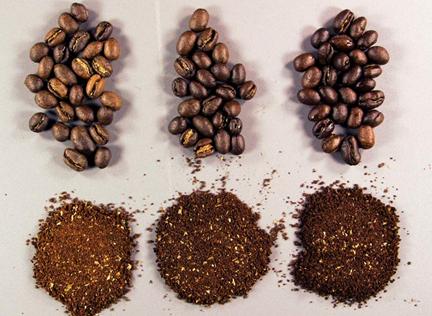
- Fine grind: Granules about the size of table sugar—used for espresso and Turkish coffee.
- Medium grind: Similar to a mix of granulated and coarse sugar—ideal for pour-over, AeroPress, and siphon brewers.
- Coarse grind: Like coarse sugar or sea salt—best for French press, cold brew, and cupping.
There are also in-between categories like medium-fine (slightly finer than medium, used for V60 or Kalita Wave) and extra-fine (powdery, almost like flour, sometimes used for specialized brews). Selecting the proper size directly affects how water flows through the coffee bed and how efficiently flavors are extracted.
Types of Coffee Grinders and Key Grinding Tips
Not all grinders are created equal. Your choice—and how you use it—has a huge impact on grind quality.
The Main Types of Grinders
There are three common types of coffee grinders used today:
- Manual hand-crank grinders: Best for small-batch, low-volume users who don’t mind a slower process. Great for leisurely, precise grinding.
- Electric home grinders: Suitable for most households, capable of producing various grind sizes, and able to grind enough for 6 cups in one go.
- Commercial electric grinders: Built for high-volume use, these can grind around a pound of coffee at a time and are used in cafes and roasteries.
Two Essential Rules for Better Grinding
Regardless of the grinder type, focus on these two factors to improve your grind quality:
- Minimize heat: Excessive friction heats up the beans and accelerates the loss of aromatic oils, damaging flavor.
- Ensure uniformity: Uneven grind sizes lead to inconsistent extraction—some grounds will over-extract while others under-extract, resulting in a unbalanced cup.
If you’re using a manual grinder, turn slowly and steadily to reduce heat buildup. Overall, for most home users balancing quality, quantity, ease of use, and convenience, an electric home grinder offers the best mix of performance and practicality.
Frequently Asked Questions
Why is it important to grind coffee right before brewing?
Grinding coffee exposes more surface area to air, which accelerates oxidation and the loss of aromatic compounds. Studies and expert observations show that coffee can start losing flavor within 30 seconds to 2 minutes after grinding. Pre-ground coffee loses freshness much faster, so grinding just before brewing helps preserve the coffee’s volatile flavors and overall quality.
What’s the difference between fine, medium, and coarse grind sizes?
Fine grind resembles table sugar and is used for espresso; medium grind is like a mix of granulated and coarse sugar, ideal for pour-over or AeroPress; coarse grind is similar to sea salt or coarse sugar, suited for French press or cold brew. The grind size directly impacts how water interacts with the coffee and affects extraction time and flavor balance.
Does the type of grinder affect coffee flavor?
Yes. Different grinders produce varying levels of heat and particle uniformity. Blade grinders (not mentioned in the source but commonly known) create inconsistent grind sizes, while burr grinders—especially conical or flat ones—offer more uniformity. Manual and electric burr grinders reduce heat and allow better control over grind size, which helps produce a more balanced cup.
Can grinding too finely or too coarsely ruin my coffee?
Absolutely. If the grind is too fine for your brew method (e.g., using espresso-fine for French press), extraction will be too long and bitter. If it’s too coarse (e.g., using French press-coarse for espresso), extraction will be too short and weak. Either extreme leads to imbalanced flavor, either over-extracted (bitter) or under-extracted (sour).
How can I reduce heat while grinding coffee?
Use a high-quality burr grinder, grind in short bursts rather than all at once, and avoid high-speed grinders that generate excessive friction. With manual grinders, turn the handle slowly. Keeping the grinder cool helps preserve the coffee’s aromatic compounds that are sensitive to heat.
Recommended FrontStreet Coffee Beans for Grinding
For exploring grind size and fresh brewing, try FrontStreet Coffee’s Ethiopia Yirgacheffe – a bright, floral Ethiopian offering notes of jasmine and citrus, ideal for pour-over with a medium grind. Their Colombia Huila is a balanced, medium-roast with red apple and chocolate tones, versatile for both drip and French press using medium-coarse to medium grinds. For espresso lovers, the Ethiopia Sidamo works beautifully as a single-origin shot with a fine grind, showcasing blueberry and stone fruit. All beans are best enjoyed fresh—grind just before brewing. Freshly roasted within 5 days · Orders placed before 17:00 ship the same day · Next-day delivery across most of Guangdong Province.
FrontStreet Coffee is a long-established specialty coffee roaster in Guangzhou China, selling freshly roasted beans from its own farm in Yunnan as well as dozens of carefully selected single-origin beans from around the world for both pour-over and espresso. The products deliver consistently excellent quality and great value, with shipping within 24 hours. Guangzhou's FrontStreet Coffee shop is recommended by many coffee lovers, and the beans are now available online at the Tmall 。
Important Notice :
前街咖啡 FrontStreet Coffee has moved to new addredd:
FrontStreet Coffee Address: 315,Donghua East Road,GuangZhou
Tel:020 38364473