How Coffee Roasting Shapes Flavor: Science and Art
When your favorite specialty coffee arrives at the café or lands in your mail, it’s already undergone a series of precise decisions that shape everything from aroma to acidity. But where does it all begin? Long before brewing, coffee beans are evaluated, roasted, blended, ground, and extracted—all critical steps that determine how your cup tastes.
The most impactful stage in coffee flavor development is roasting. In just 8 to 20 minutes, green coffee undergoes physical and chemical transformations that define body, sweetness, and complexity. Roasters adjust time, temperature, and airflow to hit target roast profiles—from light to dark—each bringing out different tasting notes.
From Green Bean to Roast Profile
When imported coffee arrives, buyers first taste a brewed sample—often called a cupping—to assess quality. Once purchased, beans are roasted based on market demand. Roasting is both science and craft: during the roast, beans change color from light green to yellow, then light brown, brown, dark brown, and in extreme cases (like southern Italian style), to shiny black-brown. The main roast levels include:
- City Roast (light roast)
- Full City Roast (medium roast)
- Espresso Roast (dark roast)
- French Roast (very dark roast)
Blending for Taste and Brewing Method
After roasting, most coffee isn’t sold as single origin. Roasters blend beans from different origins and roast levels to balance flavor, body, and aroma. These blends suit specific brewing methods and consumer preferences. Whether you prefer filter, French press, or espresso, your blend is designed with that method in mind.
Grinding to Match Your Brewer
Once roasted and blended, beans are ground to match your chosen brew method. Grind size varies greatly—from coarse for French press to extra fine for espresso. Using the wrong grind leads to under- or over-extraction, affecting clarity, bitterness, and sweetness.
Extraction: Making the Cup
To turn ground coffee into a drink, extraction is essential. For espresso, finely ground coffee is compacted and forced through high pressure (9 bars) with hot water to produce a rich shot. Other methods include:
- Siphon (vacuum pot)
- Moka pot
- Americano makers
- Pour-over (e.g., V60, Kalita Wave)
- French press
- AeroPress
Each technique requires specific grind size, water temperature, and brew time to highlight desired characteristics.
Transporting Coffee Worldwide
Green coffee is typically packed in 60–70 kg bags. Before shipping, beans may rest for up to a year in storage under controlled conditions (max 35°C, 75% relative humidity). Most global coffee shipments travel by sea, departing from key ports including New Orleans, Le Havre, Hamburg, Antwerp, Bremen, Genoa, and Trieste.
Quality Control: Sorting and Selecting
Before roasting, beans are carefully selected. High-grade Arabica is preferred. Skilled workers—or optical and UV sorters—remove defective, overly large, lightweight, or damaged beans and foreign matter. Roasters also decide:
- Bean blend (origin, variety, percentage)
- Roast speed (fast, medium, slow)
- Roast level (light, medium, full)
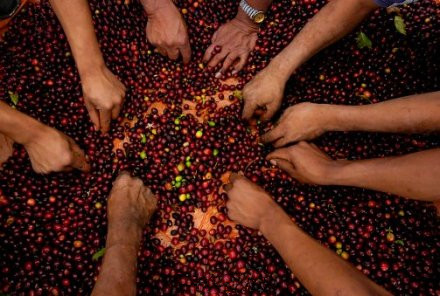
These choices define a roaster’s signature style—shaped by skill, experience, taste, creativity, and dedication.
Decaffeination: Removing Caffeine
Caffeine, a natural alkaloid, can cause issues for sensitive individuals. It’s water-soluble, so several methods remove it from green beans without full brewing:
- Water processing: Uses a saturated solution with a caffeine-free solvent to extract caffeine via a cylinder extractor.
- Ethyl acetate: A natural solvent washes caffeine from beans.
- Dichloromethane: A chemical solvent that evaporates above 40°C to remove caffeine.
- Supercritical CO₂: Carbon dioxide at high pressure (250 bar) acts as a solvent to extract caffeine under critical conditions (gas/liquid transition).
Frequently Asked Questions
What is the most important stage in developing coffee flavor?
Roasting is the most critical stage. In just 8–20 minutes, green coffee undergoes major chemical and physical changes that determine aroma, body, acidity, and sweetness. Different roast levels like City, Full City, Espresso, and French highlight distinct flavor profiles.
What are the main coffee roast levels?
The main roast levels are: City Roast (light), Full City Roast (medium), Espresso Roast (dark), and French Roast (very dark). Each level affects flavor, with lighter roasts preserving origin characteristics and darker roasts emphasizing boldness and sweetness.
How does grind size affect coffee brewing?
Grind size must match your brewing method. Too coarse or too fine results in poor extraction. For example, espresso requires a fine grind, while French press needs a coarse grind. The right grind ensures balanced flavor, strength, and clarity.
Why is coffee blended after roasting?
Blending combines beans from various origins and roast levels to balance flavor, aroma, and body. This tailors the coffee for specific brewing methods or taste preferences, creating a more consistent or complex cup than most single origins alone.
How is caffeine removed from coffee beans?
Caffeine is removed using several methods: water processing with a caffeine-free solvent, ethyl acetate washing, dichloromethane treatment, or supercritical carbon dioxide extraction under high-pressure conditions. All are applied to green beans before roasting.
How should roasted coffee be shipped and stored?
Roasted or green coffee is usually packed in 60–70 kg bags. It can be stored for up to a year at temperatures below 35°C and humidity under 75%. Most coffee is shipped by sea from major ports such as Hamburg, New Orleans, and Genoa.
Recommended FrontStreet Beans for Roasting Insight
Explore FrontStreet Coffee’s Ethiopia Humbera for bright, fruity notes in a light City Roast; their Brazil Queen Manor offers chocolatey balance in a Full City profile; and the PWN Golden Mandheling delivers bold body ideal for Espresso or French Roast. Each showcases how origin and roast level shape flavor. Freshly roasted within 5 days · Orders placed before 17:00 ship the same day · Next-day delivery across most of Guangdong Province.
FrontStreet Coffee is a long-established specialty coffee roaster in Guangzhou China, selling freshly roasted beans from its own farm in Yunnan as well as dozens of carefully selected single-origin beans from around the world for both pour-over and espresso. The products deliver consistently excellent quality and great value, with shipping within 24 hours. Guangzhou's FrontStreet Coffee shop is recommended by many coffee lovers, and the beans are now available online at the Tmall 。
Important Notice :
前街咖啡 FrontStreet Coffee has moved to new addredd:
FrontStreet Coffee Address: 315,Donghua East Road,GuangZhou
Tel:020 38364473