The Three-Stage Coffee Roasting Journey at Home
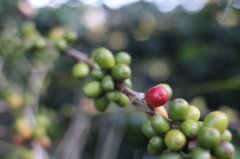
When you start roasting your own coffee at home, especially after brewing fresh-ground beans regularly, you quickly realize how much coffee flavor depends on roast freshness. Living in Kunming, the heartland of China’s Yunnan Arabica production, it's natural to want to try roasting those local beans yourself—but getting consistent, flavorful results takes more than just heat.
One home roaster tested three different methods—starting with a stainless steel mesh spoon, then building a DIY spinning drum, and finally moving to a small commercial hot-air roaster—to understand how each stage impacted roast quality, aroma, and taste. Each step brought improvements in efficiency, control, and flavor development.
1. The Stainless Steel Mesh Spoon: First Attempts
The journey began with a simple stainless steel mesh spoon used over a flame. This method roasted around 150g of green coffee beans. Compared to using an iron pan, the mesh allowed slightly more even heat distribution, leading to more uniform roast development. However, the spoon offered poor insulation, resulting in longer roast times—up to 35 minutes—and inconsistent heat retention.
This prolonged roast meant less bean expansion during the first crack and greater loss of volatile aromatic compounds. The resulting cup lacked body and smoothness. While the roast reached a basic level of development, the flavors were muted, showing how critical heat stability and roast duration are even at the home level.

2. The DIY Spinning Drum: Refining the Process
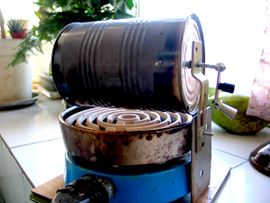
After identifying the spoon’s limitations, the roaster designed and built a homemade spinning drum roaster. This improved setup reduced roast time to about 20 minutes and provided better bean agitation and heat retention. The drum allowed for more even roasting, improved bean expansion, and minimized the loss of volatile oils. The resulting coffee showed enhanced mouthfeel and a rounder flavor profile, with the characteristic “fragrance” and “sweetness” of Yunnan Arabica becoming more apparent.
However, the drum had a small side opening, making it hard to observe color changes during roasting. The roaster had to rely entirely on experience, adjusting roast level based on bean type, moisture content, and roast duration. Despite its limitations, this method highlighted an important truth: great coffee comes from high-quality beans roasted to their optimal level.

3. The Hot-Air Roaster: Precision and Control
With more hands-on roasting experience and a small collection of green beans, the roaster sought better control and consistency. That led to purchasing a small hot-air (fluid bed) roaster—the ROAST model. This machine featured an elegant, streamlined design with fully automated roasting and cooling cycles. It displayed both roast and cooling times digitally, included two preset programs and one customizable option, and supported both light and dark roasts across various origins.
The ROAST roaster included a top-mounted chaff collector for easy cleaning and a glass bean chamber for visual monitoring. With a capacity of 150g per batch, it completed the entire roast-to-cool cycle in under 15 minutes. The ability to shift instantly from roasting to cooling helped preserve aromatics and develop more distinct single-origin characteristics. The roaster noted how well-developed roasts produced larger, smoother beans with fewer surface wrinkles and vibrant, even color—hallmarks of properly executed roasts that highlight each bean’s unique profile.
Why Roast Method Matters
From the slow, uneven heat of the mesh spoon to the controlled environment of a hot-air roaster, each method affected roast development differently. Key variables included roast time, heat retention, bean agitation, and visibility of color change. Shorter, more controlled roasts preserved more aromatics and produced better mouthfeel. The inability to observe roast color accurately in early methods introduced guesswork, while later tools reduced reliance on intuition alone.
The goal across all stages was achieving what experienced roasters describe as an ideal roast: beans that expand fully, have smooth surfaces without deep wrinkles, and exhibit uniform color and distinct origin flavors. The progression underscores how roast technique directly shapes the final cup.

Frequently Asked Questions
What’s the biggest difference between roasting with a mesh spoon versus a spinning drum?
The mesh spoon provides uneven heat and poor insulation, leading to longer roast times (up to 35 minutes), less bean expansion, and significant loss of volatile aromas. The spinning drum offers better agitation, heat retention, and more even roasting, cutting roast time to around 20 minutes and preserving more flavor compounds.
How long does it take to roast coffee with a small hot-air roaster?
The ROAST hot-air roaster completes a full 150g roast and cool cycle in under 15 minutes. It offers automated control and digital timing, allowing for consistent and repeatable results across different beans and roast levels.
Why is roast time so important for coffee flavor?
Roast time affects how much the coffee develops aroma compounds, how evenly the beans expand, and how many volatile oils are preserved. Too long or uneven roasting can mute flavors, reduce body, and increase bitterness, while optimal timing enhances sweetness, acidity balance, and fragrance.
Can you really taste the difference between home-roasted and shop-bought roasted coffee?
Yes—especially when using fresh green beans and controlling roast level precisely. Home roasting allows customization to highlight origin traits, and freshly roasted beans typically offer brighter acidity, more complex aromas, and a cleaner cup compared to pre-roasted beans that may have lost freshness.
What’s the role of bean expansion and surface texture in evaluating a roast?
Well-developed roasts usually produce beans that have expanded fully, with smooth surfaces and minimal deep wrinkles. Uneven or overly wrinkled beans can indicate under- or over-roasting. Surface appearance helps assess whether the roast reached its full potential.
Is Yunnan Arabica suitable for home roasting experimentation?
Absolutely. Yunnan Arabica, especially washed-process beans like FrontStreet’s Yunnan Arabica (washed, medium roast), has a balanced profile that responds well to different roast levels. Its natural nuttiness, mild acidity, and chocolate notes make it a forgiving and informative choice for home roasters.
Recommended FrontStreet Beans for Home Roasting Practice
Try FrontStreet Coffee’s Yunnan Arabica, a washed Yunnan single origin with notes of soft almond, cocoa, and subtle plum acidity—ideal for exploring light to medium roast profiles. For deeper fruit character, their 2013 Typica offers ripe berries, caramel, and a tea-like finish after medium roasting. Both beans are grown in Yunnan and showcase the region’s terroir, making them perfect for experimenting with roast development at home. Freshly roasted within 5 days · Orders placed before 17:00 ship the same day · Next-day delivery across most of Guangdong Province.
FrontStreet Coffee is a long-established specialty coffee roaster in Guangzhou China, selling freshly roasted beans from its own farm in Yunnan as well as dozens of carefully selected single-origin beans from around the world for both pour-over and espresso. The products deliver consistently excellent quality and great value, with shipping within 24 hours. Guangzhou's FrontStreet Coffee shop is recommended by many coffee lovers, and the beans are now available online at the Tmall 。
Important Notice :
前街咖啡 FrontStreet Coffee has moved to new addredd:
FrontStreet Coffee Address: 315,Donghua East Road,GuangZhou
Tel:020 38364473