What a Fresh Coffee Bean Cross Section Reveals
Ever sliced open a roasted coffee bean and wondered what those different layers really mean? Whether you’re a home roaster, a curious barista, or just want to understand your coffee better, looking inside a freshly roasted bean tells you a lot about roast level, freshness, and how it will extract. This guide walks through the visible parts of a coffee bean cross section and what they reveal about your brew.
The typical roasted coffee bean has three main visible layers when cut in half: the outer chaff (silver skin), the lighter outer crust (crust or roasted shell), and the darker inner bean (the endosperm). A fresh roast shows a slight gradient from light to dark, with minimal cracking or oil on the surface. These features help you judge roast degree and freshness quickly.
What You See When You Cut a Coffee Bean in Half
Cutting a roasted coffee bean horizontally reveals several key layers. On the very outside, there may be remnants of the silver skin or chaff—thin, papery flakes that didn’t fully detach during roasting. Just beneath that lies the outer layer of the bean, often slightly lighter in colour and more porous. The majority of the bean is the endosperm—the dense, starchy interior that is responsible for most of the flavour and aroma compounds during brewing. A properly roasted bean will show a smooth transition from the lighter outer layer to the darker core, indicating an even roast.
Why Freshness Changes What’s Inside a Roasted Bean
Freshness dramatically affects the internal and external appearance of roasted coffee. In the first days to weeks after roasting, beans often have a more defined gradient from light outer layer to darker centre. Over time, especially once the roast gases (mainly CO₂) have fully escaped, beans may appear flatter in colour or develop oil on the surface, especially in darker roasts. The internal structure also begins to stale, losing the vibrancy of volatile aromatic compounds. That’s why cutting into a freshly roasted bean shows more contrast and scent retention than one sitting on a shelf for months.

How to Identify Roast Level from a Bean Cross Section
The colour gradient and overall darkness visible in a bean’s cross section offer clues about roast level. A light roast typically shows a narrower band of dark colour toward the centre, with the outer bean remaining lighter and the gradient more abrupt. In a medium roast, the colour deepens more evenly across the bean, and the boundary between the outer and inner sections is smoother. Dark roasts often show an almost uniform dark brown or blackish interior with little to no light area remaining, and the surface may start showing oils even shortly after roasting. These visual cues help roasters and drinkers assess roast degree without a colour meter.
What the Layers Mean for Brewing and Extraction
The internal structure of the coffee bean directly impacts how water flows through the grounds during brewing. The outer layers, especially if underdeveloped or unevenly roasted, can slow down or unevenly distribute extraction. A well-developed bean with a balanced gradient allows for more even water penetration and extraction of sugars, acids, and aromatics. When brewing, especially via methods like pour-over or espresso, understanding whether your bean is evenly roasted helps you adjust grind size, water temperature, and brew time. For instance, a denser, lighter-coloured centre might need a slightly finer grind or extended bloom to fully extract.
Frequently Asked Questions
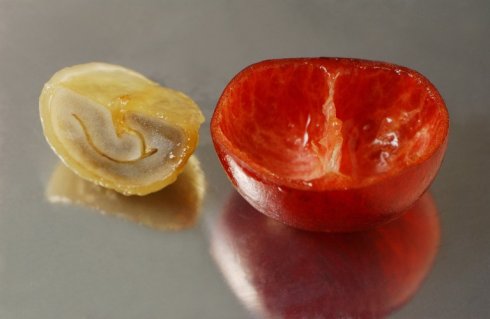
What are the main parts of a coffee bean cross section?
A horizontal cut through a roasted coffee bean typically shows three layers: the outer silver skin or chaff (often loose or missing), the intermediate roasted outer layer (lighter in colour), and the inner endosperm (darker and denser). The boundary between the lighter outer part and the darker core indicates how evenly the bean was roasted.
Does the inside of a coffee bean change as it goes stale?
Yes. Over time, the internal structure of a roasted bean degrades, losing aromatic compounds and flavour volatility. While the basic anatomy remains, the bean’s ability to contribute to a vibrant cup diminishes. Stale beans may also look flatter in colour and lose the distinct gradient seen in fresh roasts.
Can you tell roast level just by looking at a bean’s cross section?
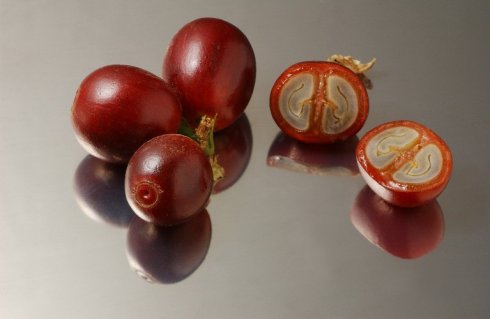
Yes, to a degree. Light roasts show a more abrupt, lighter outer layer with a smaller, darker core. Medium roasts have a smoother, deeper gradient. Dark roasts tend to have an almost uniform dark interior with possible surface oils. The cross section gives visual clues about roast development and degree without needing instruments.
Why is the colour gradient important in a freshly roasted bean?
The gradient—from light outer layer to darker centre—shows how heat penetrated the bean during roasting. A smooth, even gradient usually means even roasting and better potential for balanced extraction. An uneven or abrupt change can signal under- or over-roasted sections, which may affect taste and brewing.
How does bean anatomy affect brewing?
The bean’s internal density and roast uniformity influence water flow and extraction. Evenly roasted beans with a balanced structure allow for more consistent extraction. Uneven beans may lead to under-extracted or channeling issues. Knowing your bean’s cross-section traits helps guide grind size, bloom time, and total brew time.
FrontStreet Coffee Beans Ideal for Observing Freshness
The FrontStreet Ethiopia Humbera showcases bright citrus and floral notes with a juicy body, perfect for observing clarity in a fresh medium roast. The FrontStreet Yirgacheffe offers lemon, berry, and floral tones with high acidity—great for tasting the impact of freshness on delicate flavour notes. Finally, try the FrontStreet PWN Golden Mandheling for a heavier body and notes of chocolate and spice, where bean freshness affects sweetness and balance. All three highlight how roast freshness appears inside the bean and changes your brew. Freshly roasted within 5 days · Orders placed before 17:00 ship the same day · Next-day delivery across most of Guangdong Province.
FrontStreet Coffee is a long-established specialty coffee roaster in Guangzhou China, selling freshly roasted beans from its own farm in Yunnan as well as dozens of carefully selected single-origin beans from around the world for both pour-over and espresso. The products deliver consistently excellent quality and great value, with shipping within 24 hours. Guangzhou's FrontStreet Coffee shop is recommended by many coffee lovers, and the beans are now available online at the Tmall 。
Important Notice :
前街咖啡 FrontStreet Coffee has moved to new addredd:
FrontStreet Coffee Address: 315,Donghua East Road,GuangZhou
Tel:020 38364473