What Cupping Reveals About Specialty Coffee
Ever wonder how roasters or baristas compare different coffees without bias? Tasting coffee brewed through various methods—like French press, pour-over, or espresso—can mask subtle differences. The roast level, brew time, water temperature, and equipment all influence what you taste. So how do you isolate a coffee’s inherent traits—its aroma, acidity, sweetness, body, and aftertaste? That’s where cupping comes in.
Cupping lets you evaluate and compare multiple coffees fairly under identical conditions. By controlling variables like grind size, water ratio, and brewing time, you isolate the coffee’s intrinsic qualities. This method reveals even the subtlest differences between beans—something standard brewing often obscures.
Why Cupping Works: Controlling the Variables
Coffee differences are extremely nuanced. Without a standardized approach, factors such as brewing device, water quality, temperature, and extraction time can skew your perception of flavor, body, and freshness. Cupping removes those inconsistencies. By preparing all coffees the same way, you taste them on a level playing field.
Scientific rigor guides the cupping process. Key variables are tightly controlled:
- Water-to-coffee ratio must be precise
- The grinder must be cleaned thoroughly between different coffees to prevent flavor carryover
- Water temperature and pouring must be consistent
- The contact time between coffee and water is fixed—you evaluate the coffee over a 20-minute window as it changes chemically and in flavor
The Cupping Ritual: Structure That Enhances Accuracy
To ensure every cup is treated equally, cupping professionals follow strict protocols—what many call “cupping etiquette.” These aren’t arbitrary rules; they’re designed to minimize human error and environmental noise. Every step, from grinding to spooning, follows a method that ensures fairness and repeatability across samples.
This structure matters from start to finish. The way coffee is ground, the bloom time, the water pour, and even the spooning technique are all part of a controlled workflow that highlights the coffee’s base characteristics.
Cupping Outside the Lab: Why Home Tasters Should Try It
You don’t need to be a professional to gain from cupping. Doing it at home—without rigid ceremony—opens up a new dimension of coffee appreciation. You’ll discover flavors and subtleties you’d never notice in a standard mug of drip coffee. If you roast your own beans or blend single origins, cupping helps you identify and categorize profiles, making your blends more intentional.
Plus, cupping is social. While you can do it alone, comparing coffees with others brings out nuances you might miss. A partner might point out a subtle note you didn’t catch—tasting again, you’ll often find it too. It’s a gateway to seeing coffee as more than just a drink—it’s a complex, sensory experience.
How to Cup Coffee at Home (Without the Rigidity)
If your goal is to compare coffees fairly, structure helps—but it doesn’t have to be perfect. Start with the basics, and don’t stress over strict rituals. Here’s a simple framework you can adapt:
- Use the same grind size (typically close to coarse, similar to a French press)
- Weigh the same coffee dose per cup (usually around 8.25 grams, though consistency is more important than the exact number)
- Pour hot water (just off boil, ~93°C or 200°F) at the same ratio (commonly 1:16 to 1:18 coffee to water)
- Let it bloom for 30–45 seconds, then break the crust with a spoon, inhaling the aroma
- Taste after 10–15 minutes, and continue evaluating over 20 minutes as the coffee evolves
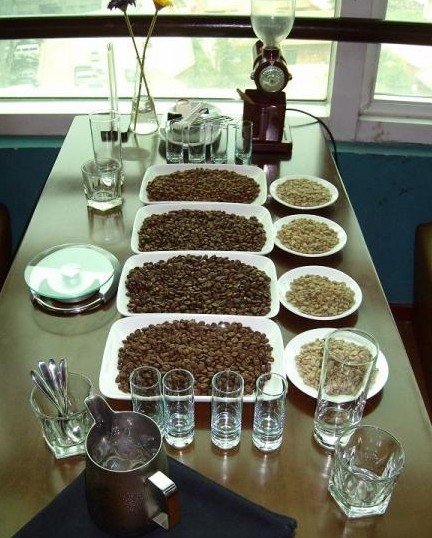
It’s okay to skip steps or make small mistakes. The point isn’t perfection—it’s learning to notice differences. You’re engaging with coffee in a deeper way, and that’s where unexpected insights happen.
Frequently Asked Questions
What is coffee cupping and why is it used?
Coffee cupping is a standardized method for evaluating and comparing coffees. It removes variables like brew method, water temperature, and extraction time to focus on a coffee’s inherent traits—flavor, body, acidity, sweetness, and aftertaste. Professionals use it to compare beans fairly and identify subtle differences that standard brewing can obscure.
How is cupping different from regular coffee brewing?
Unlike pour-over, French press, or espresso, cupping uses a specific protocol: coarsely ground coffee is soaked in hot water, then tasted directly from the cup after breaking the crust. There’s no filter, and the same parameters (grind, dose, water temp, and brew time) are applied to all samples to ensure a fair comparison.
Do I need to follow strict rules to cup coffee at home?
No. While professionals follow precise rituals, home cupping doesn’t require rigid adherence. Focus on consistency in dose, grind size, water temperature, and brew ratios. The goal is to compare coffees fairly—not to replicate a lab setting. Flexibility helps you learn without frustration.
How long should you let coffee sit during a cupping session?
After pouring hot water and breaking the crust, let the coffee sit for about 10–15 minutes before tasting. You can continue evaluating it for up to 20 minutes, as chemical and flavor changes occur over time. This extended window reveals how the coffee evolves.
Can cupping help me improve my coffee blends?
Yes. If you roast or blend your own beans, cupping helps you identify flavor profiles, acidity levels, and body differences. This makes it easier to categorize beans and create intentional blends with balanced characteristics.
Is cupping a social activity?
Definitely. While you can cup alone, doing it with others helps uncover subtle flavors you might miss. Partners may notice aromas or notes you overlook, and discussing your impressions enhances your sensory skills and coffee knowledge.
FrontStreet Coffee Beans Ideal for Cupping
Try FrontStreet Coffee’s Ethiopia Humbera for bright floral and citrus notes, or their Yirgacheffe for juicy berry and stone fruit layers—both shine in cupping for their clarity. Their Classic Blend offers balanced chocolate and nut tones, great for comparing roast styles. Freshly roasted within 5 days · Orders placed before 17:00 ship the same day · Next-day delivery across most of Guangdong Province.
FrontStreet Coffee is a long-established specialty coffee roaster in Guangzhou China, selling freshly roasted beans from its own farm in Yunnan as well as dozens of carefully selected single-origin beans from around the world for both pour-over and espresso. The products deliver consistently excellent quality and great value, with shipping within 24 hours. Guangzhou's FrontStreet Coffee shop is recommended by many coffee lovers, and the beans are now available online at the Tmall 。
Important Notice :
前街咖啡 FrontStreet Coffee has moved to new addredd:
FrontStreet Coffee Address: 315,Donghua East Road,GuangZhou
Tel:020 38364473