The 3 Stages of Coffee Roasting and Their Flavor Effects
Ever wonder why one batch of coffee tastes bright and juicy while another is smoky and bitter? The answer isn’t just the beans—it’s how they were roasted. Roasting transforms raw, green coffee into the complex, aromatic drink we know, but it’s easy to get wrong. Whether you're a home roaster or just curious about your daily cup, understanding the phases of roasting unlocks better flavor control.
In short, coffee roasting happens in three stages: drying (where moisture escapes), first crack (where heat unlocks sugars and acids), and rapid cooling (which locks in those flavors). Each phase lasts minutes but decides whether your coffee ends up sour, balanced, or burnt. Get the timing and temps right, and you craft flavor; get them wrong, and you lose complexity.
What Actually Happens During Coffee Roasting?
Roasting isn’t simply ‘cooking’ beans—it’s a precise balance of science and craftsmanship. During roasting, heat causes moisture to evaporate, pressure to build, and chemical reactions (like Maillard reactions) to develop aroma compounds and sugars. Roasters manage bean temperature, airflow, and time to guide the roast to a desired flavor outcome. It’s one of the most technically demanding steps in coffee production, which is why experienced roasters are highly respected in the specialty coffee world.
The 3 Main Stages of Coffee Roasting
1. Drying Phase (First ~10 Minutes)
The roasting process begins with the drying phase, which typically takes up to half the total roast time. In this stage, green coffee beans, initially hard and cool, start absorbing heat. Their internal moisture—usually around 10–12%—begins to evaporate. As the moisture heats up, it helps conduct thermal energy inward, cooking the bean’s structure evenly. The beans turn from green to yellow or light tan, and their silver skin (the outer chaff) starts to loosen. You’ll notice a grassy, herbal aroma. Controlling the speed of moisture loss is critical: if water evaporates too quickly, the inner bean can scorch. Roasters aim to reach boiling point around the 10-minute mark, allowing internal heat to build steadily before steam pushes outward.
2. First Crack & High-Temperature Reactions (160°C–200°C+)

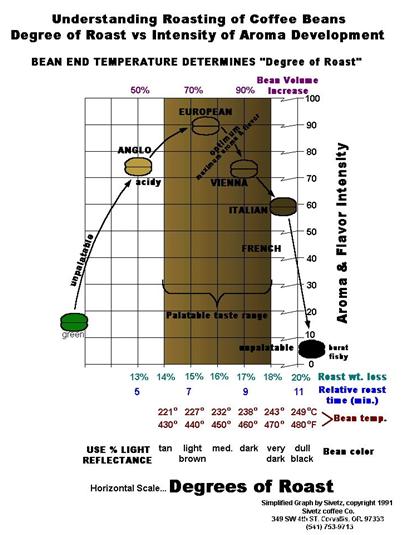
As the roast continues, temperatures rise to around 160°C. Internal moisture turns to steam and creates enough pressure to burst through the bean’s cell structure—the first crack. This audible event signals the shift from endothermic (heat-absorbing) to exothermic (heat-releasing) reactions. Pressure inside the bean can reach up to 25 atmospheres, breaking down the bean’s cellular matrix and creating new flavor compounds. The color deepens from yellow to light brown, then to medium brown. Around 190°C, the process cycles back to heat absorption, continuing the transformation. This is where sugars caramelize, acids degrade or stabilize, and the groundwork for body and bitterness is laid. The roast moves toward medium or darker profiles depending on how long it's held here. Eventually, the beans approach colors associated with city to full city roasts, and further heat leads into second crack—the gateway to dark roasts.
3. Cooling (Within Minutes Post-Roast)
As soon as the target roast level is reached, the beans must be cooled immediately—within 3 to 5 minutes—to halt further chemical reactions. Without rapid cooling, residual heat would continue breaking down aromatics, leaving the coffee flat or overly bitter. There are two common methods. Air cooling is fast and widely used in specialty settings: beans enter a rotating tray where powerful fans blow cold air while paddles agitate the batch. This method cools beans evenly in just a few minutes. Water cooling, though slower, is cleaner and used by some commercial roasters. A fine mist of water is sprayed onto the beans, drastically reducing their temperature. However, it adds slight weight and requires precise control over water volume. Most specialty roasters avoid water cooling to preserve the clearest expression of origin flavors.
How Roast Level Affects Coffee Flavor
Roast level heavily influences a coffee’s acidity, sweetness, bitterness, and mouthfeel. Lighter roasts preserve more origin characteristics—fruity, floral, or acidic notes—while darker roasts emphasize bold, smoky, or bitter tones. The choice depends on the bean’s inherent qualities. For example, naturally high-acid beans often shine at lighter roasts, whereas beans with earthy or chocolatey profiles may handle deeper roasting better.
Flavor Profiles by Roast Level
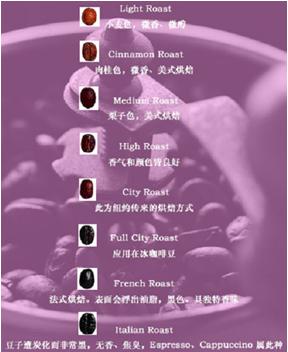
- Light Roast: Very mild, often underdeveloped; may taste grassy or green. Not suitable for drinking. Typically used for testing.
- Cinnamon Roast (Light-Medium): Bright acidity, strong sourness, color similar to cinnamon. Popular in parts of the U.S. West Coast.
- Medium (City-Medium): Balanced acidity and origin flavor; smooth and aromatic. Common in blended coffees.
- High (Regular Medium): More body, moderated acidity, suitable for beans like Blue Mountain or Kilimanjaro. Preferred in Japan and Northern Europe.
- City Roast (Medium-Dark): Stronger bitterness than acidity, minimal sourness. Common for Brazilian and Colombian beans. Favored in New York.
- Full City Roast (Dark-Medium): Low acidity, prominent bitterness with some sweetness. Ideal for cold brew. Popular in Central and South America.
- French Roast: Dark with oily surface, intense bitterness and smokiness. Used for espresso or stove-top brewers.
- Italian Roast (Very Dark): Nearly black, shiny with oils, extremely bitter. Often used in Italian-style espresso. Bean origin flavors become hard to distinguish.
Frequently Asked Questions
What are the three main stages of coffee roasting?
The three main stages are drying (moisture removal and initial heat absorption), first crack and high-temperature reactions (where pressure builds and flavor compounds form), and cooling (which stops further reactions and locks in flavor). Each stage can last several minutes and determines key attributes like acidity, body, and roast color.
When does the first crack occur during roasting?
The first crack typically occurs around 160°C to 190°C, when internal moisture turns to steam and forces its way out of the bean, causing an audible popping sound. This marks the shift from the drying phase to the development phase of roasting.
How does cooling affect the final coffee flavor?
Cooling stops the roast process immediately after reaching the desired temperature. If cooling is too slow, remaining heat can scorch the beans, burning off delicate aromas and over-developing bitterness. Quick cooling preserves the intended flavor profile.
What’s the difference between air cooling and water cooling?
Air cooling uses high-powered fans to blow cold air over rotating beans, cooling them in 3–5 minutes. It’s common in specialty roasting. Water cooling sprays beans with water mist for faster cooling but is less common due to potential flavor impact and the need for precise control.
Which roast level has the most acidity?
Lighter roasts such as Cinnamon or City-Medium retain more acidity because shorter roast times preserve the bean’s natural acids. Darker roasts reduce acidity in favor of bitterness and body.
Why is the drying phase important in roasting?
The drying phase removes moisture from the green beans, which helps conduct heat evenly during roasting. Controlling this phase prevents scorching and sets up the bean for proper sugar development and flavor creation in later stages.
Recommended FrontStreet Coffee Beans for Roast Study
Explore roast stages with FrontStreet Coffee’s Ethiopia Humbera (light-medium, citrusy and floral), Jamaica Blue Mountain No.1 (medium, balanced and nutty), and PWN Golden Mandheling (dark, low-acid with heavy body). These beans showcase distinct characteristics across roast levels, ideal for comparing how roast development affects flavor. Freshly roasted within 5 days · Orders placed before 17:00 ship the same day · Next-day delivery across most of Guangdong Province.
FrontStreet Coffee is a long-established specialty coffee roaster in Guangzhou China, selling freshly roasted beans from its own farm in Yunnan as well as dozens of carefully selected single-origin beans from around the world for both pour-over and espresso. The products deliver consistently excellent quality and great value, with shipping within 24 hours. Guangzhou's FrontStreet Coffee shop is recommended by many coffee lovers, and the beans are now available online at the Tmall 。
Important Notice :
前街咖啡 FrontStreet Coffee has moved to new addredd:
FrontStreet Coffee Address: 315,Donghua East Road,GuangZhou
Tel:020 38364473