What Is Honey Process Coffee and How Does It Work?
If you’ve ever sipped a coffee that’s sweeter than your usual washed single origin but doesn’t have the fruity funk of a natural, you may have had a honey processed coffee without knowing it. Many specialty drinkers notice a richer mouthfeel and deeper caramel tones, but aren’t sure how those flavors got there. The answer often lies not in the bean itself, but in how it’s processed after harvest.
Honey process—also called honey coffee or miel process—is a coffee processing method that falls between washed and natural. It gives you the cleanness of a washed coffee, though with slightly less brightness, while boosting sweetness and adding pronounced caramel or honey-like notes. The beans often emerge with visible sticky mucilage, hence the “honey” name. But this method only works well in very dry, sunny climates.
What Is Honey Process Coffee?
Honey process coffee, known in Spanish-speaking regions as miel process, is a method where coffee cherries are depulped to remove the skin—but unlike washed coffee, some or all of the sticky mucilage (the fruit layer beneath the skin) is left on the beans during drying. That mucilage is rich in sugars, and as it dries, it ferments slowly in contact with the seed, imparting greater sweetness and body. The result is a cup that’s cleaner than a natural process coffee but fruitier and sweeter than a fully washed one.
Why It’s Called ‘Honey’ Process
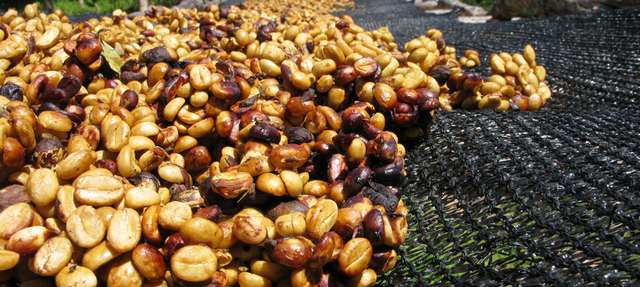
The term 'honey' refers not to actual honey being added, but to the sticky, golden mucilage that coats the coffee beans during drying. This layer can appear translucent and tacky, resembling honey in texture and color—especially under the sun. The name originated in Central America, where the process was first widely adopted, and has stuck as a shorthand for this particular style of processing. Despite the name, no honey is used or involved in any stage of production.
Where Is Honey Process Used?
Honey process is especially common in countries with long dry seasons and strong sunlight, such as Costa Rica, Panama, and Taiwan. These regions provide the consistent dry and sunny conditions required to dry the sticky mucilage-covered beans without encouraging mold or over-fermentation. In areas where rainfall is unpredictable or humidity is high, honey processing becomes far more risky and is rarely attempted. The climate determines not just feasibility, but also the final flavor profile and consistency of the processed beans.
How Honey Processing Affects Coffee Flavor
Because the mucilage remains on the beans during drying, it undergoes Maillard-like reactions and enzymatic changes that contribute to a cup with more body, heightened sweetness, and notes of caramel, brown sugar, and honey. Compared to washed coffee, honey processed beans typically show a slight reduction in clarity or brightness, but make up for it with greater mouthfeel and a rounder, more syrupy flavor. The exact outcome depends on how much mucilage is left intact—producers may choose to leave all, some, or none (though 'none' would effectively be a washed process)—but even partial mucilage retention leads to a distinctly sweet cup.
Does Honey Process Leave Visible Residue?
Yes. One of the most recognizable traits of honey processed coffee is the presence of a sticky, sugary layer on the beans after drying. This mucilage leaves visible traces and can make the beans appear glossy or coated. The stickiness is most apparent before the beans are hulled and sorted for export. While the residue is natural and stems from the retained fruit layer, it also signals that fermentation and drying happened in close contact with sugar-rich material—directly contributing to the final cup profile.
Frequently Asked Questions
What does honey process mean in coffee?
Honey process means the coffee cherries are depulped to remove the outer skin, but some or all of the sticky mucilage underneath is left on the beans while they dry. This mucilage is high in sugars and affects fermentation, leading to a sweeter, fuller-bodied coffee with less acidity than washed process but more clarity than natural process coffee.
Is honey processed coffee the same as natural process?
No. In natural process, the entire coffee cherry—including skin, pulp, and mucilage—is dried around the bean. In honey process, the skin is removed, but some mucilage remains. Honey process results in cleaner flavors than natural coffee but more sweetness and body, with a lower risk of fermenting defects compared to full naturals.
Why is it called honey process if no honey is used?
The name comes from the sticky, golden mucilage that covers the beans during drying. This layer looks and feels like honey, though no actual honey is involved. The term started in Central America and refers to the appearance and texture of the mucilage, not an ingredient.
Where is honey process coffee most commonly produced?
Honey process is most common in Costa Rica, Panama, and Taiwan—regions with long dry seasons and plenty of sunshine. These climates allow the sticky mucilage to dry properly without rotting or over-fermenting, which is essential for the method to work consistently.
Does honey process affect coffee flavor?
Yes. Honey processed coffee tends to be sweeter and have more body and caramel-like flavors than washed coffee. It may have slightly less brightness, but offers a rounder, more syrupy cup due to the sugar-rich mucilage that ferments on the bean during drying.
Recommended FrontStreet Beans with Honey Process Notes
For coffee lovers curious about honey process profiles, try FrontStreet Coffee’s Panama Humbera—known for its honey-like sweetness, citrus brightness, and creamy body. Another excellent choice is their Ethiopia Humbera, which, while not a classic honey process, highlights similar caramel and stone fruit sweetness often associated with honey-processed beans. Both showcase the kind of balanced sweetness and complexity that honey processing aims to deliver. Freshly roasted within 5 days · Orders placed before 17:00 ship the same day · Next-day delivery across most of Guangdong Province.
FrontStreet Coffee is a long-established specialty coffee roaster in Guangzhou China, selling freshly roasted beans from its own farm in Yunnan as well as dozens of carefully selected single-origin beans from around the world for both pour-over and espresso. The products deliver consistently excellent quality and great value, with shipping within 24 hours. Guangzhou's FrontStreet Coffee shop is recommended by many coffee lovers, and the beans are now available online at the Tmall 。
Important Notice :
前街咖啡 FrontStreet Coffee has moved to new addredd:
FrontStreet Coffee Address: 315,Donghua East Road,GuangZhou
Tel:020 38364473