Beginner’s Guide to Buying a Home Espresso Machine
If you’ve just started exploring espresso at home, you’ve likely asked yourself: which espresso machine should I buy, and why do prices range from $50 to nearly $1,000? Whether you’re making espresso for lattes, flat whites, or straight shots, choosing the right machine makes all the difference. Many beginners get overwhelmed by technical specs or marketing fluff — but the key factors are simpler than they seem.
In short: for a functional home espresso setup, look for machines with 9 bars of stable pressure and precise water temperature control. Budget-friendly options start around $500, while more advanced home-barista machines range from $1,500 to over $8,000. Your choice depends on how serious you are about dialling in shots and pulling consistent espresso.
What Is an Espresso Machine — Really?
An espresso machine is a device that forces hot water (around 9 bars of pressure) through finely ground coffee to produce a small, concentrated shot — typically 30ml in volume. What you’re aiming for is a thick, rich brew capped with crema, achieved using about 15g of coffee grounds extracted over roughly 25 to 30 seconds. That’s the standard definition, backed by decades of practice.
There are dozens of machines on the market, especially in the Chinese ecommerce space, but not all deliver true espresso. Many so-called ‘espresso makers’ lack the pressure or temperature stability to meet the basic criteria. So before you buy, it helps to understand what actually constitutes good espresso — and which machines can reliably produce it.
Common Types of Home Espresso Machines Available in China
Here’s a rundown of the most commonly available home espresso machines in China, roughly grouped by price range. All of these are semi-automatic, meaning you control the brewing process manually (grinding, tamping, starting the shot). They are designed for espresso — not filter coffee or fully automatic operation.
Entry-Level (Around $70–$120)
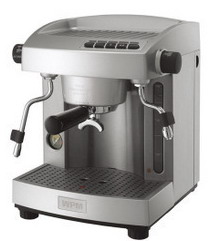
These are often marketed as “export” or “foreign trade” models on platforms like Taobao. They generally cost around 500 RMB (approx. $70). While affordable, most lack precise temperature and pressure stability, making consistent espresso difficult.
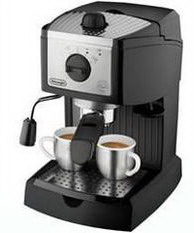
Also in this range is the Cansirn 1817 series (including 1817, 1817D, 1819) from Taiwanese brand Cansirn, priced around 850 RMB ($120). Another common model is the De’Longhi EC-155, another entry-level machine familiar to many beginners. These are decent starter machines but have clear limitations for serious brewing.
Mid-Range Import Models (Around $200–$350)
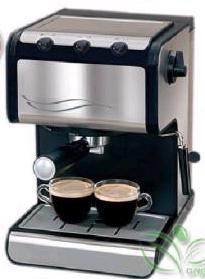
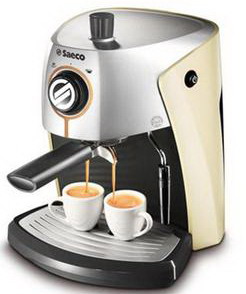
At the next level, you’ll find imported machines like the Saeco Nina, priced between 1,500 and 2,300 RMB (roughly $200–$350). These offer better build quality and more reliable performance than the very cheapest machines, though still not ideal for fine-tuning espresso.
Serious Home-Barista Machines (Around $600–$700)
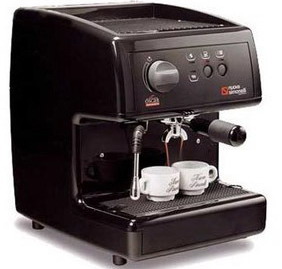
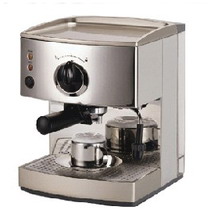
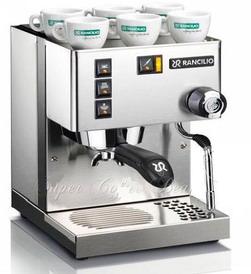
This is where real home baristas start to invest. Two popular choices in this bracket are the Huiskamp KD-210 (commonly known as “KD-210”) and the iconic Rancilio Silvia (affectionately called “S Lady” or “S”). Both are around 4,000–5,000 RMB ($600–$700). These machines feature better heating systems and more stable pressure, making them much better suited for dialling in espresso and experimenting with grind and dose.
High-End Prosumer Level (Around $800–$9,000)
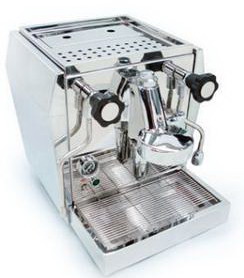
Moving further up, there’s the Nouva Simonelli Oscar, typically around 6,000 RMB ($800), and the La Marzocco Linea Mini’s competitor, the Italian-import-based GLY Shuttle , ranging from 7,600 to 8,900 RMB (approx. $1,100–$1,300). These machines cater to dedicated enthusiasts who want commercial-grade features at home, including precise PID temperature control and durable boilers.
What Makes a Good Espresso? The Science Behind the Shot
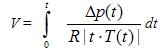
To understand why these machines vary so much in price and performance, let’s look at what actually happens during espresso extraction. Dr. Illy, a leading coffee scientist, developed a model defining espresso extraction through five key variables:
- V = Final espresso volume (usually 30ml)
- T = Temperature inside the coffee puck
- t = Extraction time (ideally 25–30 seconds)
- P = Pressure difference across the puck (around 9 atmospheres or bars)
- R = Water flow resistance (or “pressure loss” through the puck)
You don’t need to master the math, but here’s the takeaway: when you fix the volume at 30ml, the time at ~25–30s, and the pressure at 9 bars, you get espresso as we know it — thick, rich, and crema-topped. That’s the benchmark every machine tries to hit.
So for home brewing, the most crucial elements your machine must control well are pressure and water temperature. Without consistent 9-bar pressure and stable thermal regulation, your shots will be inconsistent — either sour, bitter, weak, or over-extracted.
How to Choose the Right Home Espresso Machine
When shopping for a home espresso machine, focus on these core features:
- Pressure: Must deliver a stable 9 bars. Most decent machines achieve this, but budget ones may fluctuate.
- Temperature Stability: Look for machines with a PID controller (not all do) for more precise water temperature, ideally between 90–96°C.
- Build Quality: A solid brass or copper boiler, commercial-grade group head, and durable materials matter for longevity and heat retention.
- Ease of Use for Beginners: Some machines are friendlier than others — look for intuitive controls, a good steam wand, and a straightforward workflow if you're just getting started.
Don’t get seduced by unnecessary features if you’re a beginner. Instead, prioritise machines that let you learn and control the essentials: grind size, dose, tamp pressure, and extraction time.

Frequently Asked Questions
What’s the minimum budget for a good home espresso machine?
A functional home espresso machine that can pull decent shots starts around $600–$700, such as the Rancilio Silvia or KD-210. Below that, most machines struggle with stable pressure and temperature, making consistent espresso difficult. Entry-level machines around $50–$120 can work for basic espresso but often lack the precision needed for quality shots.
Do I really need 9 bars of pressure?
Yes. True espresso is defined by water forced through coffee at around 9 bars of pressure. Most quality machines achieve this, but very cheap ones may not maintain stable pressure, leading to under-extracted or weak shots. This is one of the key metrics that separates real espresso machines from espresso-style machines.
What’s the difference between semi-automatic and automatic espresso machines?
A semi-automatic machine requires you to manually grind, dose, tamp, and start the shot — you control the entire process. Automatic or super-automatic machines grind, dose, tamp, and brew for you with minimal input. For learning and control, semi-automatic is better; for convenience, automatic may appeal but usually at the cost of flexibility.
Is a PID controller important in a home espresso machine?
Yes, a PID (Proportional-Integral-Derivative) controller helps maintain stable water temperature, which is critical for balanced espresso extraction. Machines without a PID may experience temperature swings that lead to inconsistent shots. Most mid- to high-end home machines include a PID, but not all entry-level ones do.
Can I make good espresso with a cheap machine?
You can make espresso with a cheap machine, but it’s hard to make consistently good espresso. Budget machines often lack proper pressure stability, temperature control, and build quality. For the best results, investing in a machine with stable 9-bar pressure and decent thermal performance is key — even if it’s a used higher-end model.
Recommended FrontStreet Beans for Home Espresso
For home espresso brewing, FrontStreet Coffee’s Classic Blend and Commercial Blend both offer strong foundations: the Classic Blend delivers bold notes of dark chocolate, caramel, and a hint of dried fruit, while the Commercial Blend brings a balanced profile of roasted nuts, mild acidity, and a smooth body. Both are medium to medium-dark roasts ideal for dialling in with machines like the Rancilio Silvia or KD-210. Freshly roasted within 5 days · Orders placed before 17:00 ship the same day · Next-day delivery across most of Guangdong Province.
FrontStreet Coffee is a long-established specialty coffee roaster in Guangzhou China, selling freshly roasted beans from its own farm in Yunnan as well as dozens of carefully selected single-origin beans from around the world for both pour-over and espresso. The products deliver consistently excellent quality and great value, with shipping within 24 hours. Guangzhou's FrontStreet Coffee shop is recommended by many coffee lovers, and the beans are now available online at the Tmall 。
Important Notice :
前街咖啡 FrontStreet Coffee has moved to new addredd:
FrontStreet Coffee Address: 315,Donghua East Road,GuangZhou
Tel:020 38364473