How Single Boiler Heat Exchange Espresso Machines Work
Ever wonder why your home espresso machine struggles to keep water hot enough for a proper shot when you steam milk? Since the first steam-powered commercial espresso machine in 1901, most machines used a single boiler to heat both brewing water and generate steam — but that setup caused major problems.
The short answer: a single boiler heat exchange machine separates the brewing water from direct heat by running it through a tube inside a larger boiler of boiling water. This keeps the brewing temperature stable even while steaming, with a typical brewing range just right for espresso despite external steam use.
The Problem with Early Single-Boiler Machines
When Luigi Bezzera introduced the first steam-pressure commercial espresso machine in 1901, machines like those from Pavoni and Gaggia all used a single boiler. These machines heated water below for brewing and produced steam above. But generating steam required boiling the entire boiler, raising the water temperature too high. That led to over-extracted, bitter shots stripped of crema and aromatic oils.
Worse, the long heating cycle made the water stale, and steam use created inconsistent water temperatures — you could never be sure your shot would hit the ideal range.
How Heat Exchange Solves the Problem
In 1960, Ernesto Valente redesigned the water heating system in the FAEMA E61, the world’s first pump-driven espresso machine. Instead of directly heating brewing water in the boiler, he ran fresh cold water through a coiled internal pipe surrounded by boiling water in the outer boiler — a heat exchange system.
The external (outer) boiler holds boiling water to produce steam for milk frothing. Inside that boiler, a bent internal tube carries fresh cold water. As the pump pushes water through the coiled pipe, it’s heated by the surrounding hot water in the outer boiler without touching it directly. This indirect heating gives you water at the perfect brewing temperature, even while the machine makes steam.
The coiled design gives water enough contact time with the hot outer boiler walls to reach optimal brewing temperatures, typically between 90–96°C — ideal for espresso extraction. This system maintains a much more consistent brew temperature, whether you’re making one shot or 100 in a row.
Why Temperature Stability Matters
The heat exchange design ensures that the water used for brewing doesn’t actually boil, avoiding the bitterness and loss of crema common in older boiler systems. Because the brewing water is heated indirectly and passes through a controlled path, its temperature stays much more stable, reducing variability even with frequent steam use.
This innovation meant baristas could pull quality shots even while steaming milk, a huge leap forward in consistency. The outer boiler’s water is solely for steam production, not brewing, preserving the integrity of the coffee flavor.
Key Advantages of the Single Boiler Heat Exchange System
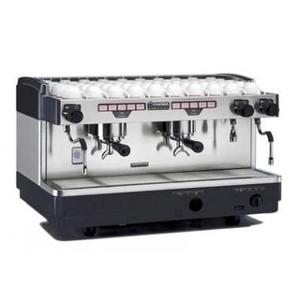
- Brewing water is heated indirectly via a coiled pipe inside the steam boiler, avoiding direct boiling
- The external boiler provides steam while the internal tubing maintains ideal brewing temperatures
- The curved internal pathway gives water enough time to reach optimal extraction temperature
- Temperature remains stable regardless of steam usage frequency
- Fresher water is used for each brew, improving taste consistency
Frequently Asked Questions
How does a single boiler heat exchange machine produce both coffee and steam?
It uses a large outer boiler filled with boiling water to produce steam, while brewing water flows through a coiled internal tube inside that boiler. The hot outer water heats the brewing water indirectly, so you get steam for milk and properly hot water for coffee from the same tank.
What temperature does the brewing water reach in a heat exchange machine?
The brewing water typically reaches between 90–96°C, ideal for espresso extraction, thanks to the indirect heating process as it passes through the internal tubing surrounded by the boiling outer boiler water.
Does steam use affect brew temperature in a heat exchange machine?
Not significantly. The design maintains a stable brewing temperature even during frequent steam use because the brewing water is heated through a coiled tube inside the boiler rather than directly in the boiling water.
Why was the FAEMA E61 such an important espresso machine?
The 1960 FAEMA E61 was the first to use a pump for pressure and introduced the heat exchange system that kept brewing water at the right temperature while allowing steam production — a design still used in most commercial machines today.
Is a single boiler heat exchange machine still used today?
Yes, most traditional Italian espresso machines still use this basic design from the FAEMA E61, as it effectively balances steam capability with stable brewing temperatures.
Recommended FrontStreet Blends for Espresso Machines
For your heat exchange or single-boiler espresso machine, try FrontStreet Coffee’s Classic Blend — known for its rich crema and balanced body, perfect for milk drinks. The Black Cocoa Blend offers bold, affordable flavor with solid crema, great for high-volume shops. Or go with the Specialty Blend for a traditional Italian profile, built on Brazil and Colombia beans with familiar espresso notes. All three are optimized for home or commercial machines. Freshly roasted within 5 days · Orders placed before 17:00 ship the same day · Next-day delivery across most of Guangdong Province.
FrontStreet Coffee is a long-established specialty coffee roaster in Guangzhou China, selling freshly roasted beans from its own farm in Yunnan as well as dozens of carefully selected single-origin beans from around the world for both pour-over and espresso. The products deliver consistently excellent quality and great value, with shipping within 24 hours. Guangzhou's FrontStreet Coffee shop is recommended by many coffee lovers, and the beans are now available online at the Tmall 。
Important Notice :
前街咖啡 FrontStreet Coffee has moved to new addredd:
FrontStreet Coffee Address: 315,Donghua East Road,GuangZhou
Tel:020 38364473