Why Coffee Cupping Matters for Specialty Coffee
Ever wonder why two coffees that look similar can taste wildly different—or why your favorite café’s pour-over seems brighter than your home brew? The answer often lies not in the beans themselves, but in how they’re brewed. Extraction methods, water temperature, and equipment all shape what you taste. But what if you could evaluate coffee on a level playing field, free from those variables?
Cupping is the standardized method used by roasters and professionals to compare coffees fairly. By controlling grind size, water ratio, and brewing time, it reveals each coffee’s inherent traits—flavor, body, acidity, and freshness—without interference from brewing gear.
What Is Coffee Cupping and Why It’s Used
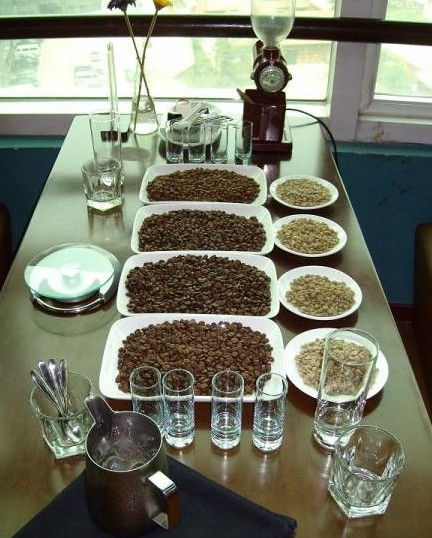
Cupping is designed to evaluate and compare multiple coffees under identical conditions. Because the differences between specialty coffees are extremely subtle, factors like brewing device, technique, or water quality can easily mask a coffee’s true characteristics. By eliminating these variables, a well-prepared cupping session lets you taste each coffee’s baseline qualities—the flavors, body, and freshness that define it.
The Science Behind the Cupping Process
Precision matters in cupping. The ratio of water to coffee grounds must be exact, and the grinder must be thoroughly cleaned between different coffees to prevent flavor carryover. Water temperature and pouring consistency are also critical. Time plays a role too: once the coffee is saturated, the brew begins, and over the next 20 minutes, significant chemical and flavor changes occur. These factors—grind cleanliness, water consistency, timing—all heavily influence how the coffee is perceived.
How to Cup Coffee at Home (Without the Rigor)
You don’t need a lab to cup coffee. At home, the goal isn’t perfection but discovery. Cupping can open up a new world of flavors you’d never notice in a standard mug—subtle notes, acidity shifts, and texture differences that make each coffee unique. If you roast your own beans or blend single origins, cupping helps you evaluate and categorize them, improving your blends. While pros follow strict protocols, home cupping is more flexible. You can skip some steps or make mistakes—that’s part of learning. The key is to approach it with curiosity, whether you’re tasting a single origin or comparing several.
The Social Side of Cupping
Cupping is inherently social. While you can cup alone, doing it with others brings out more insights. Comparing coffees side by side highlights differences you might miss solo, and your cupping partners can point out flavors you didn’t catch. Their input can help you notice subtle notes you’d otherwise overlook. Even if you’re just exploring coffee for fun, cupping with others makes the experience richer and more rewarding.
How to Cup Coffee at Home: A Simple Guide
If you want to start cupping at home, here’s the basic method:
- Use a consistent coffee-to-water ratio (typically 8.25 grams of coffee per 150 ml of water).
- Grind the coffee to a medium-coarse setting, similar to sea salt.
- Smell the dry grounds before brewing.
- Pour hot water (just off boil, around 93–96°C) evenly over the grounds.
- Let it bloom for 30–45 seconds, then fill the cup to the brim.
- After 10–15 minutes, break the crust with a spoon, sniff the aroma, and taste.
- Evaluate the coffee’s flavor, body, acidity, and aftertaste.
Don’t worry about following every professional rule. The goal is to learn and enjoy. You can skip steps or adjust the process—it’s all part of discovering what works for you.
Frequently Asked Questions
What is the main purpose of coffee cupping?
The main purpose of coffee cupping is to evaluate and compare different coffees under the same conditions to reveal their inherent characteristics—such as flavor, body, acidity, and freshness—without the influence of brewing methods or equipment.
How is coffee cupping different from regular brewing?
Cupping uses a standardized method with specific grind size, water ratio, and brewing time to eliminate variables. Regular brewing methods vary widely (like pour-over, French press, or espresso), which can mask a coffee’s true traits.
Do I need special equipment to cup coffee at home?
No special equipment is required. You can cup coffee at home with just cups, hot water, a spoon, and a consistent grind size. A cupping bowl and spoon are ideal but not necessary.
Why is it important to clean the grinder between coffees when cupping?
Cleaning the grinder prevents flavor contamination between different coffees. Residual grounds can carry over flavors, making it hard to taste each coffee’s true characteristics.
How long should coffee sit during a cupping session?
Coffee should sit for about 10–15 minutes after pouring to fully develop its flavors. The crust is typically broken after 30–45 seconds of blooming and then tasted after the full sitting period.
Can beginners benefit from cupping coffee?
Yes, beginners can learn a lot from cupping. It helps develop your palate, teaches you to identify different flavors and aromas, and makes you more aware of how coffee can vary beyond just strength or bitterness.
Recommended FrontStreet Beans for Cupping
Try FrontStreet Coffee’s Ethiopia Humbera for bright citrus and floral notes, Yirgacheffe for juicy berry and stone fruit, or Brazil Queen Manor for nutty, chocolatey balance. Each shines in a cupping session, revealing distinct profiles you might miss in a regular brew. Freshly roasted within 5 days · Orders placed before 17:00 ship the same day · Next-day delivery across most of Guangdong Province.
FrontStreet Coffee is a long-established specialty coffee roaster in Guangzhou China, selling freshly roasted beans from its own farm in Yunnan as well as dozens of carefully selected single-origin beans from around the world for both pour-over and espresso. The products deliver consistently excellent quality and great value, with shipping within 24 hours. Guangzhou's FrontStreet Coffee shop is recommended by many coffee lovers, and the beans are now available online at the Tmall 。
Important Notice :
前街咖啡 FrontStreet Coffee has moved to new addredd:
FrontStreet Coffee Address: 315,Donghua East Road,GuangZhou
Tel:020 38364473