The 3 Stages of Coffee Roasting Explained
When you sip a cup of coffee, you’re tasting the result of a complex transformation — one that hinges not just on origin or processing, but mostly on how the beans were roasted. Most people assume roasting is simply applying heat until the beans turn brown. But in specialty coffee, roasting is both a science and an art, demanding precision over every second and degree. That’s why experienced roasters are so highly regarded in coffee cultures worldwide.
To understand how your coffee ends up tasting the way it does, you need to know the three key stages of roasting: drying, high-temperature chemical change (including first and second cracks), and rapid cooling. Each phase transforms the green bean’s structure, drives flavor development, and ultimately defines your brew.
1. The Three Phases of Coffee Roasting
Coffee roasting unfolds in three critical phases: drying, high-temperature decomposition (including first and second cracks), and cooling. Each stage contributes uniquely to the bean’s physical and chemical transformation, directly shaping flavor, aroma, and body.
Drying Phase: Removing Moisture
The roast begins in the drying phase. At this point, green coffee beans, which can contain 8–12% moisture, start absorbing heat. The internal water begins to evaporate, and the beans gradually shift in color from green to yellow or light brown. You may notice a faint grassy or hay-like aroma. This phase typically consumes about half the total roast time. Though the main goal is moisture removal, skilled roasters control the rate carefully—allowing water to act as an internal heat conductor without evaporating too quickly. Ideally, moisture reaches boiling point and turns to steam around the 10-minute mark, helping to evenly distribute heat inside the bean and prepare it for the intense changes ahead.
High-Temperature Decomposition: First and Second Cracks
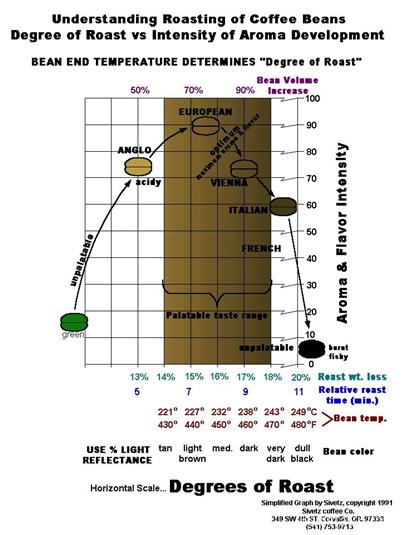
As the roast temperature approaches 160°C, internal moisture turns to steam and begins escaping the bean. The beans switch from absorbing heat to releasing it, triggering the first crack — an audible popping sound caused by internal pressure buildup, which can reach up to 25 atmospheres. This marks a major chemical shift: heat and pressure break down the bean’s cellular structure and initiate the Maillard reaction, forming new flavor compounds. After the first crack, the beans return to absorbing heat. Around 190°C, the heat absorption and release cycle repeats. The beans continue darkening from light brown to deep brown, entering the domain of medium to dark roasts. If roasting continues further, you’ll hear the second crack — a sign you’re approaching very dark roast levels.
Cooling: Halting the Roast
Once the desired roast level is reached, immediate cooling is essential. Without rapid cooling, the ongoing exothermic reactions can scorch the beans, burning off delicate aromatic compounds. There are two common cooling methods. Air cooling, used in most professional settings, involves blowing forced cold air over the beans while a rotating arm stirs them. This process typically takes 3–5 minutes. Water cooling, though less common in specialty contexts due to potential weight gain and flavor dilution, works by spraying a fine mist of water on the beans. It cools them more quickly but requires precise control over water volume. Water cooling is sometimes preferred in large commercial operations for its speed and cleanliness.
2. How Roast Level Affects Coffee Flavor

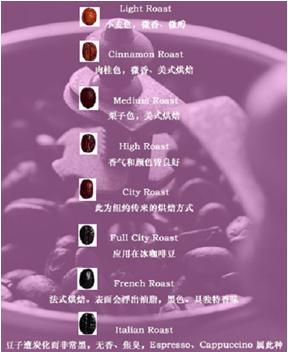
Roast level heavily influences a coffee’s flavor profile. In general, lighter roasts preserve more acidity and origin characteristics, while darker roasts emphasize bitterness, body, and roasted flavors. The ideal roast depends on the bean’s inherent traits.
Light Roast (Light)
This is the lightest possible roast, often under-developed. The beans show little aroma or concentration and may retain unpleasant grassy or “green” flavors. Typically used only for experimental purposes, not for drinking.
Cinnamon Roast (Cinnamon)
Also known as a light-medium or American “light” roast. These beans are light brown, similar in color to cinnamon, and feature pronounced acidity. Popular on the U.S. West Coast, this roast highlights bright, tangy flavors.
Medium-Light Roast (Media)
Slightly darker than cinnamon, this roast better develops the bean’s intrinsic flavors. It offers a balance of aroma, acidity, and sweetness, and is commonly used in coffee blends.
Medium Roast (High)
This is the classic roast level for many single-origin coffees. Acidity mellows while body and sweetness increase. It suits beans like Blue Mountain and Kilimanjaro and is favored in Japan and Northern Europe.
City Roast (City)
Also called City roast, this level emphasizes deeper flavor complexity with more pronounced bitterness and less acidity. It’s ideal for beans like Colombian and Brazilian origins, and is especially popular among New York coffee drinkers.
Full City Roast (Full City)
This roast produces a balanced cup with minimal acidity and strong, sweetish bitterness. Commonly used for iced coffee, it’s appreciated in Central and South America for its smooth yet robust profile.
French Roast (French)
A dark roast with a shiny, near-black appearance. French roast beans are oily, bitter, and intense, often used in espresso blends or for brewing with pressure methods.
Italian Roast (Italian)
The darkest commercial roast level. The beans are nearly black, coated with surface oils, and taste predominantly of charred bitterness. At this stage, individual coffee origins become hard to distinguish. Commonly used for traditional Italian espresso.
3. Why Roasting Stage Timing and Temperature Matter
Each stage of roasting — drying, first crack, and cooling — must be precisely managed. The drying phase sets up internal heat conductivity, first crack initiates major flavor development, and rapid cooling locks in aromatics. Mismanaging timing or temperature at any stage can lead to underdeveloped, baked, or scorched results.
Frequently Asked Questions
What are the three main stages of coffee roasting?
The three main stages are drying (moisture removal and initial heating), high-temperature decomposition (including first and second cracks, where chemical reactions create flavor compounds), and cooling (which stops further reactions and preserves aromas). Each stage lasts several minutes and requires precise control over temperature and airflow.
When does the first crack happen during roasting?
The first crack typically occurs around 160°C to 190°C, after the drying phase, when internal moisture turns to steam and pressure builds up inside the bean. It’s an audible sign that significant chemical and physical changes are taking place.
How does cooling affect the final coffee flavor?
Cooling stops the roast immediately after reaching the target level. Slow or incomplete cooling allows unwanted reactions to continue, which can burn off aromatic compounds and ruin flavor. Effective cooling preserves the intended taste profile.
What’s the difference between air cooling and water cooling?
Air cooling uses forced cold air and agitation (usually 3–5 minutes), while water cooling sprays beans with a fine mist for faster cooling. Water cooling is cleaner and quicker but risks altering flavor and increasing bean weight, so it’s mainly used in large-scale commercial roasting.
Which roast level has the most acidity?
Lighter roasts, such as Light or Cinnamon, retain more of the bean’s original acidity. As roast levels deepen, acidity diminishes and is replaced by bitterness and roasted flavors.
Why do roast levels matter for different coffee beans?
Different beans have unique density, sugar, and acid profiles. Lighter roasts are better for beans with high acidity or delicate floral and fruity notes, while darker roasts suit beans with earthy or chocolatey qualities. Roast level should match the bean’s inherent traits.
Recommended FrontStreet Beans for Roast Exploration
Try FrontStreet Coffee’s Ethiopia Humbera for bright, juicy acidity in a light-to-medium roast; their Jamaica Blue Mountain No.1 offers balanced sweetness ideal for medium roasts; and their PWN Golden Mandheling shines in City to Full City ranges with its full body and low acidity. Freshly roasted within 5 days · Orders placed before 17:00 ship the same day · Next-day delivery across most of Guangdong Province.
FrontStreet Coffee is a long-established specialty coffee roaster in Guangzhou China, selling freshly roasted beans from its own farm in Yunnan as well as dozens of carefully selected single-origin beans from around the world for both pour-over and espresso. The products deliver consistently excellent quality and great value, with shipping within 24 hours. Guangzhou's FrontStreet Coffee shop is recommended by many coffee lovers, and the beans are now available online at the Tmall 。
Important Notice :
前街咖啡 FrontStreet Coffee has moved to new addredd:
FrontStreet Coffee Address: 315,Donghua East Road,GuangZhou
Tel:020 38364473