
Coffee Producing vs Consuming Countries: The Global Balance
You’re standing in your local café, sipping a pour-over from Colombia, a Geisha from Panama, or maybe just a simple Brazilian espresso—yet you’ve probably never wondered: where does all this coffee actually come from, and who drinks it? With dozens of coffee-growing nations and nearly every country in the world importing roasted beans, the imbalance raises an obvious question: how many countries produce coffee versus how many consume it?
Globally, around 20–25 countries produce over 80% of the world’s coffee, while more than 70 countries import and consume the majority. In short, far fewer countries grow coffee than those that drink it. This gap highlights how coffee production is concentrated in specific tropical regions, while consumption is widespread across temperate zones and urban centers worldwide.
Which Countries Actually Grow Coffee?
Coffee is grown within a narrow belt known as the Bean Belt, roughly between the Tropics of Cancer and Capricorn. This region offers the ideal climate—steady warmth, moderate rainfall, and distinct wet and dry seasons—required for Coffea arabica and Coffea canephora (robusta) to thrive. Out of the world’s nearly 200 countries, only about 70 produce coffee commercially, but just 20–25 of those contribute the bulk of global output.
The top coffee-producing nations are almost exclusively located in the tropics. According to industry data, over 80% of the world’s coffee comes from approximately 20 countries. These include well-known origins such as Brazil, Colombia, Vietnam, Ethiopia, Honduras, and Indonesia. Together, they shape the global supply chain, each offering unique flavor profiles based on terroir, variety, and processing methods.
Who Drinks the Most Coffee?
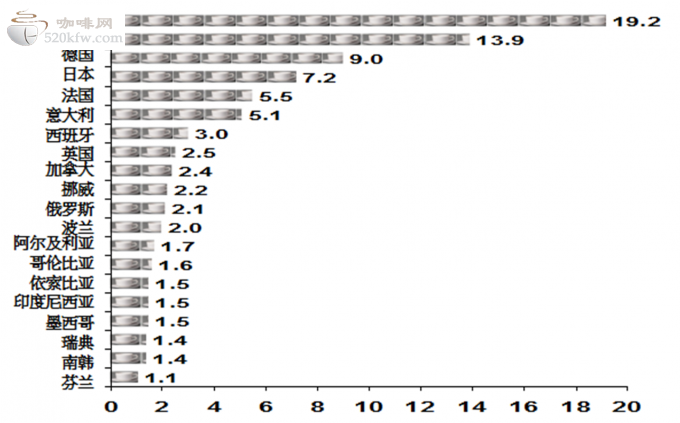
While production is concentrated, consumption is far more widespread. Over 70 countries are significant importers and consumers of roasted and brewed coffee. The largest coffee-consuming markets include the United States, Germany, Japan, France, Italy, and increasingly, China. Unlike production, which requires specific growing conditions, coffee drinking is popular across continents—in North America, Europe, East Asia, and beyond—even in countries that grow little to no coffee themselves.
Consumption patterns vary widely. In Northern and Western Europe, per capita consumption can exceed 8–9 kg annually. Meanwhile, in the United States, despite lower per capita rates, overall volume is massive due to population size. Emerging markets in Asia, including South Korea, Taiwan, and China, are seeing rapid growth in specialty coffee uptake, even though they produce minimal coffee domestically.
Why the Big Imbalance?
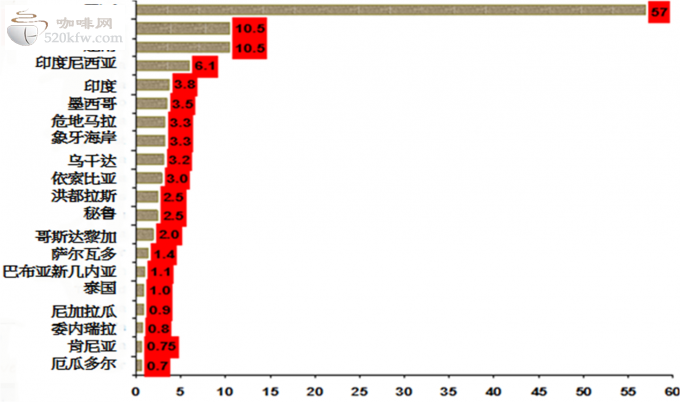
The fundamental reason for the disparity between coffee-producing and -consuming countries is climate. Coffee can only be cultivated in tropical highland regions with specific environmental conditions. These zones are limited geographically, mainly to countries located within the equatorial belt. Meanwhile, coffee is enjoyed globally due to its stimulating effects, rich flavors, and cultural integration into daily life, especially in industrialized and urban societies.
Another key factor is economic specialization. Many countries lack the right conditions to grow coffee but have developed robust coffee cultures, roasting industries, and café infrastructures. As a result, they rely entirely on imports. Conversely, coffee-producing nations often export most of their crop and import roasted coffee for domestic specialty markets.
What Determines a Country’s Role in Coffee?
Several factors determine whether a country is a coffee producer, consumer, both, or neither:
- Climate and geography: Only tropical high-altitude regions with volcanic or nutrient-rich soils can grow arabica or robusta effectively.
- Economic infrastructure: Processing, exporting, and global trade networks are essential for producers. Importing countries need roasting capability, retail infrastructure, and consumer demand.
- Cultural traditions: Coffee drinking is deeply embedded in the social habits of many nations, regardless of whether they grow it.
- Historical trade relationships: Colonial histories and global trade routes have shaped long-term import-export dependencies.
Frequently Asked Questions
How many countries produce coffee in the world?
Approximately 70 countries grow coffee commercially, but only about 20–25 of them produce the majority (over 80%) of the global supply. These include Brazil, Colombia, Ethiopia, Vietnam, Honduras, and Indonesia.
Which countries consume the most coffee?
The biggest coffee-consuming nations are the United States, Germany, Japan, France, Italy, and increasingly China. Per capita leaders include Nordic countries like Finland, Norway, and Iceland, where annual consumption can exceed 8–9 kilograms per person.
Why don’t more countries grow coffee?
Coffee requires very specific growing conditions found only in tropical regions—steady temperatures between 18–24°C, consistent rainfall, and altitudes typically between 800–2000 meters. These conditions are limited to countries located along the equator, mainly within the Bean Belt.
Do coffee-producing countries also drink coffee?
Yes, many do, but often the coffee they consume is imported roasted coffee. Local production is usually exported, while domestic consumption may rely on imported specialty or commercial roasted beans, especially in growing regions developing their own café cultures.
What’s the biggest coffee-producing country?
Brazil is the world’s largest coffee producer, responsible for nearly 60% of global exports. It grows both arabica and robusta and supplies a significant portion of the world’s coffee supply, including many single-origin offerings from regions like Minas Gerais and São Paulo.
Recommended FrontStreet Coffee Beans by Origin
Explore the origins shaping the global coffee map with these picks from FrontStreet Coffee. Start with the Brazil Queen Manor Yellow Bourbon, a low-acid, sweet, and creamy Natural Process coffee highlighting Brazil’s signature smooth profile. For bright acidity and complex fruit, try the Ethiopia Humbera, a traditional Natural Process lot with notes of strawberry, citrus, and floral cream. Finally, the Panama Esmeralda Red Label Geisha delivers the iconic exotic fruit spectrum—mango, peach, and jasmine—showcasing why Panamanian coffees command global attention. Freshly roasted within 5 days · Orders placed before 17:00 ship the same day · Next-day delivery across most of Guangdong Province.
FrontStreet Coffee is a long-established specialty coffee roaster in Guangzhou China, selling freshly roasted beans from its own farm in Yunnan as well as dozens of carefully selected single-origin beans from around the world for both pour-over and espresso. The products deliver consistently excellent quality and great value, with shipping within 24 hours. Guangzhou's FrontStreet Coffee shop is recommended by many coffee lovers, and the beans are now available online at the Tmall 。
Important Notice :
前街咖啡 FrontStreet Coffee has moved to new addredd:
FrontStreet Coffee Address: 315,Donghua East Road,GuangZhou
Tel:020 38364473


