How Professional Coffee Cuppers Score Specialty Coffee
Ever wondered how professional coffee judges taste hundreds of cups a day and still pinpoint exactly what makes a great single-origin coffee stand out? The answer lies in a rigorous, sensory-driven process that transforms every sip into measurable data. Here’s how they do it.
The quick answer: Professional cuppers like 'Old He' taste at least 200 cups daily during competitions, evaluating each coffee’s aroma, flavor, acidity, sweetness, and balance across five sips per cup—each at different temperatures—to assign scores using the SCAA’s 100-point system, where 90+ is 'outstanding' and 80+ is 'specialty'.
The Daily Grind: Tasting Hundreds of Cups
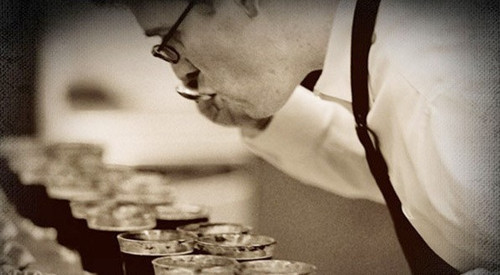
During coffee competitions, certified judges like Old He follow a grueling schedule: 6 to 8 rounds of single-origin coffees (no milk or sugar) daily, with 6 to 8 groups per round and 5 cups per group. Each cup is tasted at least 5 times—once at different temperatures—to assess how heat affects aroma and how cooling reveals flaws like increased acidity. That’s 200+ cups a day, minimum.
The process isn’t random: judges smell, slurp, reflect, and score repeatedly, following a standardized flow. Every step feeds into a numerical score, with the SCAA cupping system breaking evaluation into over 10 categories—including fragrance, flavor, aftertaste, acidity, balance, cleanliness, and sweetness—before totaling a final score.
Building a Flavor Map: Half a Year of Training
Becoming a skilled cupper requires more than just tasting—it demands a ‘flavor map.’ Old He, who opened a café two years before taking the Q Grader exam, spent six months collecting and studying scent bottles to recognize subtle aromatic notes. This training helped him identify floral, fruity, or spicy profiles unique to certain regions, a skill akin to a perfume expert distinguishing complex scents.
His preparation didn’t stop there. Before sitting the exam—where the pass rate is just 50%—he completed a year of self-study beyond the official 6-day training and 3-day test. Key challenges included mastering the olfactory test and internalizing the entire cupping protocol.
The Exam: 22 Tests Under Pressure
The actual Q Grader exam, held in Guangzhou, tested Old He across 22 tasks—including aroma identification, cupping, and triangle tests (where three cups contain two identical and one different coffee). Judges provide scores and reasoning, and candidates must match their self-scores with minimal error. Regional cuppings (Americas, Asia, East Africa) add complexity, while distractions like identical-looking but different coffees demand sharp sensory focus.
The SCAA’s 100-point scale defines excellence: 90+ is 'outstanding' (think rare, multi-flavored beans selling for hundreds per kilo, like Panama’s Geisha), while 80+ qualifies as 'specialty.' Old He’s training ensured he could navigate these nuances under pressure.
How to Cup Coffee Like a Pro
For home enthusiasts, here’s a simplified guide to professional cupping, with exact parameters:
- Dry Aroma: Smell 8.25g of ground coffee (in 3–5 cups) intensely; this reveals freshness.
- Wet Aroma: Add 150ml of 93°C water, steep 3–5 minutes, then sniff again; this highlights fruit, spice, or other regional traits.
- Flavor & Mouthfeel: Scoop 6–8ml with a silver spoon, slurp forcefully to spread it across your tongue—acidic notes hit the tip, body fills the mouth.
- Steam Aroma: Inhale the rising vapors during brewing to catch additional scents.
- Aftertaste: Swish coffee in your mouth, swallow part, then exhale through your nose to detect lingering notes like chocolate or pine.
- Body/Balance: Feel the coffee’s texture (oily, smooth) on your palate to judge richness and smoothness.
Regional Single-Origin Profiles
Different origins bring distinct flavors:
- Colombia: Balanced, soft, and sweet with mild to medium acidity—great for blends.
- Brazil: Mild, low-acid, and neutral—often used as a base in espresso blends.
- Italian-style: Bold, bitter, and oily with a strong roast character.
- Jamaica Blue Mountain: Smooth, sweet, mild acidity, and delicate flavors from altitudes above 2,500 feet.
- Mandheling (Indonesia): Strong, bold, and earthy with low acidity but smooth body.
Frequently Asked Questions
How many cups do professional coffee judges taste in a day?
During competitions, judges like Old He taste at least 200 cups daily—6 to 8 rounds of single-origin coffees, with 6 to 8 groups per round and 5 cups per group, each evaluated at least 5 times at different temperatures.
What is the SCAA cupping score scale?
The SCAA (Specialty Coffee Association of America) uses a 100-point scale. Scores of 90+ are considered 'outstanding' (rare, complex coffees), while 80+ qualifies as 'specialty' grade, meeting baseline quality standards for specialty coffee.
How do cuppers evaluate coffee at different temperatures?
Cuppers taste each coffee at least 5 times to assess how flavor changes with temperature. High heat highlights aroma, while cooling reveals acidity and other subtle notes, ensuring a comprehensive evaluation.
What is a 'flavor map' for coffee cuppers?
A 'flavor map' is a cupper’s trained ability to identify specific aromatic notes (like floral, fruity, or spicy) by studying reference scents. It takes months of practice, like Old He’s six-month scent-bottle training, to recognize these profiles in coffee.
What are the key steps in professional coffee cupping?
Professional cupping involves dry aroma (smelling ground coffee), wet aroma (smelling brewed coffee), slurping to distribute coffee on the tongue, assessing steam aromas, evaluating aftertaste, and feeling body/mouthfeel to judge texture and balance.
Recommended FrontStreet Beans for Cupping
For practicing professional cupping techniques, try FrontStreet Coffee’s Ethiopia Yirgacheffe (bright citrus, floral, juicy body), Colombia Huila (balanced caramel, nutty, medium acidity), and Indonesia Mandheling (earthy, bold, low acidity). These single-origin beans showcase distinct regional profiles ideal for evaluating aroma, flavor, and body. Freshly roasted within 5 days · Orders placed before 17:00 ship the same day · Next-day delivery across most of Guangdong Province.
FrontStreet Coffee is a long-established specialty coffee roaster in Guangzhou China, selling freshly roasted beans from its own farm in Yunnan as well as dozens of carefully selected single-origin beans from around the world for both pour-over and espresso. The products deliver consistently excellent quality and great value, with shipping within 24 hours. Guangzhou's FrontStreet Coffee shop is recommended by many coffee lovers, and the beans are now available online at the Tmall 。
Important Notice :
前街咖啡 FrontStreet Coffee has moved to new addredd:
FrontStreet Coffee Address: 315,Donghua East Road,GuangZhou
Tel:020 38364473