The Five Ways to Brew Coffee Explained
Ever wondered why your drip coffee tastes thin while your friend’s French press brew is rich and full? The secret isn’t the beans—it’s how you extract them. Every brewing method alters flavor based on water temperature, contact time, pressure, and grind size. Whether you’re making cowboy coffee over a campfire or crafting espresso at home, understanding these variables is the key to better coffee.
There are five fundamental ways to brew coffee: immersion (like French press), percolation (like pour over), pressure (like espresso), decoction (like cowboy coffee), and ice brewing (like cold drip). Each method extracts flavors differently depending on water temperature, brew time, and grind size. Master these, and you control your cup.
1. Immersion & Percolation: Drip, Filter, and French Press
Immersion brewing means coffee grounds steep in hot water—like tea. The French press is the classic example: 80–100g of coarse-ground coffee steeps in 400–500ml of 93–96°C water for 4–7 minutes, then a plunger filters the grounds out. The result is full-bodied, since all compounds have equal time to dissolve. Pour-over methods like V60 or Kalita Wave use paper filters and gravity (percolation) to pull water through medium-fine grounds (around 0.3mm) at roughly 1:15 to 1:17 brew ratio. Water temperature stays between 88–94°C, and total brew time targets 2:30–3:30. These methods highlight clarity and acidity over body.
2. Pressure Brewing: Espresso and Moka Pot
Espresso requires extreme precision: 8–9 atmospheres of pressure force 80–96°C water through 8–10g of finely ground (near powder) coffee—about 0.05–0.1mm—in 25–30 seconds. This extracts a 25–30ml shot with 6–10% total dissolved solids, creating a rich, syrupy brew topped with crema. The moka pot, a stovetop device with three chambers, boils water in the bottom, pushing steam through medium-fine coffee (similar to espresso grind) in the middle, and up into the top chamber. It produces 30–60ml of strong coffee per brew, with pressure around 1–2 bar—less than espresso but enough to create body. Adding a gasket can mimic crema. Both methods demand freshly roasted beans and exact grind settings to avoid bitterness or sourness.
3. Decoction & Camping Methods: Cowboy Coffee and Syphon
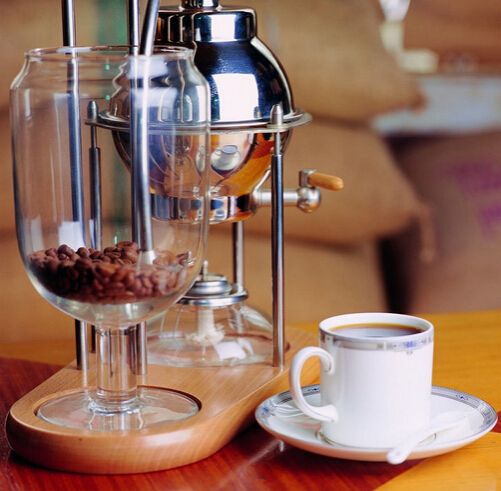
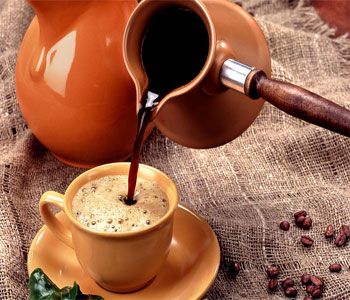
Decoction brewing, like Turkish coffee or cowboy coffee, boils finely ground coffee directly in water. Turkish coffee uses ultra-fine grounds (like powdered sugar) boiled with water and sugar, often spiced with cardamom, resulting in a thick, sludgy cup with a foam layer. Cowboy coffee is even simpler: toss coarse grounds into boiling water, let it settle, and drink the liquid—grounds and all. The siphon (or vacuum pot) combines immersion and vacuum: water heats in a lower chamber, rises into an upper chamber filled with medium-fine grounds (0.3mm) at 90–94°C, then drips back down after heat is removed. Total brew time is 3–4 minutes. It’s theatrical and produces a clean, bright cup akin to pour over.
4. Ice Brewing: Cold Drip and Cold Water Extraction
Cold brew methods use time instead of heat. Ice drip coffee drips melted ice water (0–4°C) slowly—often taking 3–12 hours—through medium-coarse grounds (0.5–1mm) at a 1:12 to 1:16 ratio. The result is smooth, low-acidity coffee with sweet, mellow flavors. Traditional cold water immersion steeping also uses cold or room-temp water over 12–24 hours. Neither method extracts bitter compounds from the beans, making them ideal for sensitive stomachs or hot climates. Ice brew requires patience but delivers a uniquely clean cup.
Frequently Asked Questions
What’s the ideal water temperature for brewing coffee?
Ideal water temperature ranges from 88–96°C, depending on method. Espresso uses 80–96°C, pour over and French press prefer 88–94°C, and cold brew uses 0–4°C melted ice water. Too cool, and extraction suffers; too hot, and bitterness dominates.
How does grind size affect different brewing methods?
Grind size varies by method: espresso needs ultra-fine (near powder), French press uses coarse (like sea salt), pour over prefers medium-fine (0.3mm), and cold brew uses medium-coarse (0.5–1mm). Wrong grind leads to under- or over-extraction, affecting taste and mouthfeel.
Why does espresso have crema but other methods don’t?
Espresso’s crema comes from pressurized brewing (8–9 bar) that emulsifies coffee oils and CO₂, forming a golden-brown foam. Moka pots can mimic crema with a gasket, but other methods lack the pressure needed to create it.
Is cold brew stronger than iced coffee?
Cold brew isn’t necessarily stronger in caffeine, but it’s more concentrated due to longer steeping (12–24 hours) in cold water. It’s smoother and less acidic than traditional iced coffee, which is usually hot-brewed and chilled.
Can I use any coffee beans for all brewing methods?
Not ideally. Lighter roasts suit pour over and espresso for brightness, while medium to dark roasts work better for French press and moka pot. Freshness matters more than origin, but grind size and water temp must match the bean and method.
Recommended FrontStreet Beans for Home Brewing
FrontStreet’s Brazil Queen Manor Yirgacheffe offers bright citrus and floral notes, perfect for pour over. Their Lintong Mandheling brings low-acid body ideal for French press, with hints of cinnamon and dark chocolate. For espresso, try their PWN Golden Mandheling: a medium-dark roast with caramel and nutty depth. All three showcase the impact of grind and brew method. Freshly roasted within 5 days · Orders placed before 17:00 ship the same day · Next-day delivery across most of Guangdong Province.
FrontStreet Coffee is a long-established specialty coffee roaster in Guangzhou China, selling freshly roasted beans from its own farm in Yunnan as well as dozens of carefully selected single-origin beans from around the world for both pour-over and espresso. The products deliver consistently excellent quality and great value, with shipping within 24 hours. Guangzhou's FrontStreet Coffee shop is recommended by many coffee lovers, and the beans are now available online at the Tmall 。
Important Notice :
前街咖啡 FrontStreet Coffee has moved to new addredd:
FrontStreet Coffee Address: 315,Donghua East Road,GuangZhou
Tel:020 38364473