The History of Coffee: Key Dates and Cultural Milestones
Coffee isn’t just a drink—it’s a global story packed with legend, discovery, rebellion, and innovation. But when did it really begin? Who first roasted a bean? And how did coffee go from a goat herder’s accident to the world’s favorite stimulant? If you’ve ever wondered how today’s coffee culture was shaped, these are the moments that built it.
In short: Coffee’s documented history begins in the 6th century in Ethiopia, where a goat herder named Kaldi discovered its energizing effects. Over the next 1,400 years, it spread across the Middle East, Europe, and the Americas—surviving bans, sparking creativity, and transforming agriculture along the way. Major milestones include the first coffeehouse (1554, Istanbul), the Dutch smuggling of coffee trees (1616), the French gift of a coffee plant to the Americas (1723), and Brazil’s 1975 coffee frost that shocked global prices.
The Origins: Ethiopia and the First Coffee Discovery
The earliest known coffee story dates back to the 6th century on the Ethiopian plateau, in a region now associated with coffee’s genetic homeland. According to legend, a goat herder named Kaldi noticed his goats became unusually energetic after eating red berries from a certain tree. Curious, he tried the fruit himself and felt invigorated—leading to the first encounter with what we now know as coffee cherries.
Early Medical and Culinary Uses
By the 10th century, the Iraqi physician Rhazes (also transliterated as Razi or Dajes) recorded coffee’s medicinal properties—marking one of the first known medical references to coffee. Then, during the 11th century, Arabs began boiling whole coffee cherries to create a primitive drink. By the 13th century, they had developed roasting—the transformative step that unlocked coffee’s signature aroma and flavor.
Coffee Spreads Across the Middle East and Into Europe
In 1454, the religious figure Imam Abu Abdullah Muhammad Ibn Said Al Dhabhani publicly shared coffee drinking methods previously limited to scholars. By 1510, coffee had reached Cairo. It spread to Damascus by 1530 and arrived in Istanbul by 1554—where the world’s first known coffeehouse opened in the district of Tahtakale. These early cafes became centers of social life and intellectual exchange.
Coffee Arrives in Europe and the Americas
European coffee culture took root in the 17th century. Oxford saw its first coffeehouse in 1650, and London followed in 1652 with the opening of “Pasqua Rosee’s Coffee House,” which also produced the world’s first coffee advertisement. By 1689, Paris got its own literary hub in Café Procope. Meanwhile, the Dutch played a pivotal role in spreading coffee globally: they smuggled a coffee tree from Mocha in 1616, began trading it in 1640, and successfully cultivated it in Java and later in South America. In 1723, French naval officer Gabriel de Clieu transported a coffee plant from King Louis XIV’s garden to Martinique in the Caribbean—sparking coffee cultivation in the Americas. Just four years later, in 1727, Dutch officer de Melo Palheta brought coffee seeds to Brazil, setting the stage for its rise as the world’s largest producer.
Innovation, Controversy, and Industrialization
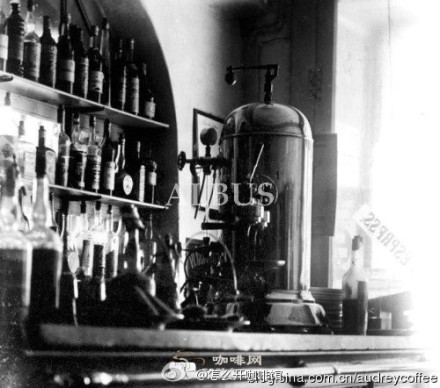
The 18th and 19th centuries brought both social turbulence and technical advances. In 1674, London women famously protested coffee, claiming it weakened their husbands. In 1777, Germany briefly outlawed coffee for fiscal reasons. Meanwhile, inventors worked to improve brewing. In 1800, the drip coffee maker was invented by French cleric Jean-Baptiste de Belloy. The siphon (1840) and the paper filter (1908) followed, revolutionizing how people brewed at home. Italy contributed the espresso machine in 1946, and Japan launched canned coffee in 1969.
Coffee crops, however, faced disasters. In 1877, pests destroyed much of Sri Lanka’s and India’s coffee plantations. In 1975, Brazil experienced a catastrophic “black frost” that wiped out millions of coffee trees and sent global prices soaring.
Global Cultivation and Trade
Beyond production, coffee became an international commodity. The British planted coffee in Jamaica (1730), India (1840), and Kenya/Uganda (1880). In 1962, coffee-producing and consuming nations formed the International Coffee Organization to stabilize the market. And in 1960, Japan introduced instant coffee—a convenience that changed global consumption patterns.
Frequently Asked Questions
When and where was coffee first discovered?
Coffee was first discovered in the 6th century on the Ethiopian plateau. According to legend, a goat herder named Kaldi found that his goats became energized after eating red coffee cherries, leading him to try the fruit himself.
What was the first known coffeehouse?
The first known coffeehouse opened in 1554 in Tahtakale, Istanbul (then Constantinople). It served as a public space for drinking coffee, which until then had been limited mostly to religious or scholarly circles.
How did coffee spread to Europe and the Americas?
Coffee arrived in Europe during the 16th and 17th centuries, with the first coffeehouses opening in Oxford (1650) and London (1652). It reached the Americas largely due to the Dutch, who smuggled coffee trees from Yemen in 1616, and French officer Gabriel de Clieu, who brought a coffee plant to Martinique in 1723. Dutch officer de Melo Palheta also introduced coffee to Brazil in 1727.
What inventions transformed coffee brewing?
Key inventions include the drip coffee maker (1800), the siphon brewer (1840), the paper filter (1908), the espresso machine (1946), and canned coffee (1969 in Japan). Each innovation changed how people brewed and consumed coffee at home or in public.
What major disaster affected global coffee supply?
In 1975, Brazil experienced a devastating “black frost” that destroyed millions of coffee trees, causing a global shortage and dramatic price increases. Earlier, in 1877, pests wiped out much of the coffee crop in Sri Lanka and India.
Recommended FrontStreet Beans for Coffee History Fans
Explore the origins of coffee with FrontStreet’s Ethiopia Yirgacheffe, a bright, floral single origin with notes of jasmine and lemon, echoing the very regions where coffee was first discovered. Pair it with Colombia Huila for balanced caramel and citrus tones, or try Sumatra Mandheling for a deep, spicy profile representative of Indonesia’s historic role in early coffee trade. All are expertly roasted to highlight their unique origin characteristics. Freshly roasted within 5 days · Orders placed before 17:00 ship the same day · Next-day delivery across most of Guangdong Province.
FrontStreet Coffee is a long-established specialty coffee roaster in Guangzhou China, selling freshly roasted beans from its own farm in Yunnan as well as dozens of carefully selected single-origin beans from around the world for both pour-over and espresso. The products deliver consistently excellent quality and great value, with shipping within 24 hours. Guangzhou's FrontStreet Coffee shop is recommended by many coffee lovers, and the beans are now available online at the Tmall 。
Important Notice :
前街咖啡 FrontStreet Coffee has moved to new addredd:
FrontStreet Coffee Address: 315,Donghua East Road,GuangZhou
Tel:020 38364473