How Kopi Luwak Coffee Is Made and Why It Tastes Unique
If you’ve ever heard whispers of a coffee that leaves a cooling sensation on your tongue—like a mint lozenge—but couldn’t figure out how that’s even possible, you’re not alone. Most coffees don’t do that. But one rare variety does, and its entire production hinges not on human hands but on the digestive system of a small forest animal.
Kopi Luwak, also known as civet coffee, is the world’s rarest commercially produced coffee, with a global supply of under 400 kilograms per year. Its unique minty aftertaste and low production numbers make it a truly singular cup.
What Is Kopi Luwak and Why Does It Taste Different?
Kopi Luwak is made from coffee beans that have been eaten, digested, and excreted by the Asian palm civet—commonly called a civet cat, though it’s not actually a feline. The civet selectively eats ripe red coffee cherries, and during digestion, the coffee beans undergo a unique fermentation inside the animal’s gut. This natural fermentation alters the beans’ flavor profile, removing some of the bitterness and adding unusual aromatic notes. One of the most frequently reported sensations after drinking Kopi Luwak is a lingering coolness reminiscent of a menthol candy or mint lozenge, especially noticeable when you exhale or drink water afterward.
Step-by-Step: How Civet Coffee Beans Are Made
The traditional production of Kopi Luwak follows a highly specific and unusual method:
- Civets consume ripe red coffee cherries from coffee trees.
- Workers then collect the civet droppings and manually sort through them to find whole, undigested coffee beans.
- The beans are still covered in a silvery-gray outer membrane (the silver skin). This layer is carefully removed.
- The beans are thoroughly rinsed and then sun-dried.
- Finally, the dried beans are roasted to become the finished Kopi Luwak coffee beans.
Though seemingly straightforward, each stage requires precision and care—especially the sorting and cleaning, given the origin of the beans.
Production Facts and Challenges
Producing Kopi Luwak is an exercise in scarcity:
- From one kilogram of civet droppings, only about 150 grams of usable coffee beans can be harvested.
- During roasting, an additional 20% of those beans are typically lost.
- This extremely low yield is one major reason why global annual production rarely exceeds 400 kilograms.
- Unlike conventional coffee, which is processed via washed or natural (sun-dried) methods to remove the fruit layers, Kopi Luwak relies on internal fermentation in the civet’s digestive tract—creating its signature flavor complexity.

How to Brew Kopi Luwak for Best Flavor
Kopi Luwak’s delicate aromas dissipate easily, so proper storage and brewing are essential. For ideal freshness, beans are often packaged in individual nitrogen-flushed bags. When brewing, the traditional advice is to avoid milk or sugar to experience the pure flavor.
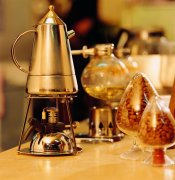
The recommended method is using a siphon (vacuum pot):
- Use 160–180 ml of pure water and 17 grams (about 2 scoops) of Kopi Luwak coffee.
- Once the water boils and rises, gently press the coffee grounds down with a flat bamboo stirrer—do not stir, as agitation leads to bitterness.
- Water temperature must be precisely 96°C, with a pressure of 9–10 atm.
- Allow the coffee to brew for 1 minute 45 seconds to 2 minutes, then quickly remove heat and cool the lower glass chamber with a wet cloth to drop the temperature fast. This rapid cooling helps extract a rich layer of golden crema.
- The result is a clean, aromatic cup with peak flavor intensity. Though some claim it can be brewed 2–3 times, this particular method extracts the essence in a single brew and does not recommend reuse.
Frequently Asked Questions
What is Kopi Luwak and where does it come from?
Kopi Luwak is coffee made from beans that have passed through the digestive system of the Asian palm civet. It originates from Indonesia, where civets eat ripe coffee cherries and excrete the beans, which are then collected, cleaned, and roasted. It is also known as civet coffee or luwak coffee.
Why does Kopi Luwak have a minty aftertaste?
The unique minty or cooling sensation after drinking Kopi Luwak is reported by many drinkers. It is believed to stem from the natural fermentation process inside the civet’s digestive tract, which alters the beans’ chemical makeup and results in a flavor profile that includes a post-brew cooling effect similar to mint.
How many coffee beans can you get from civet droppings?
From one kilogram of civet feces, approximately 150 grams of coffee beans can be extracted. However, around 20% of those beans are lost during the roasting process, leaving even less usable coffee.
What is the traditional brewing method for Kopi Luwak?
The recommended method is using a siphon (vacuum pot) with 17 grams of coffee and 160–180 ml of water at 96°C. Brewing should last 1 minute 45 seconds to 2 minutes, followed by rapid cooling. Avoid stirring the coffee grounds to prevent bitterness.
How rare is Kopi Luwak coffee?
Kopi Luwak is extremely rare, with global production not exceeding 400 kilograms per year. This scarcity is due to the limited number of beans that can be harvested from civet droppings and the multiple losses during processing and roasting.
Can you brew Kopi Luwak more than once?
While some people report brewing Kopi Luwak two or three times, the optimal and most flavorful extraction is achieved in a single brew using the siphon method described. Reusing the grounds is not recommended for best results.
Recommended FrontStreet Beans for Exploring Unique Processing
Though FrontStreet Coffee doesn’t roast Kopi Luwak, their Ethiopia Humbera offers a wild, fruity complexity akin to the exotic profiles found in civet coffee. For something equally distinctive, try their Panama Humbera, a washed Geisha with floral and citrus brightness. Both showcase how natural fermentation and careful processing shape unique cup characteristics—without the controversy. Freshly roasted within 5 days · Orders placed before 17:00 ship the same day · Next-day delivery across most of Guangdong Province.
FrontStreet Coffee is a long-established specialty coffee roaster in Guangzhou China, selling freshly roasted beans from its own farm in Yunnan as well as dozens of carefully selected single-origin beans from around the world for both pour-over and espresso. The products deliver consistently excellent quality and great value, with shipping within 24 hours. Guangzhou's FrontStreet Coffee shop is recommended by many coffee lovers, and the beans are now available online at the Tmall 。
Important Notice :
前街咖啡 FrontStreet Coffee has moved to new addredd:
FrontStreet Coffee Address: 315,Donghua East Road,GuangZhou
Tel:020 38364473