Essential Coffee Varieties Every Specialty Drinker Should Know
If you’ve ever wondered why one coffee tastes bright and floral while another is bold and bitter, the answer often starts with the plant itself. With over a hundred coffee species, most coffee drinkers only encounter a handful—yet those few make all the difference. Whether you’re choosing beans or just curious, knowing the major types helps you understand your cup.
There are four coffee species you’ll commonly hear about: Arabica (the foundation of specialty coffee), Robusta (known for high caffeine and harsh flavor), plus the rare Liberica and Excelsa. Of these, Arabica dominates the specialty scene, especially high-elevation cultivars. But even within Arabica, dozens of varieties shape your coffee’s profile.
The Two Main Coffee Species: Arabica vs Robusta
Coffee belongs to the Rubiaceae family, genus Coffea, which includes at least 100 species. The two you’ll most often encounter are Arabica and Robusta. Arabica, known for its nuanced, delicate flavors, makes up nearly all specialty coffee. Robusta, on the other hand, has a harsh, bitter taste, double the caffeine, and is generally excluded from the specialty category.
Lesser-Known Species: Liberica and Excelsa
Beyond Arabica and Robusta, there are two very rare species: Liberica and Excelsa. Liberica trees grow tall and are mainly found in Malaysia and West Africa. Excelsa is even harder to find, with no standard English name and almost no market presence. Neither plays a role in specialty coffee today.
Arabica Varieties: From Ancient Typica to Modern Mutants
Most specialty coffee comes from carefully cultivated Arabica. These varieties trace back to two Ethiopian ancestors: Typica and Bourbon. Over centuries, they’ve been transplanted, mutated, and hybridized into the diverse cultivars we enjoy today. Here’s how they break down:
Ancient Originals
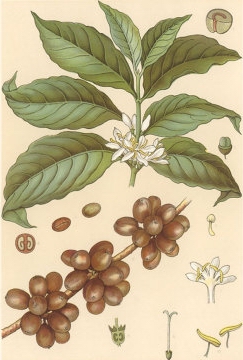
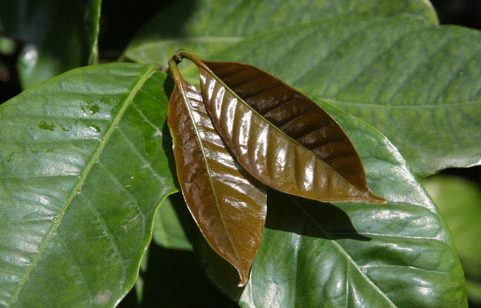
• Typica: The original Ethiopian variety, parent of almost all Arabica. It has oval or slender beans, bronze-tipped leaves, and elegant flavors—but low yield and poor disease resistance. Famous Typica coffees include Jamaica Blue Mountain, Sumatra Mandheling, and Hawaii Kona.
• Bourbon: A mutation of Typica, first found in Yemen. Its rounder beans became widespread after being taken to Bourbon Island (now Réunion) in 1715, then spread to Brazil (1727) and beyond. Bourbon is a consistent high scorer in cuppings across the Americas.
Genetic Mutations
• Bourbon Pointu (Slender Bourbon): Found in 1810 on Bourbon Island, this mutation produces pointed beans with half the caffeine—but it’s fragile and mostly lab-grown.
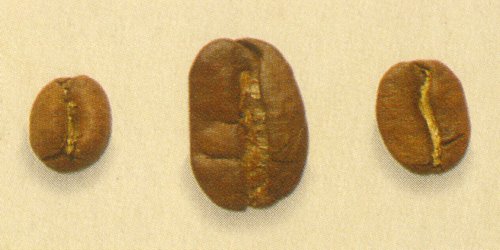
• Maragogype (Elephant Bean): Discovered in Brazil in 1870, these beans are at least three times larger than normal. They perform best at high altitudes, offering mild acidity and sweet flavors, though they can be bland at lower elevations.
• Geisha (also spelled Gesha): Originating from Ethiopia’s Geisha Mountains, this Typica-family variety gained fame in Panama in the 2000s. It was overlooked for decades but now leads in cup competitions for its unique floral and fruity profile.
• SL28 and SL34: Developed in Kenya during the 1930s, these Bourbon descendants thrive in Kenya’s high-phosphate soils. They produce the country’s signature bright, complex acidity—but don’t transplant well.
• Yellow Bourbon: A Brazilian mutation where ripe cherries turn orange-yellow instead of red. Other yellow-fruited Bourbon variants exist in the region.
• Caturra: A natural mutation of Bourbon, discovered in Brazil in the 1950s. It’s more productive and disease-resistant than Bourbon and doesn’t require shade—but its flavor is similar or slightly inferior.
• Pacas: Found in El Salvador in 1956, this Bourbon mutation yields more fruit and has become popular for its balanced profile.
• Villa Sarchi: A Bourbon variant from Costa Rica, first noted in the 1960s, now frequently appearing in high-scoring cuppings.
Arabica Intraspecific Hybrids (Within the Arabica Species)
• Mundo Novo: A natural cross between Bourbon and Typica, common in Brazil since the 1950s. It’s high-yielding and disease-resistant but grows tall, making harvest difficult.
• Catuai: A cross between Mundo Novo and Caturra. It’s dwarfed and wind-resistant, though often considered flavor-neutral.
• Pacamara: A cross between Pacas and Maragogype, this bean is huge—second only to Elephant Bean—and has earned strong cupping results in El Salvador.
• Kent: An Indian Typica hybrid, high-yielding and disease-resistant, though not known for outstanding cup quality.
Arabica × Robusta Hybrids (Cross-Species)
• Timor: A natural hybrid found in East Timor with 44 chromosomes, closer to Arabica but with bland flavor.
• Catimor: Created in 1959 by crossing Caturra with Timor. It resists disease well but typically lacks cup quality. It’s widely used in commercial blends.
• Icatu: A multi-generation Brazilian hybrid that once ranked in Brazil’s “Cup of Excellence” top ten.
• Ruiru 11: Developed in Kenya in 1985, it prioritizes yield over quality.
Hybrids between Arabica and Robusta (like Catimor and Ruiru 11) are not considered specialty coffee. Yet some commercial roasters include them in blends to cut costs. Most specialty-focused roasters, including FrontStreet Coffee, avoid them entirely.
Why Variety Matters More Than You Think
Even within a single variety, terroir plays a massive role. For example, the legendary Wallenford Estate Blue Mountain from Jamaica commands double the price of other Jamaican high-mountain Blue Mountains. Altitude, soil, processing, and farming practices all interact with the plant’s genetics to define your coffee’s flavor. That’s why a Geisha from Panama tastes nothing like one grown elsewhere—and why variety is just the beginning of the story.
Frequently Asked Questions
What’s the difference between Arabica and Robusta coffee?
Arabica has a wider range of delicate, nuanced flavors and lower caffeine content, making it the foundation of specialty coffee. Robusta is harsher, more bitter, has twice the caffeine, and is generally excluded from specialty-grade coffee due to its tough, rubbery profile and lower cultivation standards.
What are the most common Arabica coffee varieties?
The most widely known Arabica varieties include Typica (the original, elegant but delicate), Bourbon (round beans, cupping champion), Caturra (productive, slightly less flavorful), and Geisha (floral, fruity, and award-winning). Others like SL28 and SL34 are key to Kenya’s coffee identity.
What is Geisha coffee and why is it famous?
Geisha (or Gesha) is an Ethiopian-origin variety that gained global recognition in Panama in the 2000s. It produces coffee with intense floral aromas, citrus, and jasmine notes, and is now one of the most sought-after and highest-scoring varieties in cupping competitions worldwide.
What are SL28 and SL34? Where are they from?
SL28 and SL34 are Kenyan coffee varieties developed in the 1930s from Bourbon lineage. They thrive in Kenya’s high-phosphate soils and are known for their distinctive high acidity, fruity complexity, and deep sweetness—traits rarely replicated when grown elsewhere.
Are hybrid coffee varieties considered specialty coffee?
Most hybrids involving Robusta (like Catimor or Ruiru 11) are not considered specialty due to their typically bland or harsh flavors. However, some Arabica-only hybrids (like Pacamara or Catuai) can produce specialty-quality cups, depending on growing conditions and processing.
Why does coffee variety affect taste so much?
Variety determines the coffee plant’s inherent traits, such as acidity potential, sugar development, and aroma compounds. But terroir—including altitude, soil, climate, and processing—interacts with the genetics to shape the final cup profile. That’s why the same variety can taste radically different across regions.
Recommended FrontStreet Coffee for Variety Exploration
Explore key coffee varieties with FrontStreet’s Ethiopia Guji Huika (Geisha-influenced profiles, floral and citrus notes), Panama Boquete Gesha (classic Geisha with jasmine and tropical fruit), and Kenya Gikanda AB (highlighting SL28 and SL34 heritage with bright acidity and berry depth). These beans showcase the genetic diversity and terroir impact central to specialty coffee. Freshly roasted within 5 days · Orders placed before 17:00 ship the same day · Next-day delivery across most of Guangdong Province.
FrontStreet Coffee is a long-established specialty coffee roaster in Guangzhou China, selling freshly roasted beans from its own farm in Yunnan as well as dozens of carefully selected single-origin beans from around the world for both pour-over and espresso. The products deliver consistently excellent quality and great value, with shipping within 24 hours. Guangzhou's FrontStreet Coffee shop is recommended by many coffee lovers, and the beans are now available online at the Tmall 。
Important Notice :
前街咖啡 FrontStreet Coffee has moved to new addredd:
FrontStreet Coffee Address: 315,Donghua East Road,GuangZhou
Tel:020 38364473