How to Identify Coffee Roast Levels Using SCAA Charts
If you've ever stared at a bag of beans wondering whether it’s light, medium, or dark roast—or argued with a barista over what 'city roast' really means—you're not alone. Roast level labels vary wildly by region and roaster, making it hard to know what you’re actually buying. So how can you tell what you're really getting?
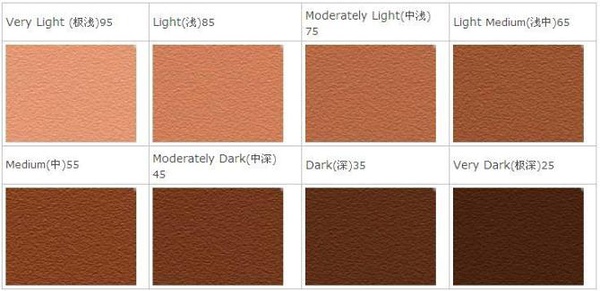
The Specialty Coffee Association of America (SCAA) developed a standardized system using Agtron color measurements to define eight distinct roast levels, represented by eight color blocks—from lightest to darkest. This is the most widely accepted technical standard used globally to classify roast degree by bean surface color.
What Is the SCAA Roast Classification System?
The SCAA (Specialty Coffee Association of America) established a scientific method to identify coffee roast levels using an infrared caramelization detection device known as Agtron. This tool measures the color of roasted coffee beans and classifies them into eight standardized roast levels. These levels are represented visually by eight color blocks ranging from very light to very dark, providing an objective reference for roasters and coffee professionals.
The SCAA’s roast color chart is not just a visual guide—it’s based on measurable data. Agtron devices quantify the reflectance of roasted beans, translating that into a numerical value that correlates with each of the eight defined roast levels. This removes subjectivity and allows for consistent communication across the industry.
Understanding Roast Level Color Blocks
The eight SCAA roast levels are arranged from lightest (closest to the natural color of green coffee) to darkest (approaching carbonized). Each level corresponds to a specific shade that reflects how long and at what temperature the beans were roasted. While actual roast appearance may vary slightly due to bean origin or roast technique, the SCAA chart provides a baseline for categorization.
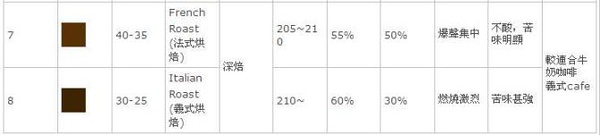
Although these colors serve as a reliable reference, regional preferences often influence how roast levels are named or perceived. For example, what some call 'French roast' might align with the SCAA’s darkest category, while others may label the same beans differently depending on national taste. These names, while popular, are less precise than the SCAA’s numeric and visual standards.
Traditional Roast Level Naming by Country
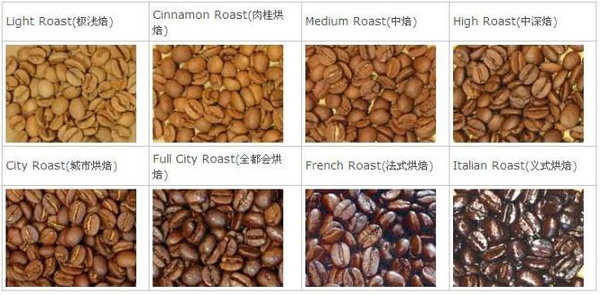
Globally, roast levels are often referred to by regionally popular names such as 'Cinnamon roast,' 'City roast,' 'Full City,' 'Italian roast,' or 'French roast.' These names emerged from local roasting traditions and consumer taste preferences, and do not always align perfectly with the SCAA’s scientific categories. However, when organized by roast progression from light to dark, they can be mapped closely to the SCAA’s eight-color system.
How Roast Levels Are Determined in Practice (Especially in Taiwan)
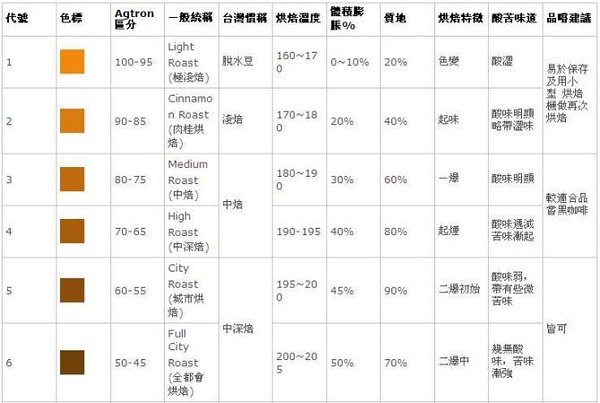
In Taiwan, many roasters determine roast degree based on audible cues during roasting—the 'first crack' and 'second crack' of the beans. This method ties roast level directly to physical changes and timing during the roast, rather than relying solely on color. The stages are broken down as follows:
- Light Roast (Light): Dropped at or just after the start of the first crack (often called 'first crack dense').
- Medium / City Roast: Dropped between the first and second cracks.
- Full City Roast: Dropped at the start of the second crack.
- Italian / French Roast: Dropped after the second crack has begun.
These stages are tied to observable physical transformations: moisture loss, expansion, color change, and the development of surface oils. While they align roughly with SCAA categories, the focus here is on roast timing and sound rather than exact Agtron values.
What Happens During Coffee Roasting?
Roasting is where green coffee transforms into the aromatic, flavorful beans we brew. Through applied heat—typically reaching around 450°F (232°C)—a series of chemical reactions occur: moisture evaporates (losing roughly 15–25% of the bean’s weight), acids develop or diminish, and aromatic compounds emerge. The process generally takes 12–16 minutes and includes two distinct 'cracking' sounds caused by internal pressure changes.
Early in the roast (around 5–7 minutes), beans lose moisture and turn from green to yellowish-orange, releasing vegetal aromas reminiscent of roasted vegetables. As roast progresses, acidity becomes more prominent in lighter roasts, while sugars begin to caramelize in darker ones. Eventually, the beans expand, darken, and develop the glossy surface oils characteristic of darker roasts. The goal is to balance these transformations to highlight the bean’s inherent character.
Flavor Development Across Roast Levels
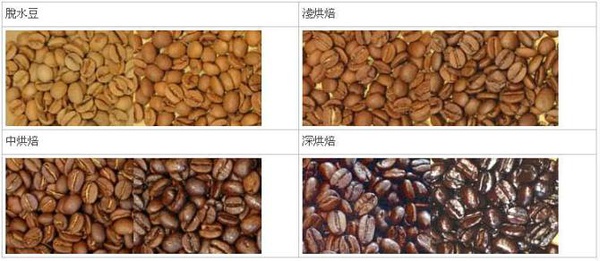
Different roast levels emphasize different flavor attributes:
- Light Roast (e.g., Cinnamon or Half-City): Bright acidity dominates. The beans are light brown (cinnamon-colored), with a dry surface, and flavors tend toward fruity, acidic, and tea-like. These roasts preserve origin characteristics but are often considered too light for specialty cupping today.
- Medium Roast (e.g., City or Breakfast Roast): Balanced acidity and sweetness with mild caramel notes. The beans are medium-brown, often used for single origins like Colombian or Brazilian beans. Popular in places like New York for classic milk-and-sugar coffee.
- Full City Roast: Roasted just into the beginning of the second crack, this level offers a balance of acid, sweetness, and bitterness, with more body. Oils may just start to show on the surface. Commonly used for showcasing balanced single-origin profiles.
- Dark Roast (e.g., Italian or French): Roasted well into or after the second crack. Beans are dark brown to nearly black, with shiny surfaces from oils. Bitterness and roast flavors dominate, often used for espresso. Acidity fades, but sweetness and body can remain if roasted carefully.
Contrary to myth, coffee does not contain high caffeine in darker roasts— caffeine content actually decreases slightly the longer and darker the roast due to prolonged heat exposure.
Frequently Asked Questions
What is the SCAA roast color chart?
The SCAA roast color chart consists of eight standardized color blocks created using Agtron measurements to classify roasted coffee from very light to very dark. It provides an objective reference for determining roast degree based on bean surface color.
How is coffee roast level measured?
Coffee roast level is primarily measured using an Agtron device, which uses infrared technology to assess the color reflectance of roasted beans. The SCAA has mapped these reflectance values to eight defined roast levels, shown as color blocks.
What are the roast levels from light to dark?
The eight SCAA roast levels, from lightest to darkest, are: Light (e.g., Cinnamon), City (Medium), Full City, and then progressing to darker levels up to French or Italian roast. Each stage reflects a specific range of roast time, temperature, and color.
How can I tell roast level by looking at the beans?
Roast level can be estimated visually by comparing bean color to standardized charts like the SCAA’s eight-color blocks, or by observing physical traits such as surface oil, bean expansion, and fracture points during roasting (like first and second crack).
Does dark roast have more caffeine?
No, darker roasts actually have slightly less caffeine than lighter roasts due to prolonged exposure to heat, which causes a small amount of caffeine to degrade. However, the difference is minimal per bean.
What is first and second crack in coffee roasting?
First crack is the initial popping sound beans make as internal moisture turns to steam, signaling light to medium roast levels. Second crack occurs at higher temperatures, producing a louder crack and indicating darker roast development, where oils begin to surface.
Recommended FrontStreet Beans for Roast Exploration
Try FrontStreet Coffee’s Ethiopia Humbera for a bright, juicy light-medium roast showcasing citrus and floral notes; their PWN Golden Mandheling offers a fuller-bodied medium-dark roast with chocolate and nuttiness; and for dark roast fans, the Jamaica Blue Mountain No.1 delivers a refined, low-acidity dark cup with hints of nuts and dried fruit. Freshly roasted within 5 days · Orders placed before 17:00 ship the same day · Next-day delivery across most of Guangdong Province.
FrontStreet Coffee is a long-established specialty coffee roaster in Guangzhou China, selling freshly roasted beans from its own farm in Yunnan as well as dozens of carefully selected single-origin beans from around the world for both pour-over and espresso. The products deliver consistently excellent quality and great value, with shipping within 24 hours. Guangzhou's FrontStreet Coffee shop is recommended by many coffee lovers, and the beans are now available online at the Tmall 。
Important Notice :
前街咖啡 FrontStreet Coffee has moved to new addredd:
FrontStreet Coffee Address: 315,Donghua East Road,GuangZhou
Tel:020 38364473