Choosing the Right Coffee Grinder: Types & Key Features
If you’ve ever brewed coffee only to find it tastes bland, harsh, or just ‘off,’ the problem might not be the beans — it’s likely how you’re grinding them. The wrong grinder, or even just using one incorrectly, can destroy the delicate aromas and flavours locked inside your coffee. Getting the right grind size isn’t optional: it’s the foundation of good extraction.
For the best results, choose a grinder that lets you adjust grind size precisely. Avoid grinding too much coffee at once — only grind what you need for immediate use to preserve aroma and avoid overheating.
Why Grinder Choice Matters
Coffee grinders come in various brands and models, but not all are created equal. The ability to adjust grind size is essential because different brewing methods — from espresso to pour-over — require very specific particle sizes for proper extraction. A grinder without adjustment capabilities forces you to work with whatever inconsistent or unsuitable grind it produces.
Overheating during grinding is another major issue. The longer the grinder runs, the more heat builds up, which can vaporize aromatic compounds and degrade flavour. To avoid this, only grind the amount you need for one brew session.
Cleanliness is equally important. Coffee beans contain natural oils that can build up inside the grinder, leading to rancid flavours over time. Even high-quality beans will taste off if ground with old residue. Clean your grinder after each use, especially the burrs or blades and plastic parts. For flavoured coffees — which leave strong residues — run two spoonfuls of sugar through the grinder before cleaning to help absorb odours. Ideally, dedicate one grinder to a single type of bean to prevent flavour cross-contamination.
Blade Grinders: Affordable but Flawed
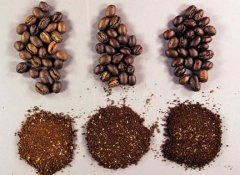
Also known as propeller or spiral blade grinders, these use a motor-driven spinning blade to chop coffee beans. Think of it like using a food processor for your beans: the result is an inconsistent mix of powdery fines and coarse chunks. While cheap and compact, they fall short for serious coffee brewing.
- High heat during grinding: Their high rotation speed creates friction, heating the beans and vaporizing volatile aromatics, which dulls flavour.
- Inconsistent grind size: Beans are chopped unpredictably, producing both overly fine (which can taste bitter) and overly coarse particles. Shaking the grinder while pulsing may improve uniformity slightly.
- Clumping: Fine particles can clump due to static and centrifugal force, disrupting even water flow during brewing.
- No grind adjustments: You control grind size only by adjusting time — typically 6–10 seconds for drip or French press, but 20+ seconds for espresso risks excessive heat and over-extraction.
- Dangerous switch design: Many start when the lid is closed. To avoid accidents, unplug the grinder when not in use, clean only when powered off, and avoid putting fingers near the blades.

Hand Grinders: Traditional and Reliable
Hand grinders have remained largely unchanged for over a century. They use a crank to turn a metal burr (not a blade) that crushes beans into uniform particles. While slower and more labour-intensive, they offer distinct advantages.
- Uniform grind size: The burr mechanism crushes beans more evenly than blades, leading to better extraction.
- Low heat buildup: Manual operation generates minimal friction heat, preserving aroma.
- Quiet operation: No motor means a peaceful grinding experience.
- Limited grind range: Most hand grinders can produce medium to fine grinds suitable for pour-over and drip, but not fine enough for espresso.
- Adjustment: A ring near the handle lets you adjust from medium to fine settings, though not as finely as electric burr grinders.
These grinders are favoured for their simplicity, reliability, and portability. They’re a great choice for brewers who prioritise consistency and don’t mind a bit of effort.
Burr Grinders (Knife or Disc Type): Precision and Consistency
Burr grinders, particularly those with a conical or flat knife-like burr design, are the gold standard for precision. They crush beans between two revolving abrasive surfaces, allowing for exact grind size adjustments and consistent particle distribution.
- Even grind size: Burrs ensure a uniform grind critical for balanced extraction across brewing methods.
- Adjustable grind settings: Most feature a numbered dial where lower numbers indicate finer grinds. Some models specify settings for methods like Filter (drip, pour-over) or Espresso.
- Capacity and speed: Equipped with a hopper for beans, grind time determines output. Grind only what you need to avoid staleness.
- Two burr types:
- Flat (plane) burrs: Two circular burrs with sharp edges, similar to commercial machines, provide fast and consistent grinding.
- Conical (cone) burrs: Comprise two tapered burrs; they run cooler and produce the most uniform grounds, preferred in both home and commercial settings.
- Power considerations: Look for models with motors rated between 70–150 watts; higher wattage means faster grinding and less heat retention.
- Espresso precision: For espresso, burr precision is crucial — inconsistent grinds lead to poor extraction and weak flavour.
While more expensive than blade or basic hand grinders, burr grinders justify the cost with superior grind quality and control. They’re ideal for anyone aiming to dial in their brew precisely.
Frequently Asked Questions
What’s the best type of grinder for home use?
The best home grinder is one with adjustable grind settings, preferably a burr grinder (either conical or flat). It provides the consistency needed for different brew methods. Hand grinders are also a good option if you prefer manual operation and don’t mind the effort.
Why shouldn’t I grind coffee too far in advance?
Grinding coffee too early exposes more surface area to air, causing rapid oxidation and loss of aroma. Only grind what you need for each brew session to preserve freshness and flavour.
Does grind size really affect taste?
Yes. Grind size determines how quickly water extracts flavour compounds. Too fine, and you risk over-extraction and bitterness; too coarse, and you get under-extraction and sourness. Correct grind size is key to balanced coffee.
How do I clean my grinder?
Clean after each use. For blade or burr grinders, wipe metal parts with a damp cloth and wash plastic components with warm water. For flavour residue, run two spoons of sugar through before cleaning. Avoid water on motorized parts.
Can I use a blade grinder for espresso?
You can, but it’s not ideal. Blade grinders produce uneven grinds, and reaching the very fine grind needed for espresso often requires grinding too long, which heats and damages the coffee. A burr grinder is strongly recommended for espresso.
Is a more expensive grinder worth it?
Generally yes. Higher-priced grinders offer better grind consistency, more precise adjustments, and less heat buildup — all of which improve coffee quality. For serious brewing, the investment pays off.
Recommended FrontStreet Coffee for Home Grinders
For filter and pour-over brewing, try FrontStreet Coffee’s Ethiopia Humbera — bright with citrus, jasmine and stone fruit, perfect for medium-fine grind. Their Yirgacheffe offers floral and berry notes, ideal for V60 or Kalita Wave at similar grind settings. Both beans highlight why grind consistency matters. Freshly roasted within 5 days · Orders placed before 17:00 ship the same day · Next-day delivery across most of Guangdong Province.
FrontStreet Coffee is a long-established specialty coffee roaster in Guangzhou China, selling freshly roasted beans from its own farm in Yunnan as well as dozens of carefully selected single-origin beans from around the world for both pour-over and espresso. The products deliver consistently excellent quality and great value, with shipping within 24 hours. Guangzhou's FrontStreet Coffee shop is recommended by many coffee lovers, and the beans are now available online at the Tmall 。
Important Notice :
前街咖啡 FrontStreet Coffee has moved to new addredd:
FrontStreet Coffee Address: 315,Donghua East Road,GuangZhou
Tel:020 38364473