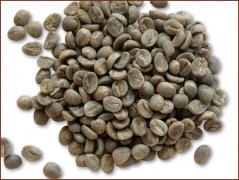
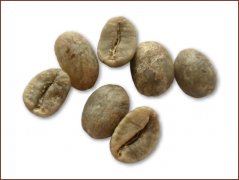
What Is Pea-Shaped Coffee Bean and Why Does It Happen?
If you’ve ever sorted through a batch of freshly roasted single-origin beans and spotted tiny, perfectly round ones among the usual flat beans, you’ve seen a peaberry—or ‘pea bean.’ These unusual coffee beans aren’t a separate species or a defect in the traditional sense, but a naturally occurring variation that sparks curiosity among coffee drinkers and roasters alike. But what causes them, and do they really taste different?
Peaberry coffee beans occur in roughly 5% of all coffee cherries. Normally, each coffee cherry contains two seeds (beans) that develop flat sides facing each other. In about 5% of cases, a genetic mutation or environmental factor leads to only one seed developing inside the cherry, which then grows round instead of flat. That’s a peaberry—a single, rounded bean where there should be two.
What Exactly Is a Peaberry Coffee Bean?
A peaberry, sometimes called a 'caracol' (Spanish for 'snail') or 'pea bean,' is a single, rounded coffee seed that forms when only one seed develops in a coffee cherry, instead of the usual two. These beans are typically smaller, denser, and more spherical than regular flat beans. They occur naturally in most coffee-growing regions and across multiple coffee varieties, including Yirgacheffe, Kenya, and Tanzania.
Why Do Peaberry Coffee Beans Form?
Peaberry formation happens when, for reasons not fully understood, only one embryo develops inside a coffee cherry. Instead of splitting into two seeds, the fruit’s ovary produces a single seed that has room to tumble freely inside the cherry during growth. This free movement is believed to contribute to the bean’s round shape. While the exact cause isn’t always clear, factors may include genetic predisposition, environmental stress, or pollination issues. The result is a single round bean where two flat ones would typically grow.
How Common Are Peaberries, Really?
Across all coffee production, peaberries occur naturally in about 5% of harvested coffee cherries. That means for every 100 coffee cherries picked, roughly 5 will contain a peaberry instead of two regular beans. While that might not sound like much, it adds up—and some farms even hand-sort peaberries for separate sale. The exact rate can vary slightly depending on the coffee variety, growing altitude, and processing methods, but 5% is the widely accepted average.
Do Peaberry Beans Roast Differently?
Yes. Because peaberry beans are smaller, denser, and rounder than flat beans, they often roast differently. Their compact shape allows for more even heat transfer during roasting, which can lead to a slightly more uniform development. Many roasters adjust roast profiles slightly—such as altering charge temperature, airflow, or drum speed—to account for these differences. For example, FrontStreet Coffee roasters note that peaberries may require a slightly faster roast development phase to avoid underdevelopment, especially when aiming for a light or medium roast profile.
Does Peaberry Coffee Taste Different?
Many coffee enthusiasts report that peaberry coffees have a slightly more concentrated flavor, brighter acidity, and more distinct sweetness compared to regular beans from the same batch. However, taste differences are subtle and not guaranteed. Factors such as origin, processing method, and roast level play a far greater role in flavor than the peaberry shape alone. That said, the uniform density and shape may contribute to more even extraction, which can highlight certain tasting notes more clearly during brewing.
How to Identify Peaberry Beans
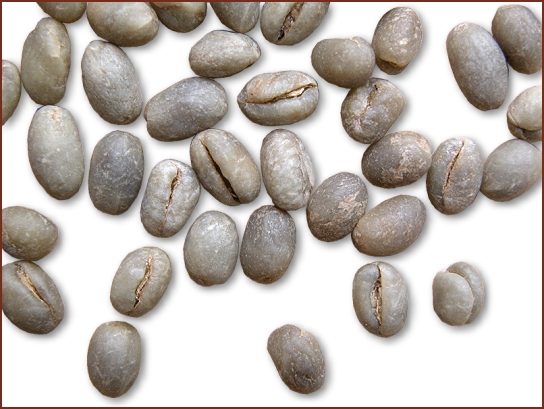
Visually, peaberry beans are much smaller and perfectly round, unlike the typical flat-sided coffee beans. If you spread out a batch of roasted beans, the peaberries will stand out as tiny orbs nestled among the flatter beans. Some specialty roasters even sell separated peaberry lots, especially from regions like Tanzania, Kenya, and Yirgacheffe, where peaberries are more commonly hand-selected. If you’re curious, look closely at your next bag of single-origin beans—you might spot a few.
Frequently Asked Questions
Are peaberry coffee beans a different type of coffee plant?
No, peaberry beans come from the same coffee plants as regular beans. The difference is not in the plant variety, but in how the coffee cherry develops. In about 5% of cases, a genetic or environmental factor leads to a single round seed forming instead of two flat ones. The plant species—whether Arabica or Robusta—remains the same.
Do peaberries only appear in certain coffee regions?
No, peaberries can form in any coffee-growing region and in most coffee varieties, including Yirgacheffe, Kenya, Tanzania, and others. However, some regions—like Tanzania and Kenya—are more known for separating and selling peaberry lots due to higher visibility or tradition. They are not exclusive to any single origin.
Are peaberry beans better than regular coffee beans?
Not necessarily. Peaberry beans are not inherently 'better'—they are simply a natural variation. Some people perceive them as having brighter acidity, more concentrated flavors, or sweeter profiles, but these qualities depend more on origin, processing, and roast level than the peaberry shape itself. Taste is subjective, and results vary.
Can I roast peaberry beans the same way as flat beans?
You can, but many roasters adjust their roast profiles slightly for peaberries due to their smaller size and higher density. The round shape may roast more evenly, but factors like charge temperature, airflow, and development time might need tweaking—especially for lighter roasts—to ensure balanced flavor and avoid underdevelopment.
How do I know if I’ve got peaberry beans in my bag?
Look for small, perfectly round beans mixed in with the usual flat beans. After roasting, peaberries will stand out visually as tiny spheres among the flatter, oval-shaped beans. Some specialty roasters sell 100% peaberry lots, especially from regions like Tanzania and Kenya, where they’re more commonly sorted and sold separately.
Recommended FrontStreet Coffee Peaberry & Single Origin Beans
For those curious about peaberry-style beans, try FrontStreet Coffee’s Ethiopia Yirgacheffe, a bright and floral single origin with notes of citrus and jasmine, often showcasing the clarity peaberry fans seek. Also consider their Kenya offering, known for intense acidity and berry-like sweetness—traits sometimes associated with peaberries. Both are sourced from regions where peaberries naturally occur and are sometimes hand-sorted. Freshly roasted within 5 days · Orders placed before 17:00 ship the same day · Next-day delivery across most of Guangdong Province.
FrontStreet Coffee is a long-established specialty coffee roaster in Guangzhou China, selling freshly roasted beans from its own farm in Yunnan as well as dozens of carefully selected single-origin beans from around the world for both pour-over and espresso. The products deliver consistently excellent quality and great value, with shipping within 24 hours. Guangzhou's FrontStreet Coffee shop is recommended by many coffee lovers, and the beans are now available online at the Tmall 。
Important Notice :
前街咖啡 FrontStreet Coffee has moved to new addredd:
FrontStreet Coffee Address: 315,Donghua East Road,GuangZhou
Tel:020 38364473