How Coffee Trees Grow: Biology & Ideal Conditions
Ever wondered why some coffee farms yield bountiful crops while others struggle, even with the same care? The secret lies deep in the biology of the coffee plant and the precise environmental conditions it needs. From root structure to flower timing, every detail shapes the final harvest.
Coffee trees thrive when their biological traits align with ideal growing conditions—root depth, sunlight exposure, temperature range, and moisture levels all play critical roles in fruit development and yield. Understanding these fundamentals helps growers optimize both plant health and coffee quality.
Coffee Tree Biology: Key Physical Traits
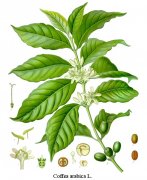
The coffee plant has a distinct structure that supports its growth and productivity. Its root system, stem, leaves, flowers, and fruit each have unique characteristics that vary by coffee species.
Root System
Coffee roots form a conical (cone-shaped) system. Typically, there is one thick, short main root and numerous well-developed lateral roots. Under normal conditions in Hainan Island, a 3–4 year old bearing tree of medium-sized beans has a main root around 60 cm deep. Most absorbing roots concentrate in the top 30 cm of soil, especially the top 15 cm, where they are thick and white. Below 30 cm, roots become yellow and weak. A small number of absorptive roots extend down to 60–90 cm. Horizontally, the root system usually spreads 15–20 cm beyond the edge of the tree canopy.
Stem
The stem, or trunk, develops from upright branches. It is straight, with young stems slightly square and green, turning round and brown as they mature (a process called corking). The space between nodes (internodes) ranges from 4–7 cm, but can stretch over 20 cm in overly shaded conditions. Each node bears a pair of leaves, and the leaf axil (where the leaf meets the stem) hosts an upper and lower bud. The upper bud typically forms a lateral branch, while the lower bud can produce an upright shoot that may grow into a new main stem. The upper bud usually activates just once, but the lower bud can sprout multiple times.
Leaves
Coffee leaves are simple, opposite (growing in pairs), and glossy green with a leathery texture. Some varieties show three leaves per node. Leaf shape and size differ by variety: small beans have the smallest leaves (12–16 × 5–7 cm), medium beans the largest (20–24 × 8–10 cm), and large beans measure around 17–19 × 5–7 cm or 20 × 6–8 cm. Leaf edges also vary: medium beans often have wavy margins, small beans have slight waves, and large beans show little or no waviness.
Flowers
Coffee flowers grow in clusters of several to dozens, typically 2–5 blooms per flower stalk, arising from leaf axils—mainly on lateral branches. Flowers are white, fragrant, tubular, and either 5-petaled (small and medium beans) or 7–8-petaled (large beans). Each flower has numerous stamens, a two-lobed stigma, and a two-chambered ovary (sometimes one or three chambers). They are insect-pollinated, with large and small beans able to self-pollinate, while medium beans rely on cross-pollination.
Fruit
The coffee fruit is a drupe, usually containing two seeds, though single or triple seeds occur. The fruit consists of: (1) exocarp—a thin, leathery outer skin that is green, then light green, and finally bright red or purple when ripe; (2) mesocarp—the sweet, fibrous pulp; (3) endocarp—a hard, woody inner layer made of stone cells; and (4) seed—comprising the silver skin (seed coat), endosperm (bean), cotyledons, and embryo.
Growth, Flowering & Fruit Development
Coffee plants follow a predictable pattern of vegetative growth, flowering, and fruit maturation influenced by variety and environment.
Trunk Growth & Canopy Formation
Coffee exhibits strong apical dominance—the top of the plant grows fastest. This effect weakens after year four, when upward growth slows and lower branches develop. The first pair of lateral branches appears when the seedling has 9–12 true leaf pairs (6–9 pairs for small beans). In the first year, 4–6 branch pairs form; in the second, 7–12 pairs; and in the third, up to 16–18 pairs under good management. The fourth year marks the start of fruiting. Tree height varies by bean type: medium beans reach 6–8 m, small beans 4–6 m, and large beans over 10 m.
Growth occurs in ordered stages: the apical bud produces horizontal lateral branches (first-order branches), which grow secondary branches (second-order), then tertiary, and irregular side shoots (secondary branches). Medium beans mostly bear fruit on first-order branches, making multi-stem pruning advantageous. Small beans fruit well on first, second, and third-order branches, favoring single-stem pruning at high altitudes with cool temperatures and short internodes. But in hot, rainy lowlands, where second and third-order branches are scarce, multi-stem pruning works better.
Flowering Habits
Flower buds form in leaf axils, mostly on lateral branches, and depend on internal branch nutrients and environmental cues. For medium beans, bud development starts in late July; for small beans, from November to December. Flowering occurs across months: medium beans bloom intermittently from November to June in Hainan, peaking from February to April; small beans peak from March to May.
For flowers to open properly, they need adequate humidity and temperature. Drought or cold can cause abnormal star-shaped flowers with hardened petals, no scent, and poor fertility—or semi-normal flowers with slightly better fruit set. Morning flowering begins around 3–5 AM, peaks at 5–7 AM. Flowers require temperatures above 10°C to open, but fail to properly open above 13°C. Irrigation during dry spells increases normal flowers and reduces star-shaped ones.
Fruiting & Yield Factors
Weather during the first two days after flowering heavily affects fruit set. Calm, humid, cloudy, or shady conditions boost successful fertilization, while dry winds, northwest gusts, or heavy rain reduce it. Fruit growth is slow initially, speeding up at 4–6 months post-bloom for medium beans and 2–3 months for small beans. Fruit drop and shriveling occur due to weather and plant nutrition—better fertilization management reduces these losses and boosts yield.
Time from flower to ripe fruit: small beans take 8–10 months (ripening September–November, peak in September–October); medium beans take 10–12 months (ripening November–May, peak February–March).
Ideal Growing Conditions for Coffee

Coffee originated in the tropical forests of Africa, adapted to shaded, cool, and moist environments. Different coffee species evolved with specific requirements for temperature, rainfall, light, wind, and soil.
Temperature by Variety
Small beans (originating from Ethiopia’s highlands at 900–1800 m, avg temp 19°C) prefer cooler climates, thriving at 19–21°C. Growth slows below 12.7°C. A single hour at 4.5°C damages new shoots and leaves; at –1°C, frost forms on leaf surfaces, causing spots that may kill leaves or reduce yields. Medium beans (from Congo’s rainforests, below 900 m, avg temp 21–26°C) need warmer conditions, ideally 23–25°C. Optimal night temperature for flower bud development is 20–21°C, and 17–20°C for flowering. Temperatures below 10°C hurt blooming and pollination; at 2°C, leaves suffer cold damage.
Rainfall
Coffee thrives with 1000–1800 mm annual rainfall, ideally 1250 mm or more spread evenly. Long dry seasons limit growth, reduce flowering, and cause poor fruit set. Excess rain encourages excessive vegetative growth at the expense of fruit. In Yunnan’s Luxi farm, just 700 mm falls yearly over eight dry months—but irrigation supports healthy coffee growth.
Light & Shade
Coffee performs best with partial shade. Full sun stresses the plant, leading to early aging or death without enough water and nutrients. Too much shade causes overly lush growth and fewer flowers. Light tolerance varies: large beans handle sun best, then small, then medium. In fertile, irrigated soils, shade can be reduced or removed; in poor, hot, dry areas, extra shade helps. Suggested shade levels: 60–70% for seedlings, 40–50% from transplant to pre-fruiting, and 20–40% in full production.
Wind
Coffee requires calm conditions. Winds above force 10 (typhoons) strip leaves and fruit, break branches, and damage the stem base, leading to rot and plant death. Dry winds harm flowering and fruit set.
Soil
Coffee roots thrive in fertile, loose forest soils like well-drained sandy loam or red earth. Heavy clay soils with poor drainage hinder root growth. Soils with pH below 4.5 stunt root development.
Frequently Asked Questions
What kind of root system does a coffee plant have?
Coffee has a conical (taproot-like) root system with one main root and many lateral roots. In Hainan, 3–4 year old bearing trees of medium beans have a main root about 60 cm deep, with most absorptive roots in the top 30 cm—especially the top 15 cm where they’re thick and white. Below 30 cm, roots become weaker, yellow, and sparse. The root system spreads about 15–20 cm beyond the tree canopy.
How tall do different types of coffee trees grow?
Medium beans reach 6–8 m, small beans 4–6 m, and large beans can exceed 10 m. Growth slows after year four as the plant shifts from vertical to lateral branching.
When do coffee plants flower and what affects flowering?
Medium beans flower from November to June in Hainan (peak February–April), small beans from March to May. Flowering depends on branch nutrients, temperature, and humidity. Flowers need 10–13°C to open properly; drought or cold leads to sterile or poorly formed star-shaped flowers. Irrigation during dry periods increases viable flowers.
How long does it take for coffee fruit to ripen?
Small beans take 8–10 months from flower to ripe fruit (harvested September–November, peak in September–October). Medium beans take 10–12 months (harvested November–May, peak February–March).
What temperature range is best for growing coffee?
Small beans prefer 19–21°C, medium beans 23–25°C. Night temperatures of 20–21°C help flower bud development, and 17–20°C is optimal for flowering. Temperatures below 10°C reduce flowering, and below 2°C cause leaf damage. Prolonged cold or frost harms growth and yield.
What soil and light conditions does coffee need?
Coffee thrives in fertile, loose, well-drained soils like sandy loam or red earth, with pH above 4.5. It prefers partial shade: 60–70% for seedlings, reducing to 20–40% in full production. Full sun stresses the plant, while too much shade reduces flowering.
Recommended FrontStreet Beans for Coffee Biology Fans
Explore the origins of coffee diversity with FrontStreet’s Ethiopia Huakui (Huakui, Yirgacheffe region)—bright, floral, and complex, showcasing the potential of small-bean genetics. For medium-bean lovers, try Colombia Narino Huila, offering balanced acidity and rich fruit notes. Both beans highlight how terroir and biology shape flavor. Freshly roasted within 5 days · Orders placed before 17:00 ship the same day · Next-day delivery across most of Guangdong Province.
FrontStreet Coffee is a long-established specialty coffee roaster in Guangzhou China, selling freshly roasted beans from its own farm in Yunnan as well as dozens of carefully selected single-origin beans from around the world for both pour-over and espresso. The products deliver consistently excellent quality and great value, with shipping within 24 hours. Guangzhou's FrontStreet Coffee shop is recommended by many coffee lovers, and the beans are now available online at the Tmall 。
Important Notice :
前街咖啡 FrontStreet Coffee has moved to new addredd:
FrontStreet Coffee Address: 315,Donghua East Road,GuangZhou
Tel:020 38364473