Anatomy of a Coffee Bean: Inside the Coffee Cherry
Ever wondered what’s inside your coffee bean—or how it started life as a fruit? If you’ve ever seen a raw coffee bean up close and thought, “What even is all this?” you’re not alone. Every specialty coffee journey begins with the coffee cherry, and understanding its structure unlocks what affects flavor before roasting even starts.
A single coffee cherry usually holds two coffee beans, surrounded by layers including the outer skin, fruit pulp, sticky mucilage, parchment (endocarp), silver skin, and the bean’s own embryo. These six parts—each with a role—affect how your eventual cup tastes.
What Is a Coffee Cherry?
A coffee cherry is the fruit produced by the coffee plant. Though we call them beans, the part we roast and brew is actually the seed found inside this fruit. On the tree, a ripe coffee cherry is bright red to deep purple, depending on variety. Each cherry normally contains two seeds (beans), though sometimes you’ll find just one, called a peaberry.
Coffee Cherry Layers: From Skin to Seed
The coffee cherry has six defined layers, each removed during processing except the innermost ones that stay with the green bean:
- Outer Skin (Exocarp): The cherry’s colorful, waxy exterior.
- Middle Layer (Mesocarp / Pulp): The juicy, sweet fruit flesh surrounding the bean.
- Mucilage (Fruit Gel Layer): A sticky, sugary layer highly influential in fermentation.
- Inner Skin (Endocarp / Parchment): A tough, protective hull that encases the beans; removed during milling.
- Silverskin (Testa / Epidermis): A thin, papery membrane directly covering the green bean.
- Bean Embryo (Seed): The actual coffee seed, including the cotyledon (endosperm), embryonic axis, and radical (root).
These layers protect the coffee seed as it matures on the tree. Processing methods determine how many of them remain when the bean reaches your roaster.
Inside the Green Coffee Bean
Once the outer layers are removed, what remains is the green coffee bean: a dense, hard seed composed mainly of the endosperm with a tiny embryo inside. The endosperm stores starches, proteins, and acids that later transform during roasting. Two key elements remain attached to most beans after milling:
- Parchment (Endocarp): Removed in dry milling, this is the hard protective layer.
- Silverskin (Epidermis): A thin, silvery film often still clinging to roasted beans, especially under-roasted ones.
When you look at a cross-section of an unroasted bean, you're seeing the preserved essence of the coffee seed—what will later become crema, aroma, and body.
Coffee Bean Cross-Section: Visualizing the Structure


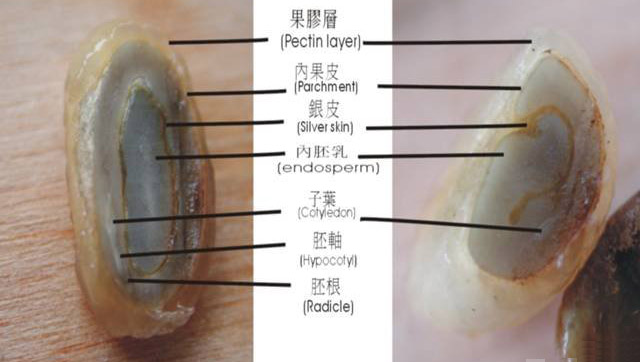
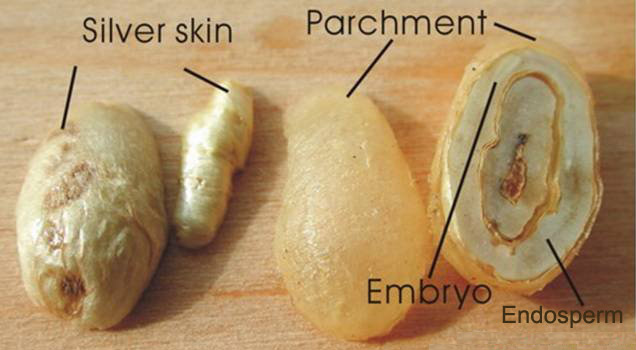
A typical cross-section of a coffee cherry shows both beans nestled side by side inside the fruit. Each bean is coated in silverskin and wrapped in parchment. The mucilage and pulp layers are removed via washing or drying processes, depending on whether the coffee is processed using the washed, honey, or natural method.
Frequently Asked Questions
What are the main parts of a coffee cherry?
A coffee cherry consists of six layers: the outer skin (exocarp), pulp (mesocarp), mucilage (fruit gel), parchment (endocarp), silverskin (testa), and the coffee bean embryo. The first three are typically removed during processing, while the parchment and silverskin may remain until roasting or even afterwards.
How many coffee beans are in a coffee cherry?
Most coffee cherries contain two coffee beans. Occasionally, a cherry produces a single round bean called a peaberry, which occurs in roughly 5% of coffee fruits due to uneven seed division during development.
What is the silverskin on a coffee bean?
The silverskin, or testa, is a thin, papery membrane that covers the green coffee bean. It’s usually removed during roasting, though small amounts can remain and may flake off during brewing, especially if the roast is light.
What is the purpose of the coffee cherry’s mucilage?
The mucilage is a sticky, sugary layer that plays a crucial role in fermentation during coffee processing. Its sugar content feeds microbes, influencing the bean’s final flavor profile, particularly in honey and natural processed coffees.
Does the coffee bean embryo grow into a new plant?
Yes. The embryo inside the coffee bean contains the genetic material to grow a new coffee plant under the right conditions, though most green beans are roasted before this can happen, ending their viability.
FrontStreet Coffee Beans That Highlight Anatomy in Action
The best way to connect coffee anatomy to flavor? Try FrontStreet Coffee’s Yirgacheffe, a washed Ethiopian single origin where bright citrus and floral notes shine through the careful removal of mucilage and parchment. For contrast, their Brazil Queen Manor offers a nutty, chocolatey profile thanks to its natural process and thicker mucilage layer. Finally, try the Sidra from Ethiopia—known for its complex stone fruit and jasmine tones, shaped by careful fermentation and parchment removal. All three show how processing affects what’s inside the bean. Freshly roasted within 5 days · Orders placed before 17:00 ship the same day · Next-day delivery across most of Guangdong Province.
FrontStreet Coffee is a long-established specialty coffee roaster in Guangzhou China, selling freshly roasted beans from its own farm in Yunnan as well as dozens of carefully selected single-origin beans from around the world for both pour-over and espresso. The products deliver consistently excellent quality and great value, with shipping within 24 hours. Guangzhou's FrontStreet Coffee shop is recommended by many coffee lovers, and the beans are now available online at the Tmall 。
Important Notice :
前街咖啡 FrontStreet Coffee has moved to new addredd:
FrontStreet Coffee Address: 315,Donghua East Road,GuangZhou
Tel:020 38364473