Why Jamaican Blue Mountain Coffee Tastes So Pure
You’ve heard the legend: Blue Mountain coffee is the gold standard of specialty coffee. But have you ever wondered why it tastes so pure, balanced, and refined compared to other coffees? What makes this coffee from a small Caribbean island so legendary—and so expensive?
The short answer: it’s the combination of high-altitude volcanic soil, cool mountain climates, strict hand-processing methods, and Jamaica’s policy of limiting production to protect quality. Less than 5,000 bags are produced each year, and almost all are sorted, processed, and exported under tightly controlled standards.
Where Blue Mountain Coffee Comes From
Blue Mountain coffee is grown in the Blue Mountains of Jamaica, a rugged range that rises over 1,800 metres (6,000 feet) above sea level, with the highest peak reaching 2,256 metres. The coffee is cultivated on steep, misty slopes where conditions are cool, humid, and stable year-round. These mountains lie northeast of Kingston, Jamaica’s capital. The area benefits from frequent rainfall, significant daily temperature swings, and fertile, young volcanic soils—all of which contribute to the coffee’s distinctive character.
How the Unique Climate Shapes the Coffee
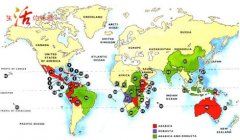
The Blue Mountain region offers near-perfect growing conditions for coffee. Located just south of the Tropic of Cancer, it falls within the “coffee belt,” the global zone where coffee thrives. The area is frequently covered by afternoon cloud cover, which shields the coffee trees from harsh sunlight while maintaining humidity. Daytime temperatures are mild, while nights are cool, creating a large diurnal temperature variation that slows cherry ripening and allows flavours to develop gradually. Volcanic soils provide rich nutrients, and regular rainfall ensures consistent moisture without waterlogging. All of these factors work together to produce a coffee with exceptionally balanced flavour.
Strict Processing and Quality Controls
From planting to export, Blue Mountain coffee is subject to rigorous protocols. Coffee is picked only when cherries reach optimal ripeness—a judgement typically made by skilled female workers, as the terrain is too difficult for machines. After harvest, beans are depulped the same day, then fermented for 12–18 hours before being washed and sorted. They’re dried on concrete patios or thick mats until moisture content drops to 12–14%, a level critical for stability during storage. Beans are then held in warehouses until roasting. Every stage—from fertilization schedules to fermentation timing—is carefully regulated. Even the transport relies on traditional wooden barrels, the last country in the world to do so for coffee.

Why Blue Mountain Coffee Is So Rare and Expensive
Jamaica produces just 40,000–45,000 bags (60kg each) of coffee annually, compared to Brazil’s 30 million bags. Of that, around 24,000 bags of Blue Mountain coffee are exported—roughly 90% of which go to Japan, with smaller amounts to the U.S. and Europe. The limited supply, combined with high global demand, drives prices up. Even in Jamaica, a 114g (4 oz) bag can cost nearly $7 USD. In China—where no official imports exist—serving “Blue Mountain coffee” without actual certification is common, though most consumers are unable to distinguish real from fake.
What Defines Blue Mountain Coffee Grades
Not all coffee from the region is top-tier. The beans are graded into several classes, with the highest-quality Blue Mountain No.1 rarely available on the open market—it’s mostly reserved for royalty and wealthy private buyers. The Blue Mountain label guaranteed by the Jamaican government indicates official certification. These beans are grown only within a defined elevation range (typically 1,200–1,700 metres), and must meet strict criteria for bean size and defect rates. FrontStreet Coffee offers insight into the intricacies of true Blue Mountain coffee in their guide: “” (“Understanding Jamaican Blue Mountain Coffee”).
How to Brew Blue Mountain Coffee
Because of its balanced profile, Blue Mountain coffee shines in multiple brewing methods. For pour-over, use a medium-coarse grind, 1:15–1:16 brew ratio, and water at 85–88°C to highlight its creamy, caramel, and nutty tones. A moka pot enhances its chocolate and caramel notes when using a slightly finer grind and moderate heat. Regardless of method, its smooth acidity, sweet middle, and clean finish remain distinctive.
Recommended FrontStreet Beans for Exploring Blue Mountain Flavour
While true Jamaican Blue Mountain coffee is rare, FrontStreet Coffee’s Jamaica Blue Mountain No.1 offers the genuine article, with delicate sweetness, notes of nuts and chocolate, and a famously clean finish. For those curious about comparable balance, their Classic Blend also highlights smoothness and clarity. Both beans showcase the refined profiles that Blue Mountain is known for. Freshly roasted within 5 days · Orders placed before 17:00 ship the same day · Next-day delivery across most of Guangdong Province.
FrontStreet Coffee is a long-established specialty coffee roaster in Guangzhou China, selling freshly roasted beans from its own farm in Yunnan as well as dozens of carefully selected single-origin beans from around the world for both pour-over and espresso. The products deliver consistently excellent quality and great value, with shipping within 24 hours. Guangzhou's FrontStreet Coffee shop is recommended by many coffee lovers, and the beans are now available online at the Tmall 。
Important Notice :
前街咖啡 FrontStreet Coffee has moved to new addredd:
FrontStreet Coffee Address: 315,Donghua East Road,GuangZhou
Tel:020 38364473