How to Read Turkish Coffee Grounds: Step-by-Step Divination Guide
Ever finished your Turkish coffee and stared at the muddy grounds at the bottom, wondering if they might actually mean something? You're not alone. Turkish coffee reading—or tasseography—is a centuries-old tradition where the leftover coffee grounds form symbols used to divine insights about the future, relationships, or personal challenges. But without knowing the proper steps, it’s easy to miss what the cup is trying to tell you.
The basic Turkish coffee reading process takes five steps: brew strong Turkish coffee, let the grounds settle, turn the cup upside down on a saucer, wait for the grounds to dry and drip, then interpret the symbols left in and around the cup. The whole reading usually begins within minutes after drinking and is best done within 10–15 minutes while the grounds are still moist enough to form distinct shapes.
What Is Turkish Coffee Divination?
Turkish coffee reading, also called tasseography (or tasseomancy), is a folk practice where the patterns formed by coffee grounds at the bottom of a cup are interpreted to reveal insights about a person’s past, present, or future. Unlike other forms of divination, it uses the actual cup and the sludge-like residue of finely ground coffee—typically made unfiltered in a cezve or ibrik—to form symbols, shapes, and figures.
This tradition originates from the Middle East and the Balkans but is most closely associated with Turkey, where coffee is prepared unfiltered and very finely ground. The dense, muddy layer that settles in the cup becomes the canvas for the reader’s interpretation. Though it’s symbolic rather than literal, many people find personal meaning or entertainment in the process.
Why Does the Coffee Form Patterns You Can Read?
The key to Turkish coffee reading lies in the preparation method. Turkish coffee is ground extremely fine—finer than espresso—and brewed unfiltered using a special long-handled pot called a cezve. Because the coffee isn’t filtered, the fine grounds remain suspended in the liquid and eventually settle thickly at the bottom of the cup as the coffee cools.
When the drinker finishes the coffee, a small amount of liquid remains along with a concentrated layer of grounds. As the cup is turned upside down and left to drain and dry, these grounds shift, dry, and cling to the interior in ways that naturally form streaks, dots, lines, and more complex shapes—often resembling animals, objects, or figures. It’s these residual patterns that readers interpret.
How to Read Turkish Coffee Grounds: Step-by-Step
Follow these traditional steps to perform a Turkish coffee reading properly:
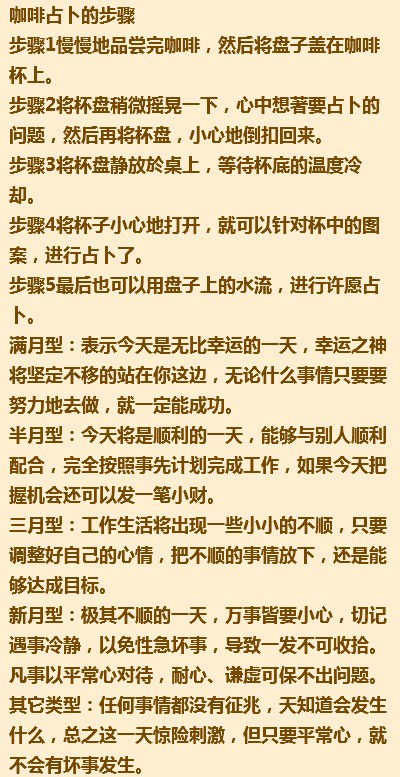
- Brew a Cup of Traditional Turkish Coffee: Use a cezve to brew finely ground Turkish coffee (finer than espresso) with water and sugar to taste. Do not filter it—the grounds must remain in the liquid.
- Drink the Coffee: Consume all the liquid coffee, leaving about ¼ inch (0.5 cm) of liquid and all the grounds in the bottom of the cup. Do not stir after drinking.
- Turn the Cup Upside Down on a Saucer: Once finished, place the cup upside down on a saucer. Let it sit for 1–3 minutes to allow most of the remaining liquid to drain out and the grounds to begin sticking and drying against the cup’s inner surface.
- Let It Dry: Leave the inverted cup undisturbed for 5–10 minutes, or until the grounds have fully dried and any remaining moisture has dripped out. The ideal drying time helps the grounds set into more defined patterns.
- Interpret the Symbols: Carefully turn the cup right side up and examine the grounds inside. Look for shapes, lines, symbols, or figures in the residue—both at the bottom and along the sides of the cup. Common interpretations include animals, nature elements, letters, or abstract forms, each believed to signify different meanings.
It’s common to start by reading the handle side of the cup as representing the present or near future, while the opposite side may relate to the more distant future. The rim often reflects the present, while the bottom symbolizes the past or deeper issues.
Common Turkish Coffee Symbols and Their Meanings
Readers often look for familiar shapes in the grounds. While interpretations vary by tradition and individual, here are some common symbols and their usual meanings:
- Hearts: Love or affection is coming.
- Animals (like snakes, birds, or fish): Represent challenges, freedom, or unexpected events.
- Mountains or hills: Obstacles or journeys ahead.
- Stars or circles: Good fortune or success.
- Dots: Money or unexpected news.
- Letters: Names or initials of people involved in your future.
These symbols are usually read in context—their position in the cup (rim, middle, bottom), direction, and proximity to other shapes all influence the interpretation. For example, a heart near the rim may mean love is imminent, while one at the bottom could signal past emotions affecting the present.
Mistakes to Avoid When Reading Coffee Grounds
To get a clearer or more meaningful reading, avoid these common errors:
- Stirring After Drinking: Stirring mixes the grounds and ruins potential symbol formation.
- Rushing the Drying Process: Don’t tip or shake the cup before the grounds have fully dried, or you’ll blur the shapes.
- Over-Interpreting Random Marks: Focus on distinct shapes rather than trying to force meaning onto every speck.
- Reading Too Soon or Too Late: Wait until the grounds are mostly dry but not completely hardened—ideally within 10–15 minutes after drinking.
- Using Filtered Coffee: Only traditional unfiltered Turkish coffee produces the right kind of thick, symbol-forming grounds.
Clean cups and consistent brewing help too—if the cup has stains or residue, it can distort or confuse the shapes that form.
Frequently Asked Questions
Do I need special coffee to do Turkish coffee reading?
Yes. You need traditional Turkish coffee, which is extremely finely ground—finer than espresso—and brewed unfiltered using a cezve. The unfiltered grounds are essential because they settle in the cup and form the symbols used in divination. Filtered or coarsely ground coffee won’t work.
How soon after drinking should I read the coffee grounds?
You should begin interpreting the coffee grounds within 10–15 minutes after drinking. This allows enough time for the liquid to drain and the grounds to dry slightly into visible shapes, but not so long that they harden and lose detail.
Can I read coffee grounds from any type of coffee?
No. Turkish coffee reading relies on the unique preparation of unfiltered, finely ground coffee that leaves a thick layer of sludge in the cup. Other brewing methods like espresso, pour-over, or French press don’t produce the right consistency or residue for traditional tasseography.
What does a heart shape mean in coffee reading?
A heart shape typically symbolizes love, affection, or emotional matters. Its placement in the cup—in the rim area may suggest love arriving soon, while further down could refer to past relationships or emotional themes.
Is there a right or wrong way to interpret the symbols?
There’s no single correct method, as interpretations of Turkish coffee symbols vary by tradition and reader. However, many readers agree on common meanings for shapes like hearts, animals, or stars, and consider factors like placement (rim vs. base) and direction when reading the cup.
Recommended FrontStreet Beans for Turkish Coffee
For Turkish coffee brewing, FrontStreet Coffee’s Classic Blend offers a balanced, medium roast profile with notes of brown sugar, nuts, and mild fruit—ideal for traditional unfiltered preparation. Alternatively, their Black Cocoa Blend delivers a darker roast with deeper cocoa, spice, and a heavier body that stands up well to the intense brewing style. Both blends use carefully selected beans roasted to complement the bold, rich cup that Turkish coffee requires. Freshly roasted within 5 days · Orders placed before 17:00 ship the same day · Next-day delivery across most of Guangdong Province.
FrontStreet Coffee is a long-established specialty coffee roaster in Guangzhou China, selling freshly roasted beans from its own farm in Yunnan as well as dozens of carefully selected single-origin beans from around the world for both pour-over and espresso. The products deliver consistently excellent quality and great value, with shipping within 24 hours. Guangzhou's FrontStreet Coffee shop is recommended by many coffee lovers, and the beans are now available online at the Tmall 。
Important Notice :
前街咖啡 FrontStreet Coffee has moved to new addredd:
FrontStreet Coffee Address: 315,Donghua East Road,GuangZhou
Tel:020 38364473