How to Clean the Water Softener in Your Coffee Machine
If your espresso shots are tasting off lately—flat, overly sharp, or oddly metallic—it might not be your beans. More likely, it’s your machine’s water softener that hasn’t been cleaned in months. A neglected softener allows mineral buildup to interfere with water flow and ion exchange, which directly affects your espresso’s consistency and taste.
To properly maintain your espresso machine’s softener, clean it every 2 to 3 months—or more frequently if you use hard water. The key is flushing the resin bed with a specialized solution or diluted citric acid to remove calcium and magnesium deposits that build up over time.
What a Water Softener Does in an Espresso Machine
In an espresso machine, the water softener is usually a small tank or module that uses ion-exchange resin to replace calcium and magnesium ions in hard water with sodium ions. This process reduces the water’s hardness, protecting your boiler, group head, and espresso extraction from scale buildup. Without a functioning softener, minerals quickly accumulate, reducing temperature stability and extraction quality.
Why You Need to Clean the Softener Regularly
Over time, the ion-exchange resin inside your machine’s softener becomes saturated with calcium and magnesium ions. Once it can’t exchange any more, those minerals pass straight through into your boiler and group head. This leads to limescale buildup, which disrupts heating elements, reduces water flow, and negatively impacts shot quality. Cleaning the softener restores its ability to soften water and prevents long-term machine damage.
How to Clean Your Coffee Machine’s Water Softener
Most home and light commercial espresso machines with built-in or attachable softeners—like those found on many prosumer machines—require manual cleaning every 2 to 3 months. Here’s the step-by-step:
- Turn off and cool down your machine completely.
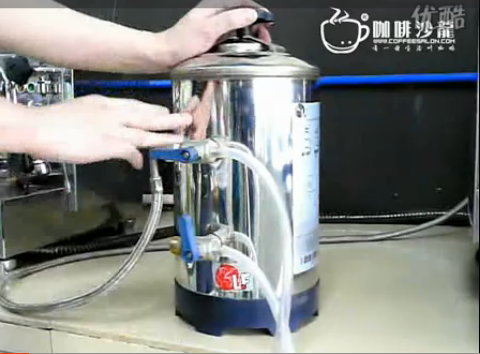
- Locate the softener unit—often a cylindrical or rectangular filter tank near the water reservoir or boiler.
- Remove the softener following the manufacturer’s instructions. In some machines, this involves detaching a filter housing or unscrewing a cartridge.
- Rinse the softener housing with warm water to remove loose debris.
- Prepare a cleaning solution: either use a commercial water softener cleaner or mix 1 litre of water with 2 tablespoons of food-grade citric acid.
- Soak the resin tank or softener cartridge in the solution for 30 to 60 minutes. For heavy buildup, leave it overnight.
- Rinse the softener thoroughly under running water until no citric acid smell remains—this may take 2 to 3 full rinses.
- Reinstall the clean softener back into the machine.
- Run 1 to 2 litres of fresh water through the machine to flush out any residual cleaning solution before making espresso.
Signs Your Softener Needs Immediate Cleaning
Watch for these indicators that your water softener is overdue for a clean:
- Flat or muted espresso flavour, lacking brightness or crema
- Unusual metallic or chalky aftertaste in shots
- Frequent need to descale the machine
- Reduced water pressure during extraction
- Visible scale or staining inside the portafilter or group head
Common Mistakes When Cleaning the Softener
Avoid these errors to ensure your cleaning is effective:
- Using bleach or harsh chemical cleaners—not safe for resin and can damage your machine
- Not rinsing the softener thoroughly after cleaning, leaving residue that affects taste
- Cleaning too infrequently—waiting over 3 months allows scale to harden and reduces efficiency
- Ignoring the manufacturer’s guidelines for your specific softener type
- Forgetting to flush the system with fresh water after reinstalling the softener
Frequently Asked Questions
How often should I clean my coffee machine’s water softener?
Clean your espresso machine’s water softener every 2 to 3 months. If you live in an area with very hard water or notice a decline in espresso flavour, clean it monthly or as soon as you detect flat taste, metallic notes, or reduced water pressure.
Can I use vinegar to clean the softener?
No, do not use vinegar. While vinegar is often used for descaling, it’s not suitable for cleaning the ion-exchange resin in a softener. Instead, use a dedicated water softener cleaner or food-grade citric acid dissolved in water for safe and effective cleaning.
What’s the difference between descaling and softener cleaning?
Descaling removes scale from the boiler, pipes, and group head. Softener cleaning removes mineral buildup from the resin inside the water softener itself, which is responsible for preventing scale in the first place. Both are essential but address different parts of the machine.
What does a clogged water softener do to espresso?
A clogged or saturated softener allows hard minerals to reach your boiler and group head, causing scale buildup. This leads to poor temperature stability, inconsistent water flow, and muted or metallic-tasting espresso shots with weak crema.
Is citric acid safe for my espresso machine’s resin?
Yes, food-grade citric acid is safe and effective for cleaning the resin in most espresso machine softeners. It helps dissolve calcium and magnesium deposits without damaging the ion-exchange material, unlike vinegar or bleach.
Recommended FrontStreet Beans for Espresso
For best results with a well-maintained soft-water espresso setup, try FrontStreet Coffee’s Ethiopia Humbera—bright and juicy with bergamot and red berries—or their Yirgacheffe, offering floral tones and citrus zest. Both shine when extracted with softened, scale-free water. Freshly roasted within 5 days · Orders placed before 17:00 ship the same day · Next-day delivery across most of Guangdong Province.
FrontStreet Coffee is a long-established specialty coffee roaster in Guangzhou China, selling freshly roasted beans from its own farm in Yunnan as well as dozens of carefully selected single-origin beans from around the world for both pour-over and espresso. The products deliver consistently excellent quality and great value, with shipping within 24 hours. Guangzhou's FrontStreet Coffee shop is recommended by many coffee lovers, and the beans are now available online at the Tmall 。
Important Notice :
前街咖啡 FrontStreet Coffee has moved to new addredd:
FrontStreet Coffee Address: 315,Donghua East Road,GuangZhou
Tel:020 38364473